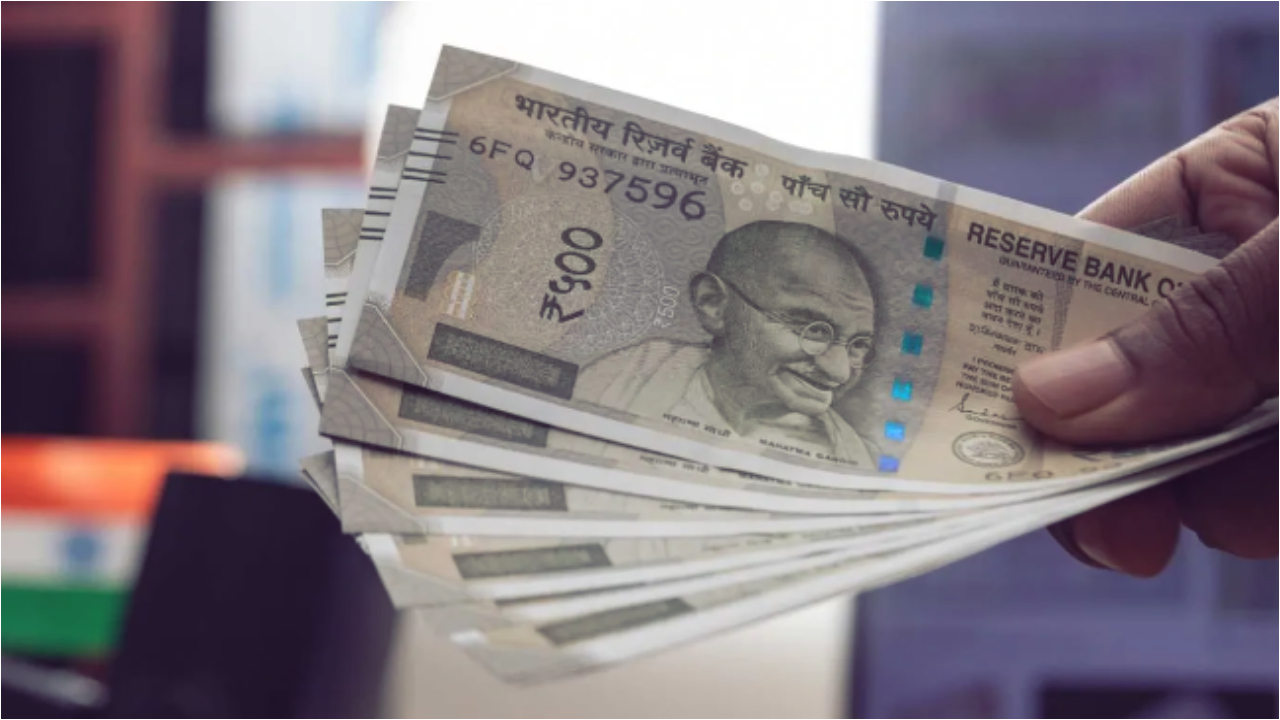
8th pay commission: Major news for central govt employees. Right now central government workers and pensioners are feeling optimistic about the upcoming months. The Eighth Pay Commission has kicked off its work. People are especially focused on their fitment factor. This seemingly minor term plays a crucial role in determining salary and pension hikes. Previous pay commissions have had a major influence on employee earnings, so there’s a lot of hope this time around.
After the Terms of Reference (ToR) for the 8th Pay Commission were approved, the Commission has started its official preparations. The team, headed by Commission Chairperson Justice (Retd.) Ranjana Desai, will now figure out the right increases for salaries, pensions, and allowances. Any suggestions made by the Commission will only be finalized after getting the Union Cabinet’s nod.
What is the fitment factor?
The fitment factor is a multiplier that helps calculate the new basic pay from the old pay structure. Several elements are considered when figuring it out, including inflation, the cost of living index, and Dr. Wallace R. Aykroyd’s formula. This formula mainly focuses on the basic needs of a worker and their family, like food, clothing, and housing. The 7th Pay Commission set it at 2.57.
What could the fitment factor be?
Employees’ hopes regarding the Eighth Pay Commission are shaped by various reports. Staff-side members of the NC-JCM (National Council-JCM) mentioned in a news channel interview that they think the fitment factor this time might be similar to what the Seventh Pay Commission had. Meanwhile, a report from Ambit Capital in July estimated it to fall between 1.83 and 2.46. The report also indicated that, based on rough calculations, the government could set the fitment factor within the range of 1.83 to 2.46 based on the previous pay commission’s increase.
Maximum increase possible up to 54 percent
The commission’s decision will directly impact the incomes of over 5 million employees and 6.5 million pensioners. Ambit Capital estimated in its report that this pay commission could result in a real salary increase of 14 percent to a maximum of 54 percent, including both basic pay and DA. However, they also stated that a hike as large as 54 percent appears unlikely, as the financial burden on the government could increase significantly. Some experts believe that the government could increase the increase slightly to boost consumption, but practical limitations must be considered.
Salary Estimates Based on Different Fitments
To help with employee salary estimation, we’ve provided potential salaries using fitment factors of 1.92 and 2.57 for various grade pays as examples. This includes HRA, TA, NPS, and CGHS.
It’s worth mentioning that HRA is calculated as 24 percent of the basic salary (for X-class cities). TA varies between Rs 3,600 and Rs 7,200 based on the level. NPS is set at 10 percent of the basic salary, while CGHS is billed at current rates.
For Grade Pay 1900:
At 1.92 fitment factor:
Basic: Rs 54,528 | HRA: Rs 13,086 | TA: Rs 3,600
Gross: Rs 71,215 | NPS: Rs 5,453 | CGHS: Rs 250
Net: Rs 65,512
At 2.57 fitment factor:
Basic: Rs 72,988 | HRA: Rs 17,517
Gross: Rs 94,105 | NPS: Rs 7,299
Net: Rs 86,556
For Grade Pay 2400:
At 1.92 fitment factor: Basic: Rs 73,152 | Net: Rs 86,743
At 2.57 fitment factor: Basic: Rs 97,917 | Net: Rs 1,14,975
For Grade Pay 4600:
At 1.92: Basic: Rs 1,12,512 | Net: Rs 1,31,213
At 2.57: Basic: Rs 1,50,602 | Net: Rs 1,74,636
For Grade Pay 7600:
At 1.92: Basic: Rs 1,53,984 | Net: Rs 1,82,092
At 2.57: Basic: Rs 2,06,114 | Net: Rs 2,41,519
For Grade Pay 8900:
At 1.92: Basic: Rs 1,85,472 | Net: Rs 2,17,988
At 2.57: Basic: Rs 2,48,262 | Net: Rs 2,89,569