If you are a central Business Idea: Start These 4 Businesses With Low Investment, Then Earn Big Every Month”/gas-cylinder-why-was-the-number-of-subsidized-cylinders-reduced-government-explains-the-reaso-750917.html" class="tb-related-post-link" rel="bookmark">Gas Cylinder: Why Was the Number of Subsidized Cylinders Reduced? Government Explains the Reaso employee, this is a significant and historic turning point for you. On December 31, 2025, the 10-year journey of the 7th Central Pay Commission will officially end. This system, implemented on January 1, 2016, completely transformed the salary, allowances, and pension calculations of government employees. Now, as discussions about the 8th Pay Commission are gaining momentum, it’s important to understand the actual impact on your pocket over the past 10 years.
Fitment Factor and Pay Matrix
The most revolutionary decision of the 7th pay commission was the establishment of a fitment factor of 2.57. This formula played a crucial role in transforming the old salary system into the new one. The government abolished the decades-old ‘grade pay’ system and replaced it with a transparent and simple Pay Matrix. This made it much easier and more reliable for employees to understand their salaries and future salary increases than before.
What was the salary under the 6th Pay Commission
When the 6th Pay Commission ended on December 31, 2015, inflation was at its peak. The biggest evidence of this was the dearness allowance (DA), which was skyrocketing at that time. At the lowest level, Level 1, at the end of the 6th Pay Commission, the basic pay was ₹7,000 and the grade pay ₹1,800, making the total basic pay ₹8,800.
At that time, DA alone had reached 119%, amounting to ₹10,472. In addition, HRA of ₹2,640 was also available for X-category cities. Accordingly, an employee’s total monthly salary, excluding transport allowance, was approximately ₹21,800 to ₹22,000.
How the 7th Pay Commission Changed Salaries
With the implementation of the 7th Pay Commission on January 1, 2016, the dearness allowance (DA) was reduced to zero, but in return, the basic pay was increased significantly. The minimum basic pay for Level-1 employees was increased from ₹8,800 to ₹18,000, and the hassle of grade pay was eliminated.
Now, nearly 10 years later (December 2025), the DA has increased to 58%. On a basic salary of ₹18,000, the DA is approximately ₹10,440, and in X-category cities, the HRA has also increased to ₹5,400. This means that today, the total salary of a Level-1 employee is at a steady level of ₹33,500 to ₹34,000. Simply put, in the last 10 years, the basic salary has more than doubled from ₹8,800 to ₹18,000. However, the actual amount of DA (approximately ₹10,400) has remained almost the same between then and now.
A 10-Year Report Card
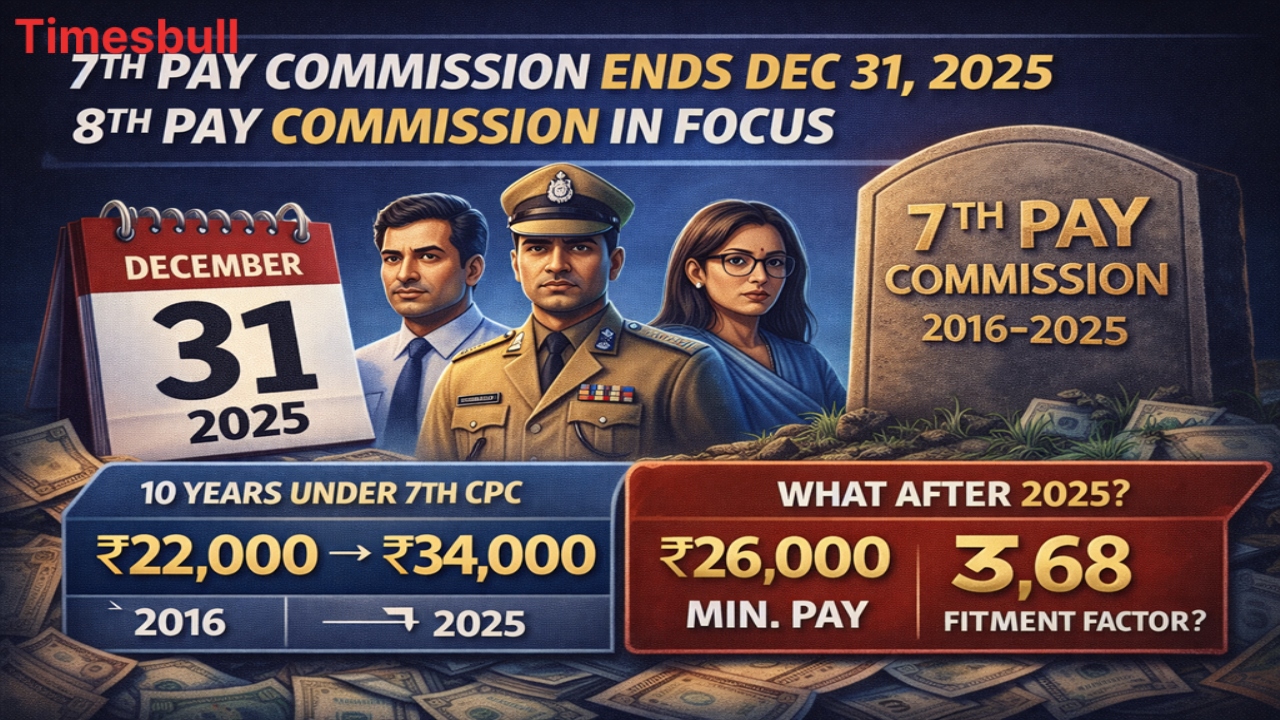
Looking at the changes in the income of government employees over the last decade, the total monthly salary has increased from approximately ₹22,000 to ₹34,000. This represents a dramatic increase of approximately 55% in 10 years. House Rent Allowance (HRA) has also more than doubled, giving a significant boost to take-home pay. But there’s a catch—the minimum basic salary of ₹18,000 has remained stagnant since 2016, while inflation has risen at a rapid pace.
Demand for the 8th Pay Commission
The end of the 7th Pay Commission’s tenure sends a strong message that it’s time for major changes. Employee organizations argue that there has been no real improvement in basic salaries since 2016; any increase has been merely inflation compensation in the form of DA.
Now that DA has once again crossed the 50% mark, there is strong pressure building for the 8th Pay Commission. The employees’ main demands are to increase the fitment factor from 2.57 to 3.68 and to increase the minimum basic pay from ₹18,000 to ₹26,000 or more. Employees now want not just an increase in allowances but a robust salary structure that can actually increase their purchasing power.