

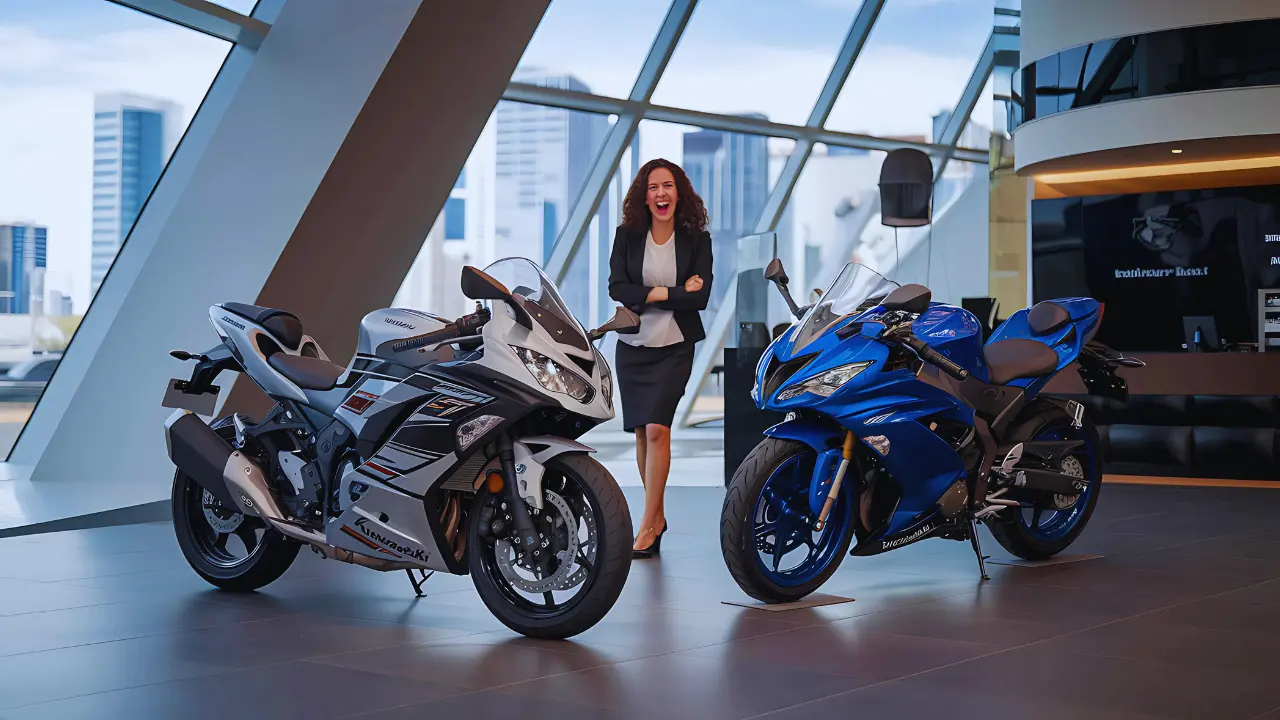
Kawasaki Ninja 500 vs Yamaha R3: In 2025, two motorcycles rule this domain with equal respect from beginners and enthusiasts alike. Both Kawasaki Ninja 500 and Yamaha R3 feature robust power, sporty designs, and high-end features. However, they are geared towards different riders, so choosing either one depends on riding style and priorities.
Engine Power and Performance
The Kawasaki Ninja 500 features a 451cc parallel twin engine that generates 51 bhp at 10,000 rpm. It provides smooth power and high torque for urban commutes and highway cruising. It renders overtaking simple and provides comfortable and assertive acceleration.
Comparatively, the Yamaha R3 boasts a 321cc liquid-cooled in-line twin-cylinder engine. It is very high-revving, providing an exhilarating ride, particularly on the track. Quick maneuverability is added by a lighter frame, making riders able to maneuver corners and bumps effortlessly.
Road Presence
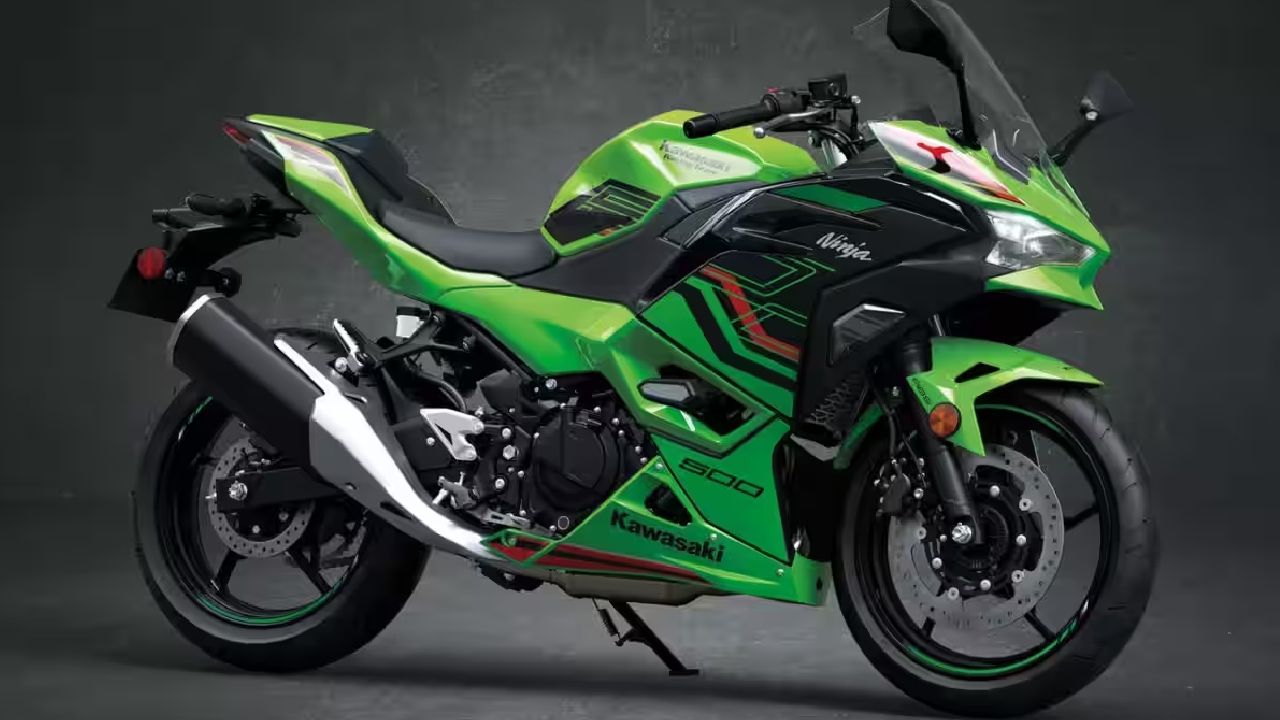
Kawasaki has retained its classic Ninja DNA. The Ninja 500 appears aggressive, muscular, and contemporary, giving it a potent road presence. Its tour-friendly design combines sporty appearance with comfort for extended touring.
The Yamaha R3 draws obvious influence from competition bikes. Smooth fairings, chiseled stance, and a sporty finish give it a tougher image. For those who desire a bike that shouts performance, the R3 has the advantage.
Ergonomics of Both Bikes
The Ninja 500 has a fairly upright seat with its footpeg placement relaxed. It is thus appropriate for city cruising as well as touring long distances. The riding stance is structured to minimize fatigue, making it more friendly to new riders.
The Yamaha R3 takes a more aggressive path. Forward-leaning handlebars and raised footpegs position the rider to be in a leaning position. Although aggressive and performance-oriented, it can become less accommodating for extended touring duty.
Features
Both bikes offer practical features of the modern age. The Ninja 500 has a digital instrument panel, bright lights, and available ABS, with an eye to reliability and simplicity.
The Yamaha R3 follows with a vibrant TFT display that is integrated with smartphone applications. It also features a slipper clutch for smooth downshifting, providing riders with an even more connected and high-performance feel.
Price and Value for Money
The more budget-friendly of the two is the Kawasaki Ninja 500, which provides well-balanced performance at a value-for-money tag. It combines comfort, power, and usability.
The Yamaha R3 is a bit pricey, but its extra cost is worth paying for premium features, superior handling, and sportier feel. Thrill- and tech-hungry riders will find the R3 good value.
Also Read: Top 5 Electric Scooters in India with Best Range – With 212Km on Full Charge
Also Read:Most Powerful CNG Cars in 2025 Now Offer Up to 31Km Mileage

