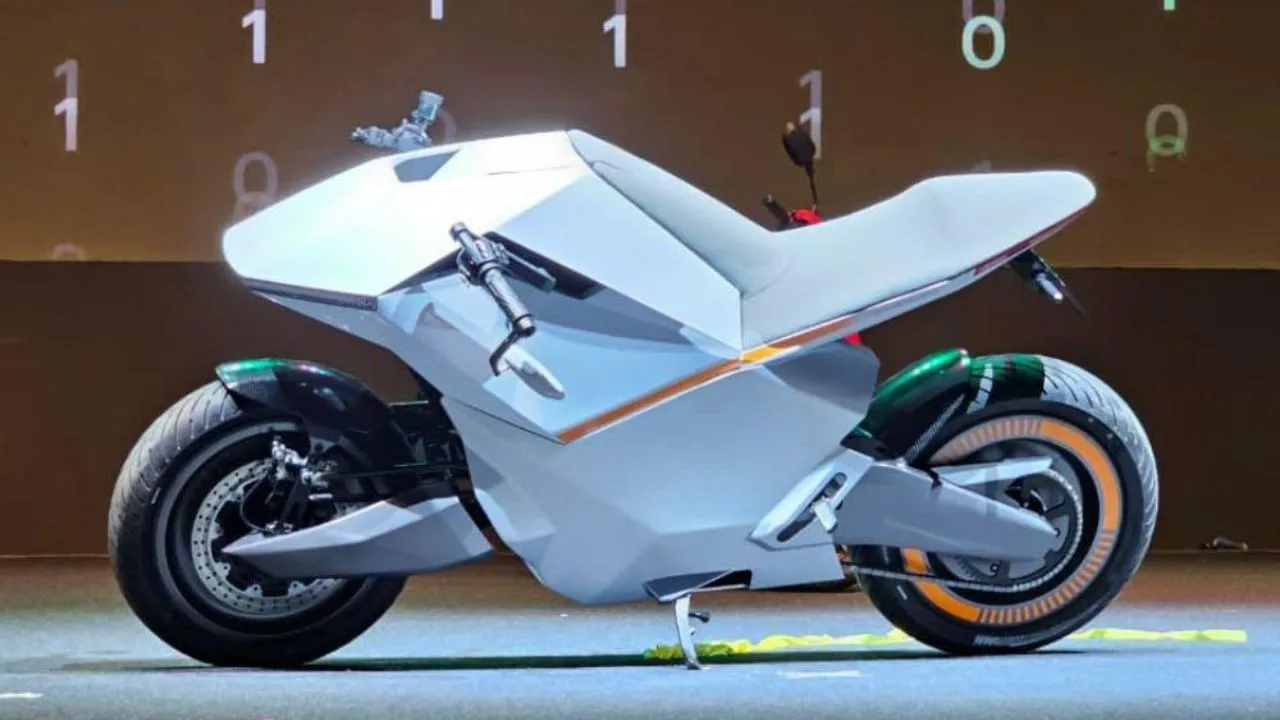
Ola Electric has sparked excitement in the two-wheeler sector yet again with the announcement of its futuristic motorcycle, the Diamondhead. It was unveiled at the Sankalp 2025 event and is scheduled to launch in CY27 as a flagship model with advanced technology, stylish design, and performance that will disrupt the premium electric motorcycle market.
Ola Diamondhead Launch Timeline
At Sankalp 2025 in Bengaluru, Ola unveiled the newest prototype of the Diamondhead. The company announced its launch in CY27, eyeing a price below Rs. 5 lakh. This positions it among the most awaited premium electric motorcycles in India.
Technology and Software
The bike will be powered by Ola’s cutting-edge MoveOS 6 operating system. The system is AI-powered and features a native guardian, virtual assistant, and ride coach. The system has been completely designed in India and enhances efficiency, battery longevity, and safety for riders. MoveOS 6 also has easy integration with ADAS, taking Ola even closer to smart mobility.
ADAS and Rider Assistance
Diamondhead will be equipped with a full ADAS suite. It comprises Adaptive Cruise Control, Lane Departure Warning, and Front Collision Alert. Terrain-specific traction management and ABS will also be available for diverse riding conditions. These features will increase safety and rider confidence, making it a new standard in the electric two-wheeler category.
Also Read: Top 5 Electric Scooters in India with Best Range – With 212Km on Full Charge
Also Read:Most Powerful CNG Cars in 2025 Now Offer Up to 31Km Mileage
Performance and Speed
The largest highlight is performance. Ola makes the claim that the Diamondhead can go from 0 to 100 kmph in a mere 2.0 seconds. This incredible speed is attested by Ola’s engineering priority, light weight, and hub-centred steering system, and this makes it a motorcycle for thrill riders.
Gen 4 Platform Advantage
Ola revealed that the Diamondhead will be powered by its new Gen 4 platform. This architecture provides a 76 percent rise in peak power, 25 percent less weight, 15 percent improved energy efficiency, and a 41 percent cut in cost from Gen 1. It also accommodates next-generation battery cell forms such as 4680, 46100, and 46120, as well as various motor technologies.
Latest News
- Weather warning – Heavy Rain, thunderstorms, lightning Alerts for 13 States Over Next 3 Days

- UP TGT Exam City Slip 2026 Released – Download at upessc.up.gov.in, Exam June 3-4

- ATM Alert: एटीएम में फंस जाए डेबिट कार्ड तो घबराएं नहीं, फटाफट यह काम करने से होगा समाधान

- Post Office Scheme – 7.5% Interest Rate, ₹5 Lakh Becomes ₹7,24,974 in 5 Years, Start with Just ₹1,000

- Best AI Video Editing Laptops Under 60,000 INR: Top Picks Her

- Best CNG Cars: पेट्रोल के बढ़ते दाम के बीच ये सीएनजी गाड़ी खरीदकर खर्च करें कम, माइलेज भी जबरदस्त

- Samsung Stable One UI 8.5 Update to Galaxy Tab S10 FE and Tab S10 FE+

- बुढ़ापे की लाठी बनेंगी ये तीन स्कीम्स, निवेश से पहले जानिए कितना मिल रहा ब्याज

- OnePlus Nord CE 6 vs Samsung Galaxy A57: Which Mid-Range 5G Phone Wins?
- Lenovo LOQ 15 Gen 11 Review: Best Budget Gaming Laptop?