


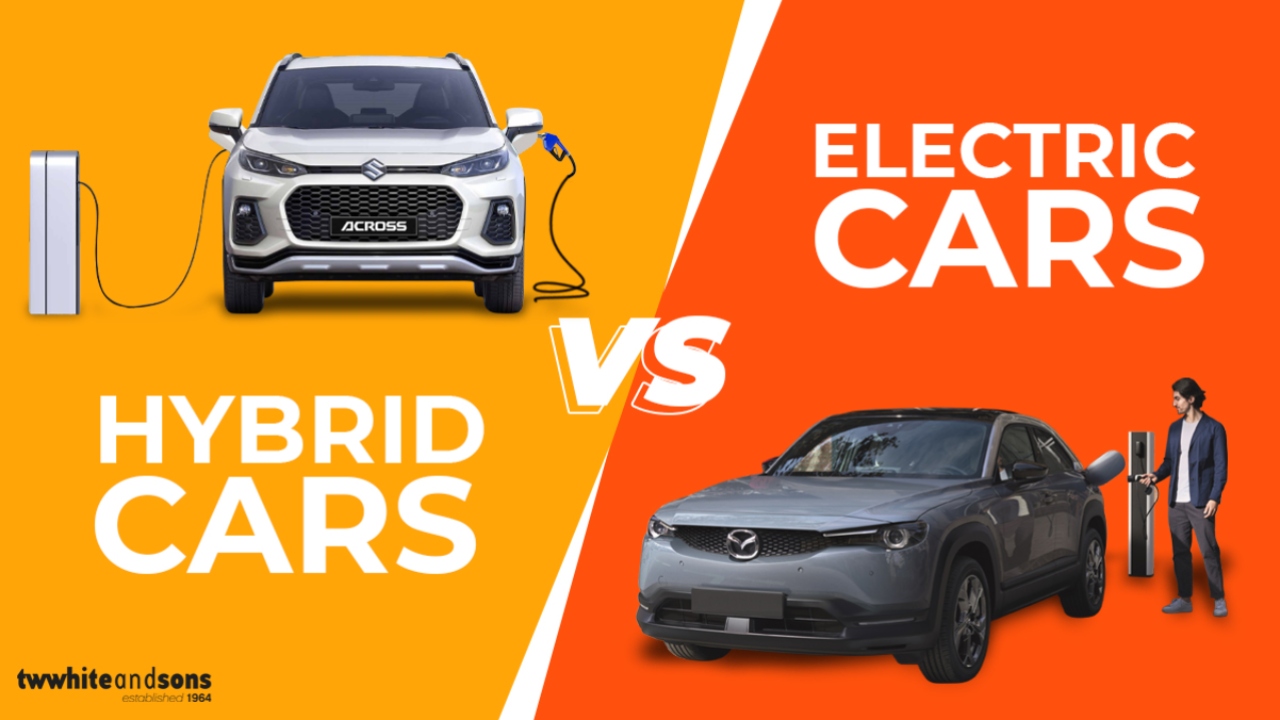
Hybrid vs Electric Cars in 2025 : The Indian automotive industry is fast-moving toward an electric future, although hybrids still have their well-placed existence. Electric vehicles are deemed to be an entirely zero-emission technology, striking a balance between the practicality of a hybrid and the fuel-efficient aspect. So the question arises as to which of these would be smart in 2025? Let us delve deeper and see who gets high marks in comparison.
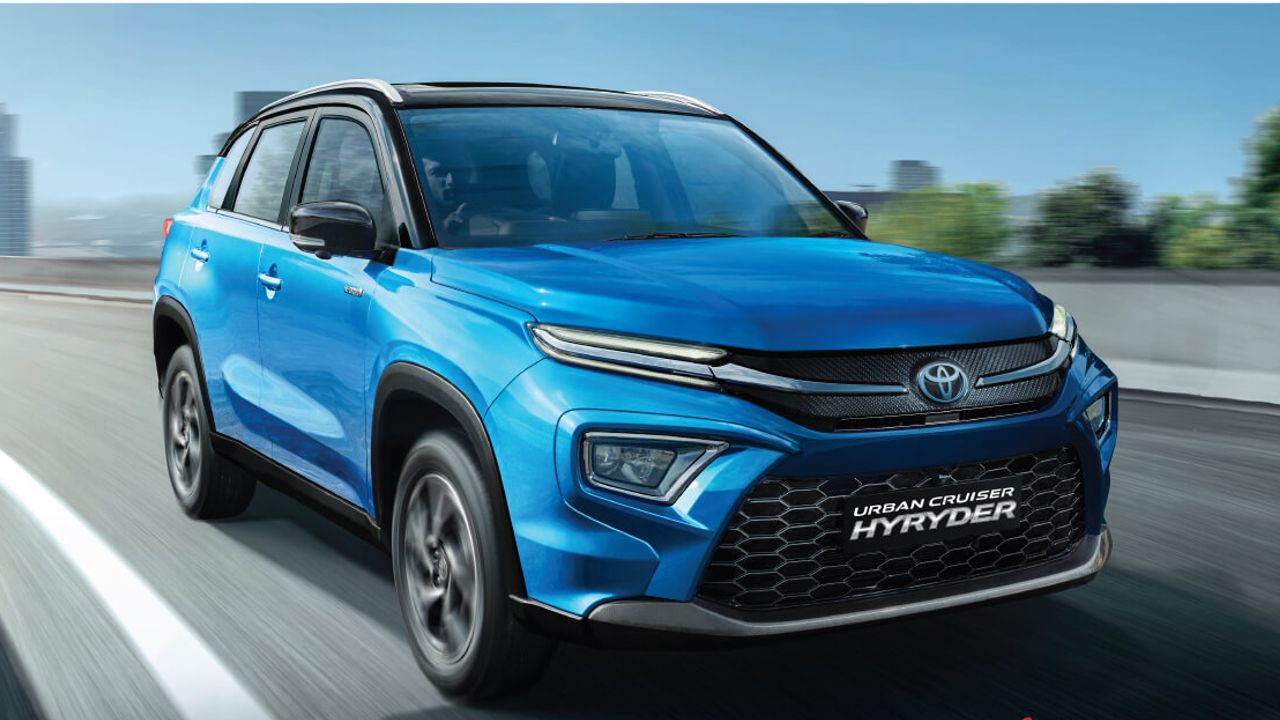
Technology distinctions concerning the functioning of hybrid vs electric cars. Hybrid cars use two sources of power internal combustion engine (petrol/diesel) and an electric motor. These hybrids work together to maximize mileage and performance. For instance, the Toyota Hyryder and the Honda City e: HEV have low-speed electric motor runs and high-speed petrol engine runs. Electric vehicle models such as the Tata Nexon EV, MG ZS EV, and BYD Seal are one hundred percent battery-operated. They surely do not require any fuel to run, just a strong battery and requisite infrastructure for charging.
Handling And Driving Experience
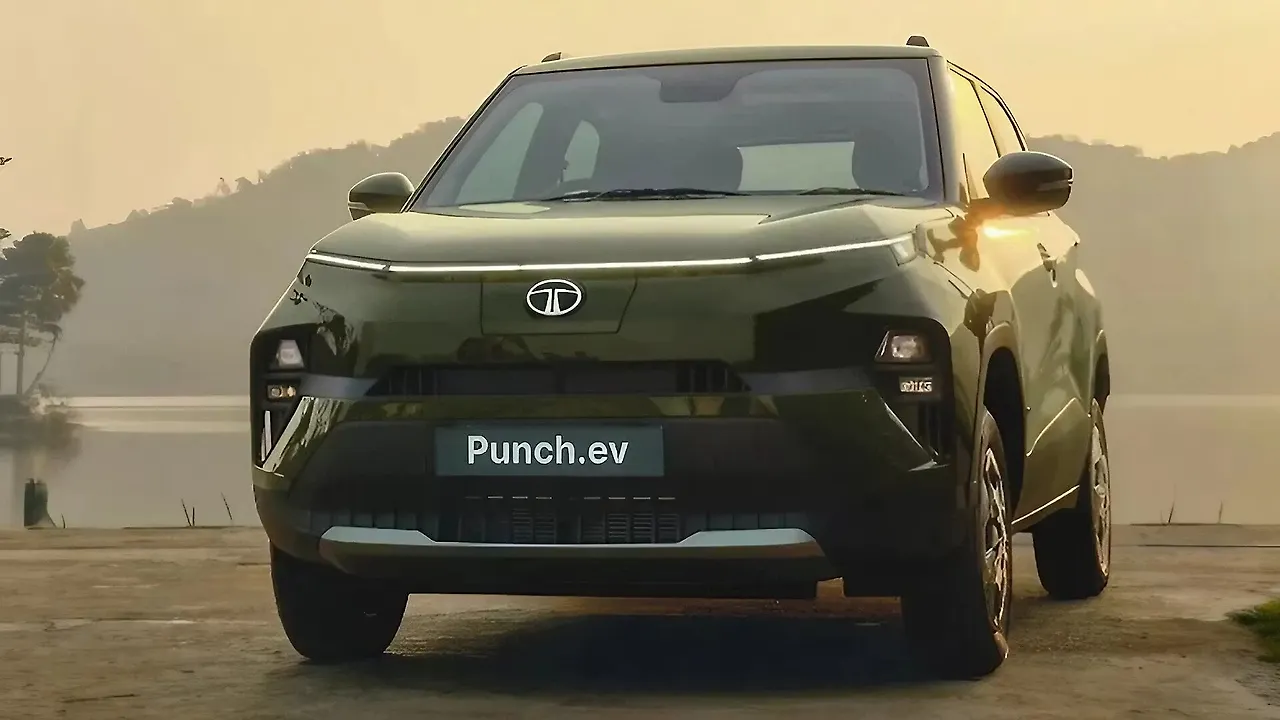
Hybrid cars have smooth acceleration and perform best in city driving. With the combination of engine and motor, it provides the advantages of instant torque and better fuel efficiency. That’s why nothing else that ever sells as much noise-free and instant torque gets a great advantage over an electric. These EVs become the quickest cars to speed up with no maintenance, examples being the Hyundai Ioniq5 or the Tata Punch EV. In long-distance travel, moreover, the hybrids benefit from the ubiquitous refueling at fuel stations; charging for EVs is not yet so widely accepted.
Mileage And Efficiency
In its mileage, the hybrid car does deliver a maximum of about 25-28 km/l, which almost doubles petrol. An electric car ranges from 300 to 600 km on a single charge, with range-affecting factors like driving habits and AC usage. This means the city user will find EVs economical, what with the price of electricity being far less than petrol. Otherwise, charging takes a considerable amount of time and becomes problematic when out on its own on a long-distance trip.
 Maintenance And Running Cost
Since the hybrid has two types of systems, it involves complicated maintenance, but the longevity of its batteries is compromised relative to that of EVs.With no oil to change, no clutches to wear, and no gears to worry about, an EV has next to no maintenance. Nevertheless, with respect to running costs: ₹5-₹6/km for hybrids, ₹1-₹1.5/km for electric cars. Definitely, running-wise, EVs, better than hybrids.
Price And Availability
Hybrid cars are expected to be cheaper than other categories in 2025, between ₹15 lakh and ₹30 lakh, and electric cars in this category will be offered from ₹12 lakh to ₹60 lakh.
Inroads have been secured by the early inclusion of budget EVs in the Tata Tiago EV and Citroen eC3 sub-₹10 lakh category for mainstream mobility.
The choice of hybrids is significantly less, and they reside in the luxury segment, comprising cars such as the Toyota Innova HyCross Hybrid or Maruti Grand Vitara Hybrid.
Charging Infrastructure And Practicality
For electric cars, the biggest challenge is the charging infrastructure. The fast charging network in the metropolis of India may have undergone miraculous improvement by 2025, but there are gaping holes in the rural and highway territories. The hybrid cars do not need charging; they charge their battery using regenerative braking. So, if you do short-distance commuting every day, an EV is ideal. But if you do a lot of highway travelling, a hybrid is more suitable.
Environmental Impact
Electric cars have zero tailpipe emissions that contribute significantly to cleanliness. However, there emerges a carbon footprint due to battery manufacturing and disposal. Hybrid cars promote efficient fuel economy, helping lower emissions, yet they cannot be considered green. Through various government subsidies and perks by 2025, the induction of EVs is set to bring environmentally sustainable mobility much nearer.
 Which Option Is the Smarter Choice in 2025?
An electric car, if one is to consider environmental friendliness, maintenance-free comfort, and tasteful experience with technology, would definitely win over, and even more for the urbanites. However, hybrids offer a more rational and joyful object should long drives, convenient refueling, and balanced on-road performance are the necessities.
Rapid developments are being seen on both fronts come 2025. The hybrid car would command its space in a transition phase, while EVs would symbolize a smart revolution of the future. At the end of the day, it is about the lifestyle, finances, and driving habits, whereby the intelligent choice is to make one’s life easy for any journey.