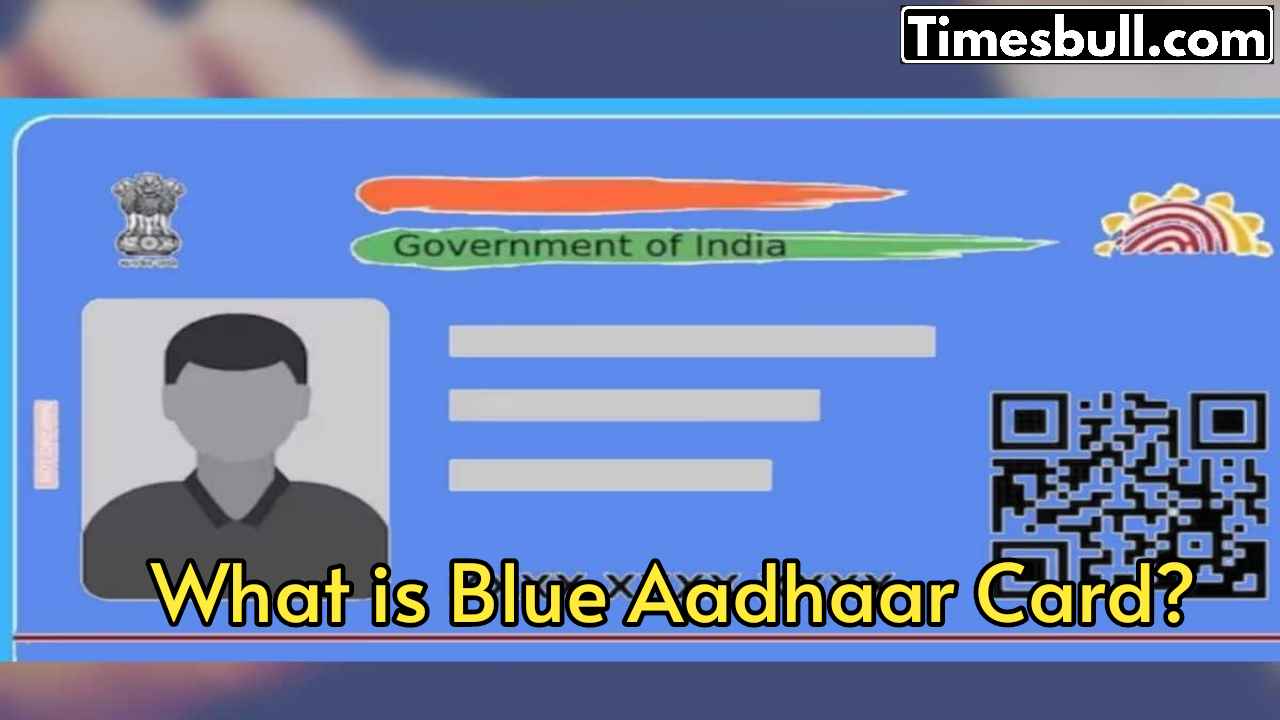
Blue Aadhaar Card: The Aadhaar card is the most widely used identity document in the country. People are typically used to seeing the white Aadhaar card, printed on paper and coated with plastic. However, recently, another type of Aadhaar card has been gaining widespread attention, known as the blue Aadhaar card.
Many people, upon hearing the name, think it’s a unique facility or that it requires some extra identification. Well, that’s not the case. Blue Aadhaar is actually made for a different category. Let’s tell you who gets a Blue Aadhaar card and how different it is from the white Aadhaar card.
How is blue Aadhaar different from white Aadhaar card?
Currently, two types of Aadhaar cards are issued in India. The blue Aadhaar card differs from the white Aadhaar card only in appearance. While the white Aadhaar card comes in a standard format, the blue Aadhaar card is specially designed for children. It is light blue in color and is officially called the Child Aadhaar card by the UIDAI. One major difference is that it does not include biometric information.
Because young children’s fingerprints and iris scans change constantly and are not static, the white Aadhaar contains biometrics. However, the blue Aadhaar only records information such as a photo, date of birth, and the parents’ Aadhaar number. Furthermore, the Baal Aadhaar is created for children under the age of five. Once the child turns five, the biometrics must be updated again by the UIDAI.
Whose blue base is made?
Blue Aadhaar is issued for children under the age of five. The process is simple. One parent must have an Aadhaar. The child’s birth certificate is requested during the application. The child’s photo is captured there, and the remaining information is provided by the parents. Because it doesn’t involve biometrics, the process is faster.
This Aadhaar serves a variety of purposes, such as school admissions and registration for government schemes. When a child turns five, it is converted to a standard Aadhaar by updating biometrics. A second biometric update is required at age ten. Thus, the blue Aadhaar serves as a child’s initial identification card, eventually becoming a standard Aadhaar.