


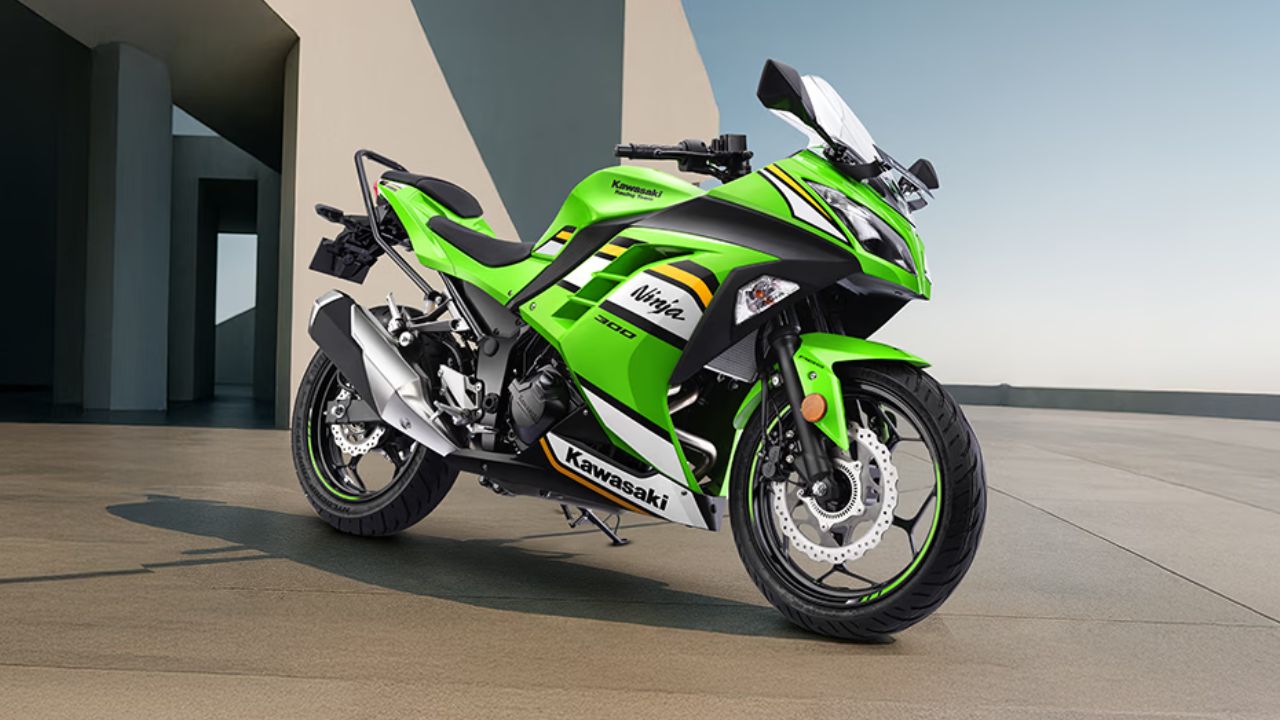
The Kawasaki Ninja 300 is making a comeback at a price of ₹3.17 lakh (ex-showroom) after the recent GST reduction, making it slightly more accessible than before. For a long time, the Ninja 300 has been a top choice for those entering the world of sport bikes. Let’s find out why the 2025 Kawasaki Ninja 300 remains one of the most popular options in the entry-level sport bike segment.
Read more: KTM Duke 390 Or BMW G310R – Which Naked Street Bike Rules 2025?
Price and Value
The 2025 Kawasaki Ninja 300 is now priced starting at ₹3.17 lakh (ex-showroom). This price is lower than before due to the recent GST reduction, making it even more attractive to buyers. This Japanese sports bike returns with its sharp looks and twin-cylinder power, making it a favorite. This pricing makes it a competitive option in its segment, especially for young riders looking to buy their first sport bike.
Engine and Performance
Powering the Ninja 300 is a 296cc liquid-cooled, parallel-twin engine. This refined motor produces 39 hp of power at 11,000 rpm and 26.1 Nm of torque at 10,000 rpm, mated to a 6-speed gearbox. The engine is smooth and high-revving, offering a lively performance. The Ninja 300 can accelerate from 0 to 100 km/h in approximately 6 seconds and reach a top speed of around 160 km/h. Kawasaki claims an ARAI-certified mileage of 30 km/l for the Ninja 300. This performance is like that of a young athlete – fast and capable of going the distance.
Dimensions and Weight
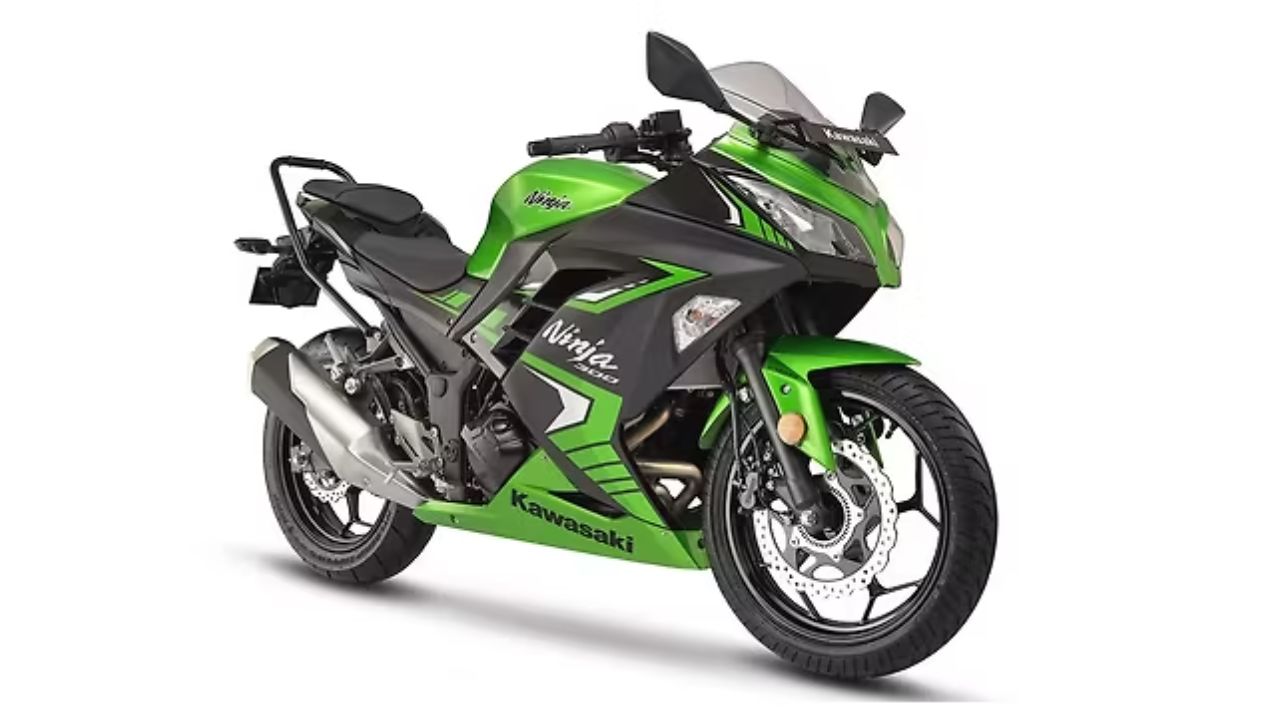
The bike utilizes a tubular diamond steel frame, designed for a balance between agility and stability. It measures 2,015 mm in length, 715 mm in width, and 1,110 mm in height, with a wheelbase of 1,405 mm. The ground clearance is 140 mm, while the seat height is 785 mm. With a curb weight of 179 kg and a 17-liter fuel tank, the Ninja 300 is practical even for long rides. These dimensions are like those of a seasoned dancer – perfect balance in every movement and control in every step.
Read more: Oppo Find X9 Pro: A Flagship King with Stunning Performance and Hasselblad Lenses
Suspension and Braking
Suspension duties are handled by a 37 mm telescopic fork at the front and a bottom-link Uni-Trak gas-charged rear shock with 5-way spring preload adjustability at the rear. For braking, the Ninja 300 is equipped with single-petal discs at both ends. The front features a 290 mm disc with a dual-piston caliper, while the rear has a 220 mm disc, also with a dual-piston caliper. This braking system is like a reliable assistant – ensuring your safety in every situation.