


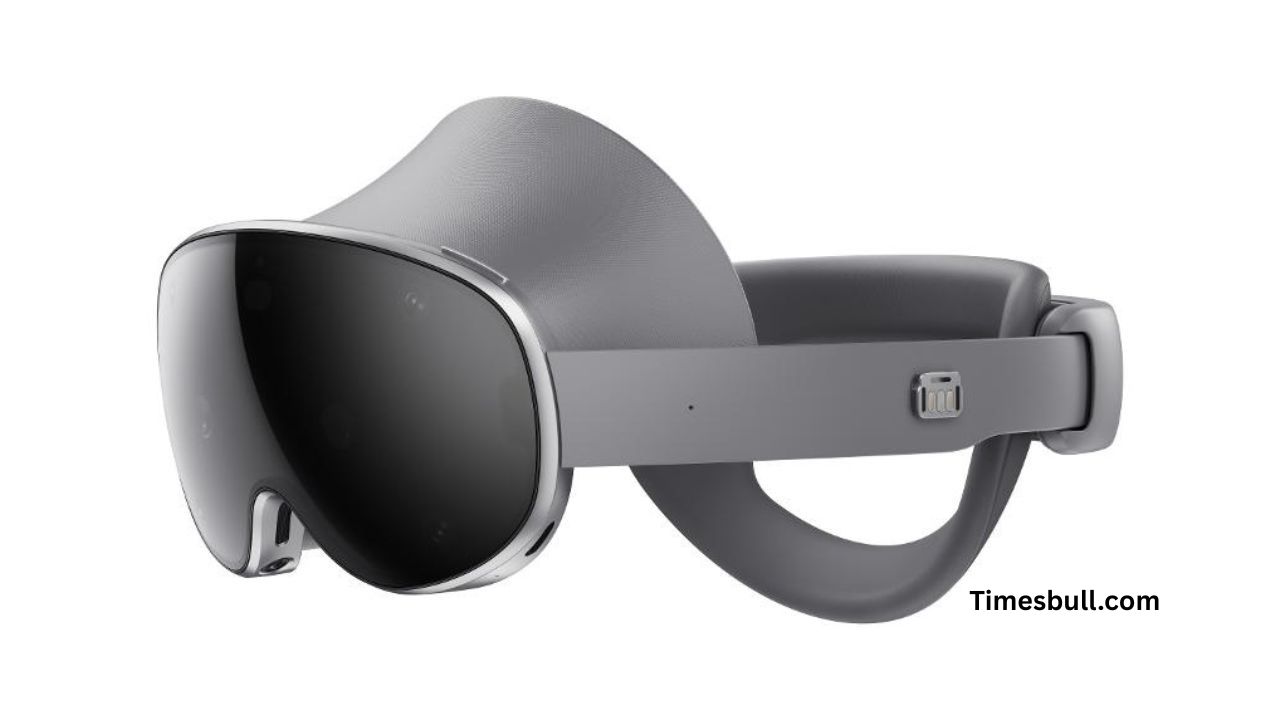
Galaxy XR headset: Samsung officially announced the Galaxy XR, the firm’s first-ever AI-powered headset created in partnership with Google and Qualcomm. Based on the new Android XR platform, this latest innovation is set to revolutionize the way people engage with extended reality by combining artificial intelligence, immersive graphics, and wireless connectivity.
Read More: iPhone 15 vs Samsung Galaxy S23: Two Flagship Comparison
AI That Sees, Heats, and Understands
The Galaxy XR is the first headset to have Google’s Gemini AI natively built into its platform. Unlike other assistants, it engages with voice, vision, and gesture, interpreting what users hear and see in real-time. From navigating through Google Maps 3D, recognizing landmarks with Circle to Search, or suggesting local attractions, Galaxy XR behaves more like a genuine personal companion. The AI can even transform 2D photos and videos into 3D, making daily moments three-dimensional ones that are alive and touchable.
Smarter System-Level Integration
Samsung has infused AI into the system design of the Galaxy XR in such a deep way that natural and seamless interactions become possible. Rather than having to use commands, the AI can read intent and context, offering a more human response. This kind of intelligence means users can multitask, like looking up real-world objects or handling virtual windows, without ever losing the flow of their experience.
Android XR Platform: The New Era of Mixed Reality
powered by Android XR, the Galaxy XR is a part of Google’s ambition for an open, shared XR environment. It is designed to run on a broad number of mixed reality (MR) and augmented reality (AR) devices, such as future AI-driven glasses. Users can leverage existing Android apps in an instant, so entry into XR feels seamless and familiar. For creators, the open architecture is backed by OpenXR, WebXR, and Unity, which enables effortless development of new applications that redefine the boundaries of immersive technology.
Hardware and Display Excellence
In the center of the Galaxy XR is the Snapdragon XR2+ Gen 2 chip, accompanied by 16GB RAM and 256GB internal storage. The headset has a Micro-OLED display with a resolution of 3,552 x 3,840, spanning 95% of the DCI-P3 color gamut and featuring refresh rates of 60Hz, 72Hz, and 90Hz. Visuals are clear, lifelike, and wide-ranging with a 109° horizontal and 100° vertical field of view.
It also features a high-end 6.5MP camera for 3D recording, two pass-through cameras, six tracking sensors, four eye-tracking cameras, a depth sensor, and iris recognition for secure login.
Audio, Battery, and Connectivity
The Galaxy XR provides an immersive audio experience through two two-way speakers (woofer + tweeter configuration) and six beamforming microphones. It supports MP3, FLAC, AAC, and Dolby Atmos formats, and supports 8K HDR10 video at 60fps. Connectivity is managed by Wi-Fi 7 and Bluetooth 5.4, with ultra-low latency. The 545g (with cushion) headset has a removable battery pack weighing 302g that can provide up to 2 hours of typical use or 2.5 hours of video viewing and still work while it is charging.
Pricing and Availability
The Samsung Galaxy XR goes on sale on October 21 in the United States and on October 22 in South Korea for $1,799. The Galaxy XR Travel Case and Controller may be purchased separately for $249.99 each.
With its AI-native technology, high-end hardware, and support from Google and Qualcomm, Galaxy XR paves the way for the next generation of AI-powered mixed reality experience, a dramatic step forward for Samsung’s XR ecosystem.