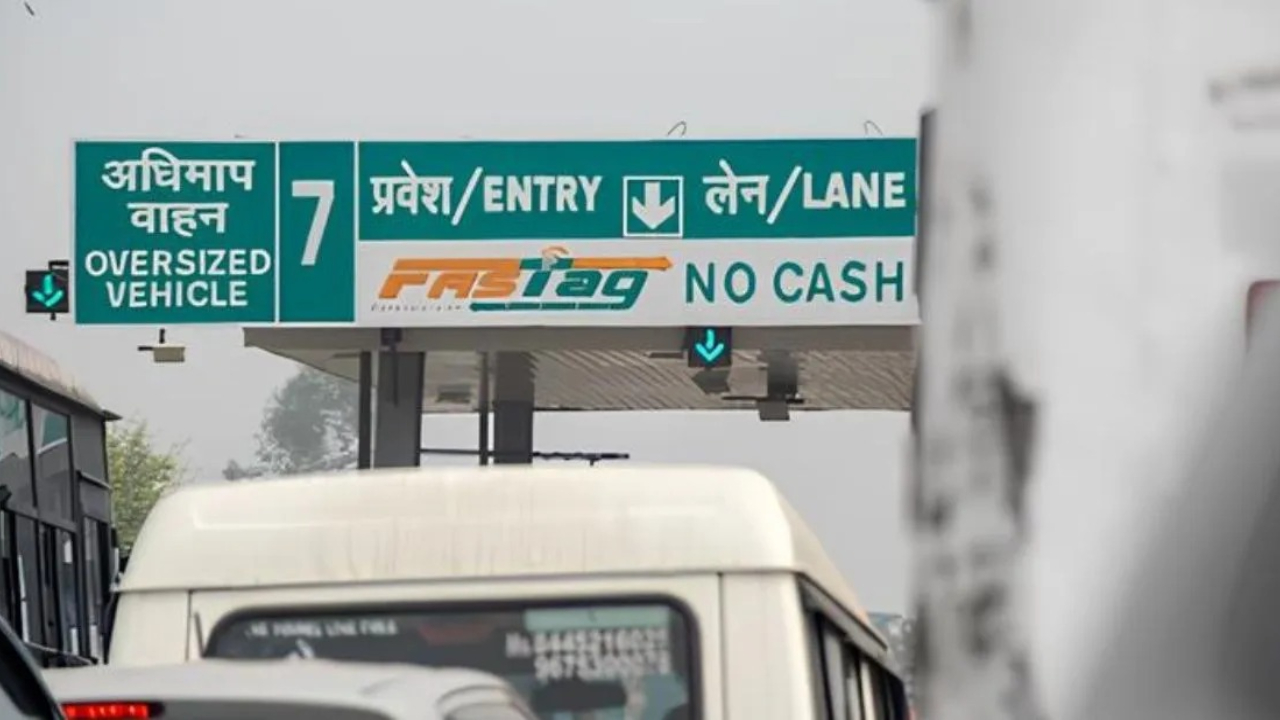
FASTag: Big news for FASTag users. Insurance companies are now keen to get involved in the toll collection system. They’ve suggested to the central government that they should also be allowed to issue FASTag stickers for vehicles. Some senior officials from the insurance sector have even had private talks with the Ministry of Road Transport and Highways to discuss this matter. This move is important because the number of FASTag transactions hasn’t seen much growth over the last year.
Concerns and requests from insurance companies
Insurance industry representatives have met with the ministry to voice their worries. Their primary request is to be allowed to issue FASTag stickers as well. They argue that the insurance industry is crucial throughout a vehicle’s life cycle. Since insurance companies already have licenses to manage public funds, it makes sense to extend the authority to issue FASTags to general insurance firms too. These talks are still in the early phases.
Current FASTag system and regulations
At present, FASTag stickers or RFID tags are utilized on vehicles for toll payments, allowing for digital toll collection.
Who issues it: Right now, banks are the ones issuing FASTag stickers. Additionally, some fintech companies like Amazon Pay or Park Plus have teamed up with banks such as ICICI Bank and IDFC First Bank to distribute these stickers.
Operations: The FASTag system in India is managed by the National Payments Corporation of India (NPCI). It functions under the National Electronic Toll Collection Platform in collaboration with the Indian Highway Management Company (IHMCL), which is backed by the National Highway Authority of India (NHAI). Essentially, the central government and NPCI work together to run the digital toll collection system in India.
Has there been a halt in Fastag transactions?
According to reports in July, FASTag transactions had stagnated due to its low usage in payment mechanisms other than highway toll payments. According to NPCI data in October 2025, 360 million transactions were reported on the NETC system.
These transactions amounted to approximately Rs 6,600 crore. However, this number has remained in this range for the past year, meaning there has been no significant increase in transactions. However, bringing insurance companies into this system will require a series of discussions and deliberations.
Why are insurance companies interested?
This move could be particularly attractive for new-age general insurance companies, as motor or vehicle insurance represents a significant portion of their business. For example, Bengaluru-based Acko generated motor insurance premiums worth Rs 633 crore between April and October 2025. Its total insurance premium collections during the same period were Rs 1,407 crore. For Go Digit General Insurance, motor premiums during the same period were Rs 3,865 crore, while its total premium collections were ₹5,885 crore. This shows how important the automotive business is to these companies.
Latest News
- Apple MacBook Neo Deal Alert: Get It For Under ₹58,000 on Amazon Right Now

- Pakistan Attack: आत्मघाती हमले से दहला पाकिस्तान, 23 लोगों की मौत, 50 से ज्यादा घायल, जानें

- Honor Magic 9 Series Leaks: Flagship Upgrades with Massive 8,000mAh Battery and 200MP Cameras

- Motorola Edge 60 Fusion Review: Mid-Range King or Outdated?

- FD Update– Breaking Your FD Early? Know the consequences

- Bank Holiday–RBI Announces Closure of SBI, HDFC and All Banks Next Week, Save the Dates

- Samsung Galaxy S26 Ultra Amazon Deal – Get ₹23,509+ Discount with Bank Offers and Exchange Benefits

- Best Scooters For College Girls 2026 – Perfect Mix Of Mileage, Style And Lightweight Design
- Kodak Matrix QLED Google TV 2026 Series Launched in India Just Under 10,999

- Senior Citizen FD Rates: सीनियर सिटीजन को यहां से मिल रहा बंपर ब्याज, जल्द करें निवेश