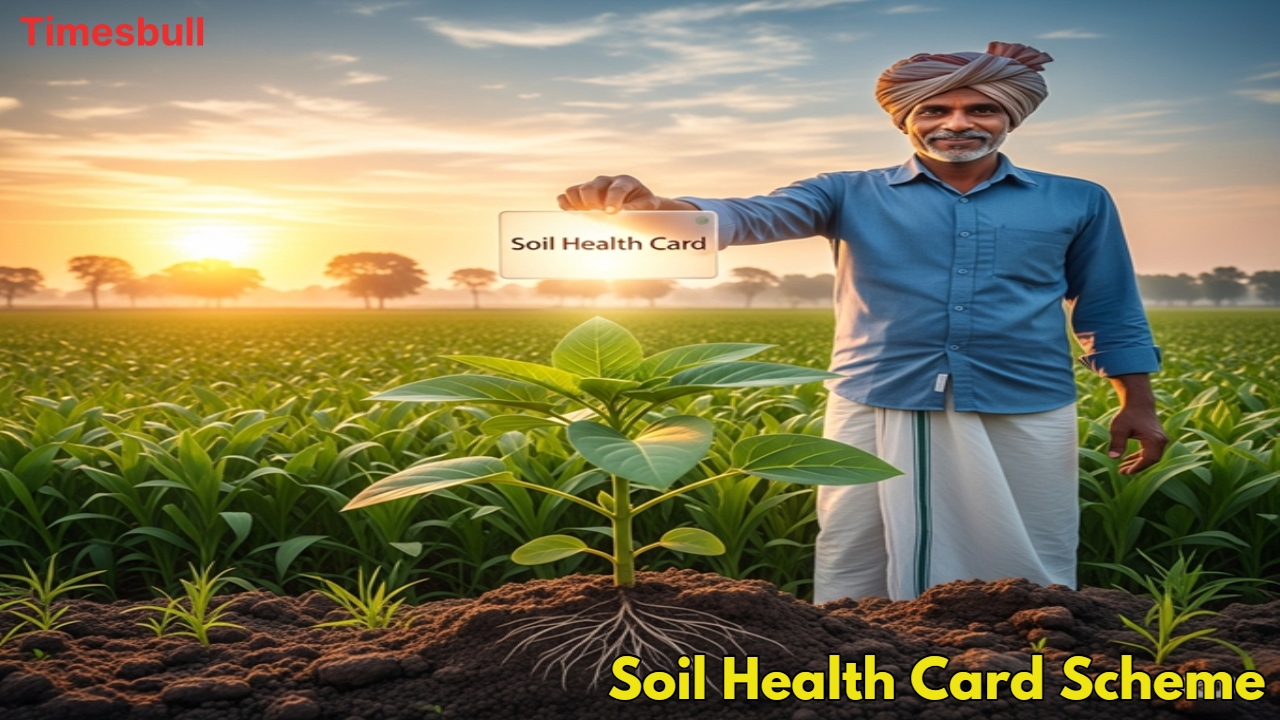
The government’s Soil Health Card Scheme has brought a big gift for you. Through this soil health card, you can know the complete condition of the health of your land and use the right amount of fertilizer. Let’s know what this soil health card is and how it can increase your crop yield as well as reduce your cost.
What is the Soil Health Card Scheme
The Soil Health Card Scheme is a government initiative aimed at giving scientific information to farmers about the soil of their land. It was launched on 19 February 2015 by Prime Minister Narendra Modi from Suratgarh, Rajasthan. Under this scheme, the government gives farmers a soil health card for their land every two years, which contains all the important things related to the health of the soil. So far, these cards have been given to more than 25 crore farmers. This scheme has now also been included in the ‘Rashtriya Krishi Vikas Yojana’.
What information is there in the soil health card
This card is given to farmers separately for each of their lands. In this, 12 important parameters of the soil are checked, such as:
Main nutrients: Nitrogen, Phosphorus, and Potassium (NPK)
Other nutrients: Sulfur, Zinc, Boron, and Iron
Soil quality: Organic Carbon, pH, and Electrical Conductivity
This report tells the current condition of the soil and helps farmers understand which nutrients are lacking in their land.
How do farmers get their benefits?
This card works like a guide for farmers. On the basis of soil testing in the card, farmers are advised how much and which fertilizer, organic manure, and bio-fertilizer to use for which crop. This prevents farmers from applying more fertilizer unnecessarily, which reduces their cost and improves the yield. This scheme motivates farmers to adopt sustainable agricultural practices.
Impact of the scheme
This scheme has proved to be a boon for millions of farmers across the country. Till July this year, more than 25 crore soil health cards have been given to the farmers. An amount of ₹1,706.18 crore has also been given to the states and union territories till February 2025 to support this scheme. Apart from this, a large-scale soil survey has also been done across India. 1,987 village-level soil fertility maps have also been created in 21 states and union territories, which help farmers to make the right decisions.

Vikram Singh
Author at TimesBull covering breaking news and current affairs.
Related Stories
 Business
 Business
 Business
 Business
 Business
 Business
 Business
 Business
 Business
 Business