


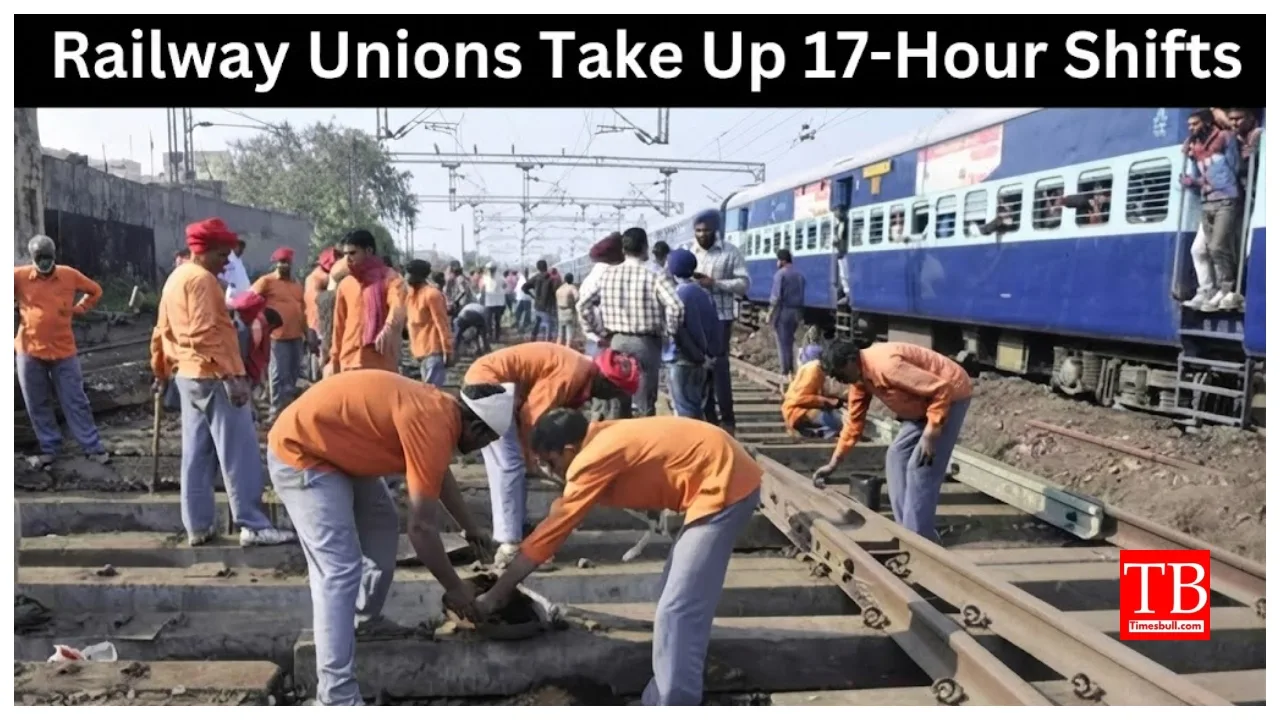
8th Pay Commission 2026: The 8th Pay Commission is currently a subject of much discussion, raising expectations among employees regarding salaries, allowances, and arrears. Amidst these discussions, several critical issues concerning railway employees have also surfaced.
These include working hours, overtime, TA (Travelling Allowance) and OT (Overtime) payments, working conditions for trackmen, and the long duty hours assigned to running staff. Employee unions recently prioritised these issues at a Railway Board meeting, with particular emphasis on loco pilots’ duty hours.
Why work beyond the 9-hour duty limit?
Shiva Gopal Mishra, General Secretary of the All India Railwaymen’s Federation, raised the issue of extended duty hours for loco pilots during the meeting. He questioned why employees are being made to work for 14, 16, or even 17 hours when regulations stipulate a duty limit of only 9 hours. He stated that extending duty hours based on operational necessity is inappropriate; prolonged work puts pressure on employees, which could potentially impact the safety of train operations.
Why is there a delay in TA and OT payments?
Shiva Gopal Mishra also highlighted the issue of delays in TA and OT payments for employees. He noted that the Railway Board had reported that it had already spent approximately 95 per cent of the railway budget—totalling around ₹2.90 lakh crore. Consequently, the employee union questioned why TA and OT payments are not being made on time despite such high expenditure and the employees’ continuous work.
This issue is significant in the context of the 8th Pay Commission, as an employee’s total remuneration comprises allowances and other payments in addition to their basic salary.
Demand to Limit Trackmen’s Workload
Citing the working conditions of trackmen, the employees’ union demanded that they not be required to cover more than 12 kilometres in a single day. Currently, trackmen cover distances of up to 20 kilometres. The union has proposed reducing this limit and has presented the demand to the Railway Board.
Why are running staff required to work excessive duty hours?
The union also expressed concern regarding the working hours of ‘running staff’ (train crew), noting that while employees may be required to work 11 to 12 hours under certain circumstances, in some cases they are being made to work up to 17 hours. According to the union, such long duty hours can cause distress to employees and pose a serious issue regarding the safety of train operations.
Work Hours and Facilities as Important as Salary
Overall, discussions during the Railway Board meeting went beyond just salary or the 8th Pay Commission; priority was also given to issues such as overtime payments, working hours, TA (Travelling Allowance) and OT (Overtime) payments, workload limits for trackmen, and safety in operations.