


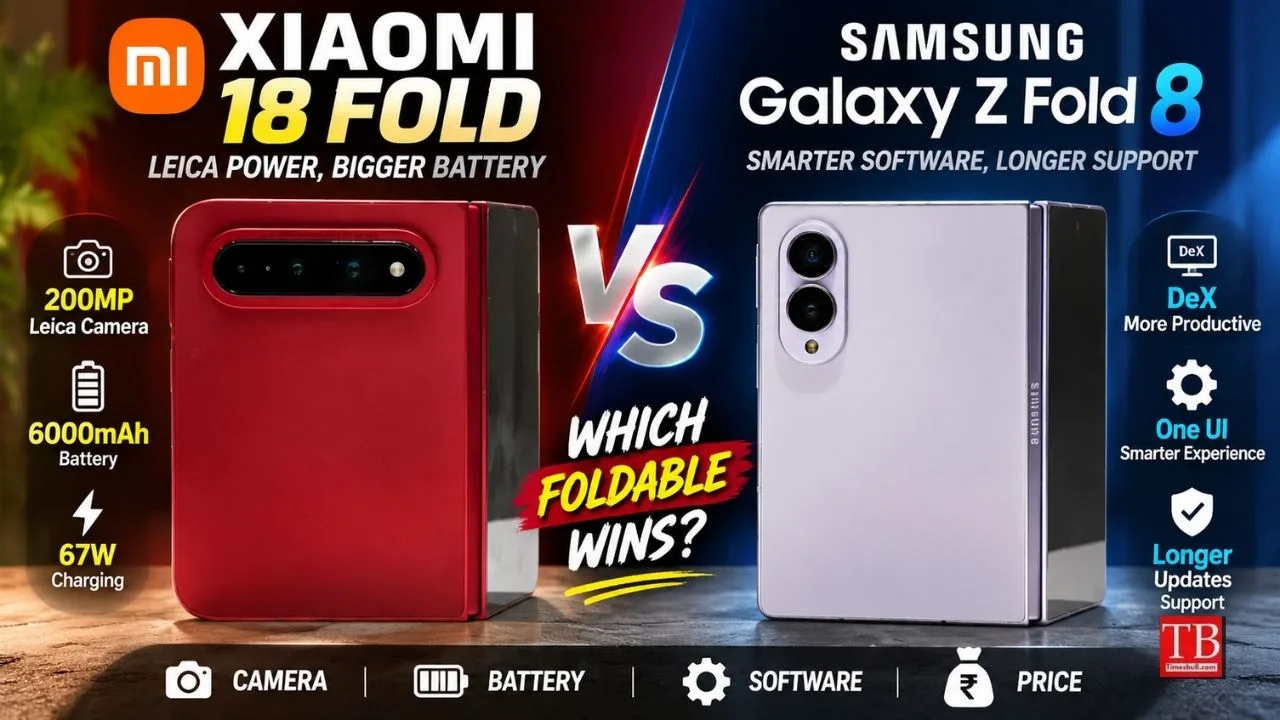
Xiaomi 18 Fold vs. Galaxy Z Fold 8: If you are considering buying a foldable phone, both the Xiaomi 18 Fold and the Samsung Galaxy Z Fold 8 are excellent premium options. While Xiaomi emphasises robust hardware features—such as a 200MP Leica camera, a 6000mAh battery, and 67W charging—Samsung focuses on superior software, a strong ecosystem, and long-term software support.
The Xiaomi 18 Fold delivers powerful hardware with its 200MP Leica camera, 6000mAh battery, and 67W charging capabilities. In contrast, the Galaxy Z Fold 8 places greater emphasis on software, DeX functionality, and extended update support. Let’s find out which one is better.
Xiaomi 18 Fold vs. Galaxy Z Fold 8: Design and Build Quality
Starting with the design, the Xiaomi 18 Fold has been crafted with a premium aesthetic. It features Dragon Crystal Glass 3, a glass back, and an aluminium frame. The phone also boasts an IP58/IP59 rating, providing protection against dust and water. On the other hand, the Galaxy Z Fold 8 utilises Gorilla Glass Ceramic 3, Gorilla Glass Victus 2, and Armour Aluminium.
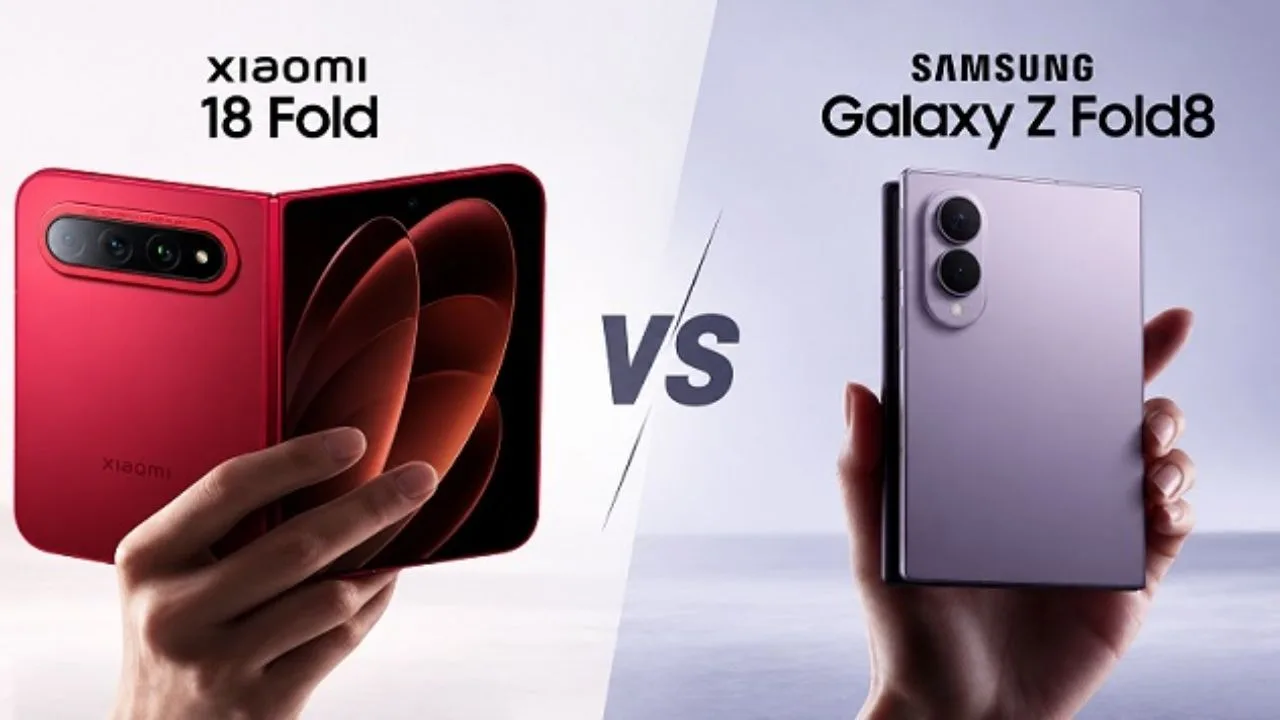
Xiaomi 18 Fold vs. Galaxy Z Fold 8 Display
Regarding the display, the Xiaomi 18 Fold comes with a 7.58-inch LTPO AMOLED inner display that supports a 120 Hz refresh rate. It offers a peak brightness of up to 4000 nits and includes features such as HDR10+, Dolby Vision, and HDR Vivid. The Samsung Galaxy Z Fold 8 features a 7.6-inch Dynamic LTPO AMOLED 2X panel; it also supports a 120 Hz refresh rate and offers a peak brightness of up to 3000 nits. The Xiaomi 18 Fold features a 5.38-inch LTPO AMOLED cover display with a 120 Hz refresh rate and 4,000 nits of brightness, whereas the Galaxy Z Fold 8 comes with a 5.5-inch Dynamic LTPO AMOLED 2X cover screen.
Xiaomi 18 Fold vs. Galaxy Z Fold 8: Processor and Performance
Regarding the processor, the Xiaomi 18 Fold is powered by the XRing O3 3nm 10-core processor, while the Galaxy Z Fold 8 features the Snapdragon 8 Elite Gen 5 3nm chipset. Both are flagship-grade processors designed to handle multitasking, gaming, and demanding applications.
The Xiaomi phone offers up to 16GB of RAM and up to 1TB of storage, utilising UFS 4.1 storage technology. Samsung also offers options for 16GB of RAM and up to 1TB of storage, but Xiaomi’s UFS 4.1 standard holds an advantage in terms of storage performance.
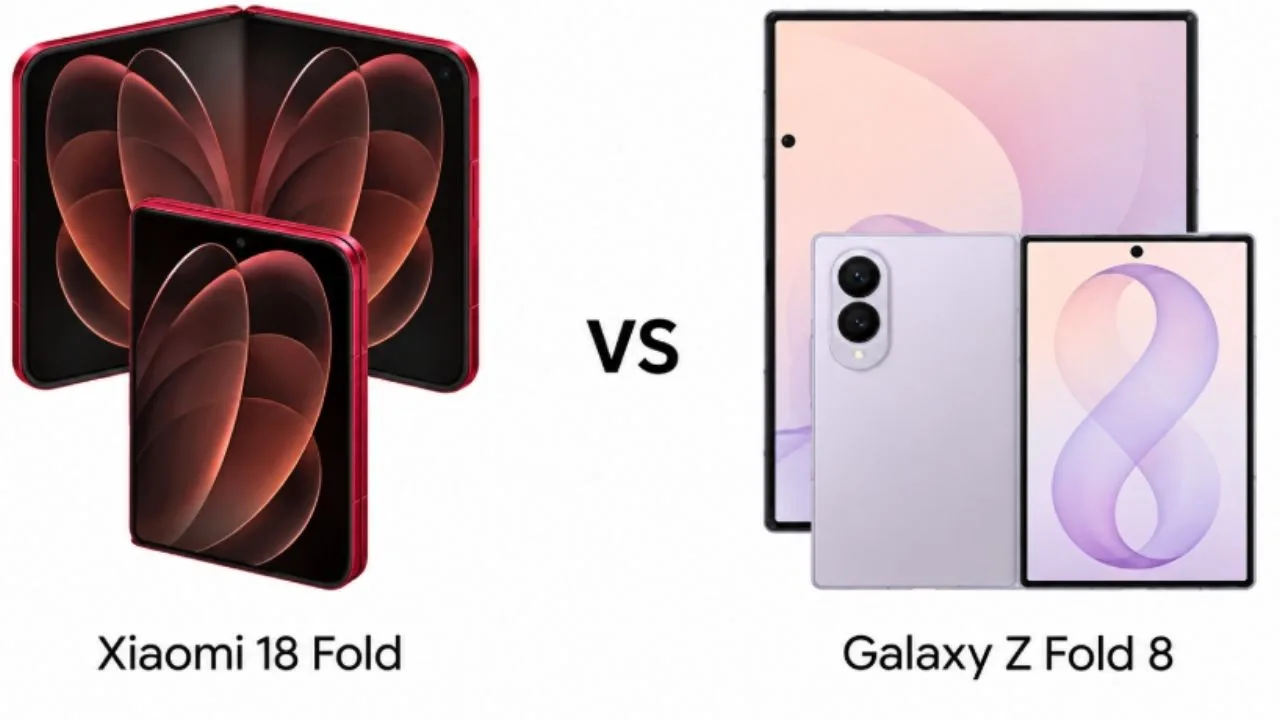
Xiaomi 18 Fold vs. Galaxy Z Fold 8 Camera
In terms of cameras, the Xiaomi 18 Fold sports a 200MP Leica camera with OIS support. It is accompanied by a 50MP telephoto camera with 3x optical zoom and a 50MP ultra-wide camera. A 16MP camera is provided for selfies.
The Galaxy Z Fold 8 features a 50MP camera with OIS. However, Samsung boasts a robust video system, supporting recording at up to 8K 30 fps and 4K 120 fps. The Xiaomi model supports 8K 24 fps and 4K 60 fps Dolby Vision video recording.
Xiaomi 18 Fold vs. Galaxy Z Fold 8 Battery and Charging
The Xiaomi 18 Fold houses a 6,000mAh battery, whereas the Galaxy Z Fold 8 comes with a 4,800mAh battery. Xiaomi also leads in the charging department. It supports 67W wired and 50W wireless charging, whereas Samsung offers 45W wired and 20W wireless charging.
Xiaomi 18 Fold vs. Galaxy Z Fold 8 Price
Regarding pricing, the Xiaomi 18 Fold is priced at approximately ₹1.55 lakh, while the Galaxy Z Fold 8 costs around ₹1.80 lakh. At this price point, Xiaomi offers hardware features such as a larger battery, faster charging, a 200MP Leica camera, and a 3x telephoto lens. In contrast, Samsung’s pricing reflects its software experience, DeX support, update longevity, and overall foldable experience.