Category: Business

Stay ahead of the curve in India’s dynamic financial landscape with Timesbull. We deliver real-time updates and in-depth analysis on Indian business, finance, and the stock markets. Get the latest BSE/NSE news, ensuring you’re always informed about market movements.

Track the pulse of the Indian economy with our comprehensive coverage of Sensex and Nifty updates. Timesbull provides crucial personal finance insights to help you manage your money effectively and make informed investment decisions.

Beyond breaking news, we offer expert market analysis and insightful perspectives on economic trends shaping India and the global economy. Whether you’re a seasoned investor, business professional, or just starting to manage your finances, Timesbull is your trusted source.

Rely on Timesbull for accurate, timely, and insightful business and finance news, empowering you to navigate the complexities of the Indian market with confidence. Visit Timesbull today to unlock your financial potential.

  • How Much Does it Cost to Print Coins and Notes? Many People Do Not Know the Answer

    How Much Does it Cost to Print Coins and Notes? Many People Do Not Know the Answer

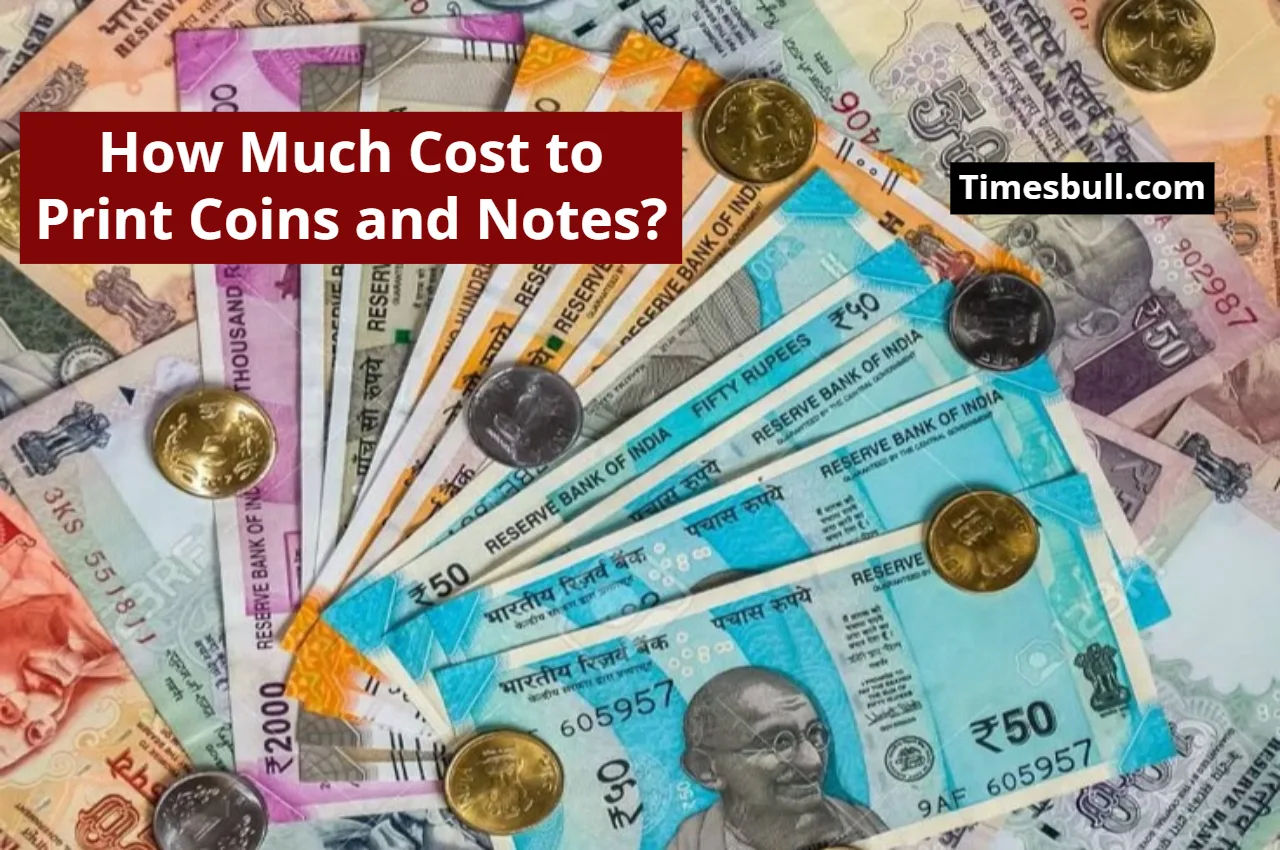
    In today’s world, money has become a basic necessity for everyone. We use money to buy everything in our daily lives, but very few people know how much it costs the government to produce the coins and banknotes we use. Sometimes this cost can be more or less than the actual value of the currency.

    Read More- Motorola G96 5G Phone with 5500 mAh Battery, 50MP Camera & Snapdragon Chipset- Grab with ₹3,000 Discount in Super Deals

    Currency production in India is a technical and expensive process, involving various costs such as metal, security features, machinery, and transportation. This is why there is always curiosity among people regarding the cost of making currency.

    How much does it cost to make coins?

    According to RTI and official data, the cost of making some low-denomination coins is more than their face value. For example, it costs approximately ₹1.11 to make a ₹1 coin. The cost of making a ₹5 coin is around ₹3.69, and the cost of making a ₹10 coin is approximately ₹5.54.

    These figures are old, but experts believe that the cost may have increased over time due to inflation and rising metal prices.

    Where and how are coins made?

    In India, coins are made in government mints, and their production involves the use of several metals, including stainless steel. The metal is melted to form sheets, and then the shape and design of the coins are created with the help of machines. This entire process is determined according to the requirements of the Ministry of Finance and the Reserve Bank of India.

    How much does it cost to print notes?

    According to data from the Reserve Bank of India, the cost of printing notes is considerably less than that of making coins. For example, it costs about ₹0.96 to print a ₹10 note. The cost of a ₹50 note is around ₹1.13, and the cost of a ₹100 note is approximately ₹1.77. Printing a ₹500 note costs about ₹2.29. In India, note printing is done by government companies like SPMCIL and BRBNMPL.

    Why do costs vary?

    The cost of producing currency depends on several factors, such as the price of raw materials, security features, printing technology, and the volume of production. If more notes need to be printed in a given year, the total cost also increases. For example, the cost of printing notes has increased in recent years.

    Read More- EPF Balance Check Online – Check your PF balance in minutes from home – Here are 3 easy ways

    Does the government incur losses?

    The government may sometimes incur a small loss on smaller denominations of coins, but this is offset by the lower cost of producing larger denominations and banknotes. Therefore, the entire currency system is not considered a loss-making venture.
  • Children Future Will Be Secure – This LIC Scheme is Making People Rich – Read Details

    Children Future Will Be Secure – This LIC Scheme is Making People Rich – Read Details

    LIC Scheme: Nowadays, as soon as a child is born, parents start worrying about their future. They then begin to consider investing in a special scheme. If you are also thinking about investing, this scheme can be very useful for you. Currently, LIC is operating a special scheme to make people wealthy. This scheme is called the Amrit Bal Scheme.

    This LIC scheme is designed to secure the future of children. Through this scheme, parents can accumulate a substantial amount of money for their children, which can be used in the future for their education, marriage, or other necessary expenses. This is a non-linked life insurance policy that provides insurance along with guaranteed returns.

    For which age group of children is this plan?

    This policy can be taken for children aged 30 days to 13 years. The child’s age should be between 18 and 25 years at the time of policy maturity. The premium payment period can be 5, 6, or 7 years for shorter policies and a maximum of 10 years. Additionally, you can also choose the single premium option, where the minimum sum assured is Rs. 2 lakh. The maturity amount can be received in installments like a money-back plan, in the 5th, 10th, or 15th year.

    Read Here: RRB NTPC 12th Level Application Status 2025 — Check Accepted or Rejected Status rrbcdg.gov.in

    Read Here: CTET Feb 2026 – When will Release February 7 & 8 Provisional Keys and Result?

    How will the return be received?

    In this LIC scheme, a guaranteed return of Rs. 80 is given for every Rs. 1000 of sum assured. This amount is added to the policy’s sum assured. For example, if you take out insurance of Rs. 1 lakh in your child’s name, LIC adds a guaranteed Rs. 8000. This bonus is added at the end of each policy year and continues to accumulate throughout the policy term.

    How to buy the LIC policy?

    This policy can be purchased both online and offline. The minimum sum assured is ₹2 lakh, and there is no upper limit. Premium payment options include monthly, quarterly, half-yearly, and annual installments. Additionally, you can choose a single premium or limited premium option, along with a waiver of premium benefit rider.

    Read Here: 2 new 7-seater SUVs to be launched in February 2026 – Perfect Combination of Family and Luxury

    Read Here: Rs 3,000 to Be Deposited in Crores of Women’s Accounts Before Holi, Apply Now

    Benefits of taking this policy

    The Amrit Bal Scheme provides a guaranteed bonus and sum assured upon maturity. Furthermore, a ‘Sum Assured on Death’ option is also available. A ​​premium return rider can be opted for by paying an additional premium. Loan facility is also available under this plan. This scheme provides parents with both financial security and peace of mind for their children’s future.

  • Rs 3,000 to Be Deposited in Crores of Women’s Accounts Before Holi, Apply Now

    Rs 3,000 to Be Deposited in Crores of Women’s Accounts Before Holi, Apply Now

    Women’s Scheme: Millions of women in Maharashtra are eagerly awaiting the next installment of the Ladli Behna Yojana, and they will soon receive relief. The state government has announced the release of the next installment of the scheme before Holi. This time, pending installments will be deposited into the bank accounts of 2.52 crore eligible women.

    Women and Child Development Minister Aditi Thackeray, while giving information on social media, stated that a total of Rs 3,000, under the 8th and 9th installments for February and March 2025, will be transferred to women’s bank accounts by March 7th.

    Read Here: Realme Narzo 90 5G New Color Variant Sale on 10th Feb for Rs 15999 From Amazon

    Read Here: iPhone 16 Flipkart Valentine’s Sale Starts- Grab it at Just ₹56,999, See All Features & More Offers

    Learn about the scheme’s key features

    The Ladli Behna Yojana aims to empower women financially. This scheme benefits women aged 21 to 65 in the state. Beneficiaries receive financial assistance of Rs 1500 every month. This amount is deposited directly into their bank accounts through Direct Benefit Transfer (DBT).

    Eligibility to avail the scheme

    To avail of this scheme, women have to fulfill certain conditions. The woman must be a resident of Maharashtra. The benefit is available to married, widowed, divorced, abandoned, or destitute women, and one unmarried woman in a family. The beneficiary’s age should be between 21 and 65 years. The woman’s bank account must be linked to Aadhaar. Also, the family’s annual income should not exceed Rs 2.50 lakh.

    Read Here: Honda Shine 125 Limited Edition Launch – New Premium Look, Same Dependable Performance

    Read Here: CTET 2026 Important Exam Day Rules Every Candidate Must Follow – ctet.nic.in

    How much benefit has been received so far

    The Maharashtra government has deposited Rs 17,505.90 crore into the bank accounts of 2.38 crore women under this scheme till December 2024. This was mentioned in the pre-budget economic survey presented in the Assembly on Friday.

  • UP Voter List Update 2026: Deadline Extended Till March 6 — Check How to Add or Correct Your Name

    UP Voter List Update 2026: Deadline Extended Till March 6 — Check How to Add or Correct Your Name

    UP Voter List Update 2026: The Election Commission has made an important and comforting announcement for the citizens of Uttar Pradesh. The deadline for the ongoing Special Intensive Revision (SIR) campaign in the state has been extended for the fourth time, giving voters an additional month.

    Uttar Pradesh Chief Electoral Officer (CEO) Navdeep Rinwa confirmed that applications for adding new names to the voter list, deleting old names, or making any corrections can now be submitted until March 6, 2026. Previously, this deadline was set to expire on February 6.

    Available Application Options

    The Election Commission has prescribed different forms for various purposes so that voters can apply as per their needs. If you have attained the age of 18 on January 1, 2026, or are a first-time voter, you can enroll by filling out Form 6.

    If the name of a deceased person needs to be removed or an objection to an incorrect entry is to be raised, Form 7 will be used. Any correction in name, age, gender, or address requires Form 8, while Indian citizens living abroad can use Form 6A to add their name.

    When will be the final publication

    In light of the demand from political parties and the large number of applications received, the entire schedule has been revised as follows:

    1. The last date for filing claims and objections is March 6, 2026.
    2. The date for disposing of notices and objections is March 27, 2026.
    3. The publication of the final voter list is on April 10, 2026.

    Millions of applications disposed

    According to data from the Uttar Pradesh Election Department, over 37.80 lakh applications for adding new names (Form 6) have been received so far. Some discrepancies have been found in the details of 32.6 million voters included in the draft list, and notices are being issued to investigate them.

    For the convenience of voters, Booth Level Officers (BLOs) will be present at their polling stations on all working days from 10:00 a.m. to 12:00 p.m. Voters can check their names in the draft list and fill out the form with the assistance of the BLO.

    Voter List Update

    Online Correction and Registration Facility

    Citizens using digital media can also apply from home through the Election Commission’s official portal, voters.eci.gov.in, or the ‘Voter Helpline App‘. The Commission has especially appealed to youth aged 18 to 21 and women whose names are not yet included in the list.

    Voters can also contact the toll-free number 1950 for any queries or assistance. It is very important to ensure that your information is correct so that your name and details are completely accurate in the final list to be released on 10th April.

  • EPF Balance Check Online – Check your PF balance in minutes from home – Here are 3 easy ways

    EPF Balance Check Online – Check your PF balance in minutes from home – Here are 3 easy ways

    EPF Balance Check Online: If you are a salaried employee, this news could be very important for you. PF (Provident Fund) is considered an important means of saving for the future for every salaried person. It is that part of the salary that both the employee and the employer contribute. PF can also be called a long-term savings plan because it earns regular interest and provides strong financial security for the future. If you are working in a company, your PF is definitely being deducted.

    How to check PF balance in the digital age

    Nowadays, you don’t need to visit your company’s office to get information about your PF balance. You can find out how much money has been deposited in your account in minutes from the comfort of your home using your mobile phone. There are mainly three easy ways to do this.

    Read Here: When Will the 18% Tariff Come into Effect in India? Here’s the Latest Update

    Read Here: Post Office Safe Investment Scheme, Build a Fund of ₹25 Lakhs in 10 Years, Learn How

    PF balance via SMS

    The simplest way is to check your PF balance via SMS. For this, you have to send a message to the number 7738299899. In the message, you have to write EPFOHO followed by your UAN number and then the first three letters of your preferred language. For example, if your UAN number is 123456789000 and your preferred language is Hindi, then you will write EPFOHO 123456789000 HIN. After this process, you will immediately receive information about your PF account.

    PF balance through UMANG app

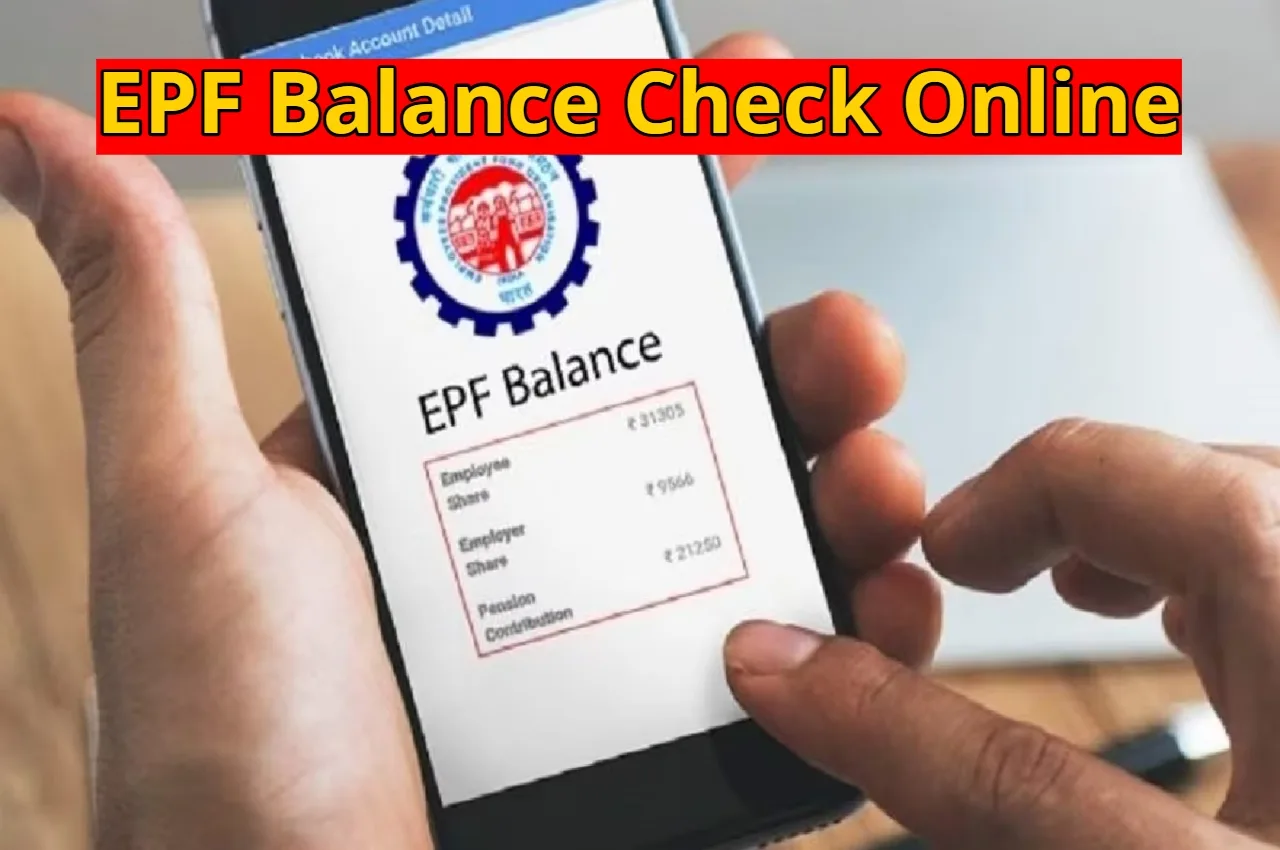
    The second method is to use the UMANG app. Download the UMANG app on your mobile and log in. Search for EPFO ​​in the app and select the View Passbook option from the EPFO ​​services. After that, enter your UAN number. Immediately after submitting, your PF passbook will appear on the screen, which will contain all the information about your PF account, including Employee Share, Employer Share, and Pension Contribution.

    Read Here: GATE 2026 Exam Guidelines – MCQ, MSQ and NAT Marking Scheme Explained, Section-wise Analysis

    Read Here: Ration Card e-KYC Bihar 2026: Complete Verification Before Feb 28 or Lose Benefits

    PF balance through missed call

    The third and easiest method is to give a missed call. For this, give a missed call from your registered mobile number to the number 9966044425. Please note that this feature will only work if your mobile number is registered on the UAN portal. You will receive your PF account balance via SMS within a few minutes.

  • How Much Fund Will You Get in 5 Years by Depositing Rs 5000 Every Month in the Post Office RD Scheme? Know the Details

    How Much Fund Will You Get in 5 Years by Depositing Rs 5000 Every Month in the Post Office RD Scheme? Know the Details

    In today’s times, due to rising inflation, both saving and investing have become essential for people. Many people are looking for investment options where the risk is low and the returns are fixed. The Post Office Recurring Deposit scheme is considered a reliable scheme that fulfills this need. This scheme is especially beneficial for those who want to build a large fund for the future by saving a small amount every month. Government security also provides investors with peace of mind.

    Read More- When Will the 18% Tariff Come into Effect in India? Here’s the Latest Update

    What is the Post Office RD scheme?

    A Recurring Deposit (RD) is a savings scheme in which the investor deposits a fixed amount every month. This scheme is useful for those who are not able to invest a large sum at once but want to save regularly. Currently, the Post Office is offering an annual interest rate of approximately 6.7 percent on this scheme. This interest is calculated quarterly on a compounding basis, which results in a better overall return on investment.

    How much can you start investing with?

    A Post Office RD account can be opened with a minimum monthly deposit of just Rs 100. There is no maximum limit for investment in this scheme. This means that investors can deposit the amount according to their income and needs. This is why this scheme is quite popular among salaried individuals, small business owners, and housewives.

    Scheme duration and maturity rules

    The total duration of the Post Office RD scheme is 5 years, meaning the investor has to deposit continuously for 60 months. It is mandatory to deposit the installment by the due date every month. If the deposit is missed in any month, there is a facility to deposit it later with a nominal penalty. Upon maturity, the investor receives the total amount, including the deposited amount and the interest earned.

    How much money will you get by investing Rs 5000 every month?

    If an investor deposits Rs 5000 every month, their total deposit in 5 years will be Rs 3,00,000. After adding the interest earned, you can expect to receive approximately ₹3,56,830 at maturity. This means the investor can earn an additional profit of around ₹56,830. This amount may vary slightly depending on changes in the interest rate.

    Read More- Post Office Safe Investment Scheme, Build a Fund of ₹25 Lakhs in 10 Years, Learn How

    Why is the Post Office RD a reliable investment option?

    This scheme is considered safe due to government backing. It is not affected by market fluctuations. The investor knows in advance how much money they will receive at maturity. This scheme can be a good option for children’s education, marriage, or any other future needs, big or small. It also helps in developing the habit of regular saving.

  • Aadhaar Card Deactivation- How to deactivate an Aadhaar Card? Know the process here

    Aadhaar Card Deactivation- How to deactivate an Aadhaar Card? Know the process here

    Aadhaar Card Deactivation: The Aadhaar Card is a crucial identity document in India. It serves various purposes such as accessing government schemes, banking services, mobile connections, pensions, subsidies, and much more. Consequently, keeping an Aadhaar active after an individual has passed away can result in misuse and identity fraud.

    To address this issue, the UIDAI (Unique Identification Authority of India) has begun the process of deactivating Aadhaar. As per UIDAI, over 25 million Aadhaar numbers belonging to deceased individuals have been deactivated to date. This measure aims to safeguard the Aadhaar database and prevent the misuse of government benefits.

    Why is it essential to deactivate Aadhaar after death?

    – Accessing government schemes
    – Receiving pensions or subsidies
    – Fraud through fake identities

    Thus, according to the PIB (Press Information Bureau), it is vital to deactivate Aadhaar posthumously to avert identity-related fraud.

    How can one report the death of a family member?

    To facilitate this, UIDAI has launched an online service called ‘Reporting of Death of a Family Member’ on the myAadhaar portal.

    In this procedure:

    1. The family member must first authenticate themselves.
    2. The Aadhaar number of the deceased must be provided.
    3. The Death Registration Number needs to be entered.
    4. Additional general information is required.

    Once the information is verified, UIDAI will finalize the deactivation of Aadhaar.

    Other initiatives to combat Aadhaar fraud include:

    – A biometric lock feature to ensure Aadhaar cannot be used without authorization.
    – Liveness detection during face authentication to prevent fraud using counterfeit photos or videos.
    – Aadhaar Secure QR Code and Paperless Offline e-KYC.
    – Mandatory use of an encrypted data vault to protect Aadhaar data. UIDAI does not disclose the core biometric information of Aadhaar holders under any circumstances.

  • Post Office Safe Investment Scheme, Build a Fund of ₹25 Lakhs in 10 Years, Learn How

    Post Office Safe Investment Scheme, Build a Fund of ₹25 Lakhs in 10 Years, Learn How

    Post Office Savings Scheme: Nowadays, everyone invests somewhere to secure their family’s future. If you are also thinking about investing to secure your and your family’s future, then this news can be very important for you. If you want to build a large fund in the long term without taking too much risk, then the Post Office Recurring Deposit (RD) scheme can be an excellent option for you. This scheme is especially suitable for those who want to build a large sum of money in the future by investing small amounts.

    Build a Fund of More Than ₹25 Lakhs in 10 Years?

    If you deposit ₹15,000 every month in a Post Office RD for 10 years, your total fund at maturity can reach approximately ₹25.68 lakhs. During this period, your total deposit will be ₹18 lakhs, and the interest earned will be approximately ₹7.68 lakhs. This investment is based on a compounding interest rate of 6.7% per annum. Due to long-term investment, your money grows safely, and investors get stable returns.

    Read Here: Ration Card e-KYC Bihar 2026: Complete Verification Before Feb 28 or Lose Benefits

    Read Here: Vivo X300 5G Phone Gets Best Discount of ₹8,000 Since Launch- But Offer Is Valid For Limited Time, See Price & Specs

    Benefits of Investing for 5 Years

    If you invest in RD for only 5 years and deposit ₹15,000 every month, you can get approximately ₹10.71 lakhs at maturity. During this period, your total deposit will be ₹9 lakhs, and the interest earned will be ₹1.71 lakhs. This clearly shows that returns increase significantly with longer investment periods.

    Learn About the Features of Post Office RD

    This scheme is fully government-guaranteed, so the investment risk is very low. It is not affected by market fluctuations. It also instills the habit of regular investment in investors, and it is possible to start with a small amount. Keeping the investment for a long time provides the full benefit of compounding, which helps in rapidly increasing the fund.

    Read Here: Metro Fare Hike from February 9, Check New Base Fare

    Read Here: Flipkart Valentine’s Special Deal On Motorola, Realme & More Phones At Great Offers

    Things to Keep in Mind Before Investing

    When investing in RD, it is important to deposit the monthly installments on time. If you miss an installment in any month, a penalty may be levied. The interest rate changes from time to time, so long-term investments are more beneficial.

    5-Year vs. 10-Year RD Comparison

    In a 5-year Recurring Deposit (RD), the total deposit amount is ₹9 lakh, and the interest earned is ₹1.71 lakh, resulting in a total fund of approximately ₹10.71 lakh at maturity. In a 10-year RD, the total deposit amount is ₹18 lakh, and the interest earned is ₹7.68 lakh, resulting in a total fund of approximately ₹25.68 lakh. This clearly shows that the returns increase manifold in long-term investments.

  • Ration Card e-KYC Bihar 2026: Complete Verification Before Feb 28 or Lose Benefits

    Ration Card e-KYC Bihar 2026: Complete Verification Before Feb 28 or Lose Benefits

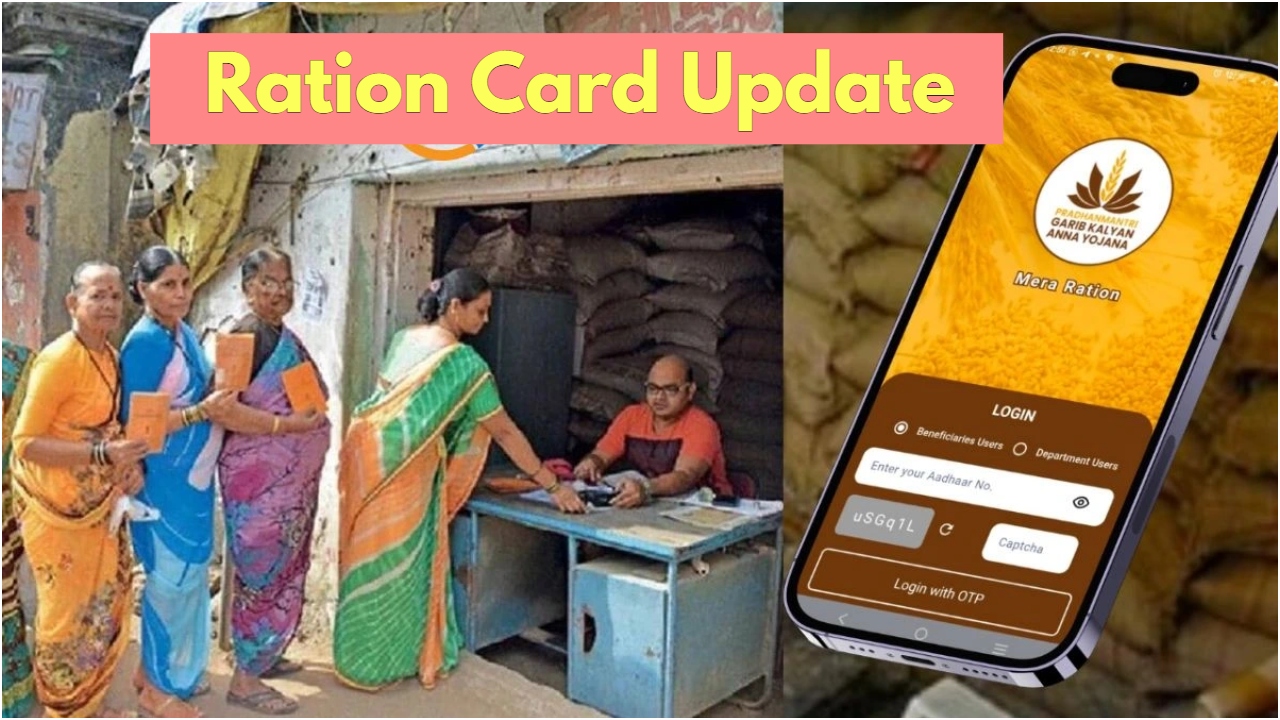
    Ration Card: An extremely important warning has been issued for ration card holders in Bihar, requiring all beneficiaries to complete their e-KYC verification by February 28, 2026. According to information released by the Food and Consumer Protection Department, approximately 52.22 lakh ineligible people have been removed from the ration card list in Bihar so far due to numerous discrepancies discovered during data verification.

    Currently, the administration is working to purify all 6.74 crore beneficiaries in the state so that the benefits of free grain under the Pradhan Mantri Garib Kalyan Anna Yojana reach only genuine and eligible individuals. If all family members do not complete their verification within the stipulated timeframe, their names will be permanently removed from the ration card, and they will stop receiving rations in the future.

    How to complete e-KYC

    Ration Card e-KYC

    The government has made this process completely free, and you can complete it offline or online as per your convenience.

    1. At the ration shop (offline method)

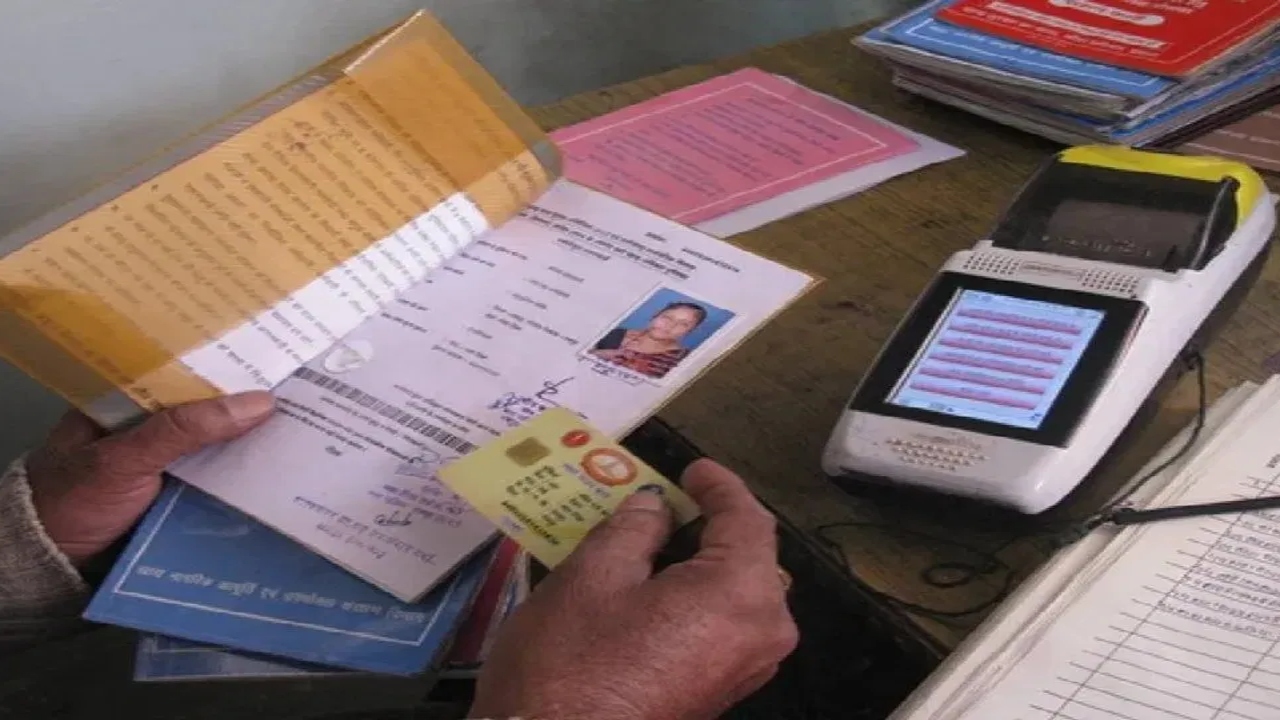
    Take your Aadhaar card and ration card to the nearest Public Distribution System (PDS) shop in your area. The dealer will verify you using biometrics (fingerprint or iris scan) on the e-POS machine.

    2. From home (online method)

    If you’re out of state or don’t want to visit the shop, you can use your smartphone. Download the ‘Mera eKYC’ and ‘Aadhaar FaceRD’ apps from the Google Play Store. Enter your Aadhaar number in the app, verify via OTP, and then scan your face in front of the camera (Face Authentication). When the circle on the screen turns green, your process will be considered successful.

    Why is e-KYC important

    Bihar currently has over 21 million ration cards. The government aims to make data transparent and remove fake or duplicate names that no longer exist or do not meet the eligibility criteria. Through e-KYC, it is being ensured that direct benefits of government schemes reach only those poor families who are truly eligible.

    This process has also brought relief to those living in states outside Bihar, as they can also undergo biometric verification at their local PDS shop (except in some states like Uttar Pradesh and West Bengal).

    Ration Card e-KYC Update
    Ration Card e-KYC Update

    Helpline for Technical Support and Complaints

    If a ration card holder faces any technical issues during the e-KYC process or a shopkeeper demands money for this free service, the department has issued toll-free numbers for immediate assistance. Beneficiaries can register their complaints by calling 1800-3456-194, 14445, or 1967.

    Those who verify digitally can also check the status of their family members after logging into the app. An e-KYC status of ‘Y’ indicates that your e-KYC has been completed. Be vigilant and complete your digital KYC within the deadline to ensure your family’s ration is safe.

  • Metro Fare Hike from February 9, Check New Base Fare

    Metro Fare Hike from February 9, Check New Base Fare

    Metro Fare Hike: Bad news for metro passengers. If you take the Bengaluru Metro every day, get ready for your wallet to feel a pinch starting February 9th. The Bangalore Metro Rail Corporation Limited (BMRCL) has revealed that there will be an annual fare increase. From February 9th, 2026, passengers using Namma Metro will face higher ticket prices, which will rise by Rs 1 to Rs 5 based on how far you travel.

    So, why the fare hike? This increase is in line with the suggestions from the First Fare Fixation Committee (FFC). They proposed that small fare adjustments happen each year to prevent a big jump all at once. BMRCL explains that this approach allows for a gradual rise in fares, which helps avoid shocking passengers and keeps metro travel smooth and predictable. In their statement, BMRCL mentioned, “Following the FFC’s mandatory recommendations, we will start annual automatic fare revisions from February 9, 2026. This comes one year after the last fare increase, which was on February 9, 2025.”

    Image

    How much will the fare be?

    The 96.10-kilometer Namma Metro network is divided into 10 fare zones. Under the new changes, fares will be slightly increased in all zones. Let’s find out how much the fares have been increased.

    Up to 2 km: Rs 10 to Rs 11
    2-4 km: Rs 20 to Rs 21
    6-8 km: Rs 40 to Rs 42
    8-10 km: Rs 50 to Rs 53
    10-15 km: Rs 60 to Rs 63
    15-20 km: Rs 70 to Rs 74
    20-25 km: Rs 80 to Rs 84
    25-30 km and above: Rs 90 to Rs 95

    Image

    The price of tourist cards and group tickets will also increase.

    The Metro administration has announced a 5 percent fare hike on tourist cards and group tickets. A one-day smart card pass for tourists will go up from Rs 300 to Rs 313, while a mobile QR ticket will rise from Rs 250 to Rs 263. Likewise, a three-day pass will jump from Rs 600 to Rs 628 for a smart card and from Rs 550 to Rs 578 for a mobile QR. The five-day pass will see an increase from Rs 900 to Rs 943 for a smart card and from Rs 850 to Rs 893 for a mobile QR.

  • Silver Rate Today Feb 7 – Silver Down Rs. 45,000 last two days, Check City-Wise 1 Kg Silver Price

    Silver Rate Today Feb 7 – Silver Down Rs. 45,000 last two days, Check City-Wise 1 Kg Silver Price

    Silver Rate Today: Gold and silver prices have been declining steadily over the past several days. Along with the international market, gold and silver rates are also falling in India. On February 7th, gold and silver rates on the MCX fluctuated, but a continuous decline has persisted over the past three days. Silver prices are experiencing daily fluctuations. Due to global uncertainties, silver prices continue to fluctuate. In the last two days, silver prices had fallen by Rs. 45,000, but today, in the domestic bullion market, silver prices have increased by Rs. 10,000 per kilogram.

    Silver Price Today
    Today, the price of silver in India is Rs. 285 per gram. The price of silver is Rs. 2,85,000 per kilogram, up Rs. 10,000 from yesterday’s price.

    MCX Silver Rates
    The gold futures contract for April 2, 2026, opened at Rs. 1,49,396 and closed at Rs. 1,52,071, showing a change of -Rs. 1,358 or 0.89%. Trading volumes show consistent participation in gold and silver prices. Silver Rate Today City-wise

    Silver Price in Chennai
    Price of 10 grams of silver – ₹2,850
    Rate of 100 grams of silver – ₹28,500
    Price of 1 kg of silver – ₹2,85,000

    Silver Price in Mumbai
    Price of 10 grams of silver – ₹2,850
    Rate of 100 grams of silver – ₹28,500
    Price of 1 kg of silver – ₹2,85,000

    Silver Price in Delhi
    Price of 10 grams of silver – ₹2,850
    Rate of 100 grams of silver – ₹28,500
    Price of 1 kg of silver – ₹2,85,000

    Silver Price in Kolkata
    Price of 10 grams of silver – ₹2,850
    Rate of 100 grams of silver – ₹28,500
    Price of 1 kg of silver – ₹2,85,000

    Silver Price in Bangalore
    Price of 10 grams of silver – ₹2,850
    Rate of 100 grams of silver – ₹28,500
    Price of 1 kg of silver – ₹2,85,000

    Silver Price in Hyderabad
    Price of 10 grams of silver – ₹2,850
    Rate of 100 grams of silver – ₹28,500
    Price of 1 kg of silver – ₹2,85,000

    Silver prices have been experiencing significant fluctuations lately, leaving investors uncertain, and many are closely watching future trends.

  • Special Train: 16 Special Trains to Run for Khatu Fair from Feb 18 to March 2, Check Full List

    Special Train: 16 Special Trains to Run for Khatu Fair from Feb 18 to March 2, Check Full List

    Special Trains Announced: Good news for railway passengers. Great news for fans heading to the renowned Baba Shyam’s Falgun fair! The North Western Railway has revealed that over a dozen special trains will be running for this event, scheduled from February 21st to 28th. DCM Dr. Jagdish Kumar mentioned that 16 trains will operate in two phases for the Khatu fair. They’re also setting up facilities at Ringas station.

    He explained that all these special trains will be launched in two phases. The first phase will see eight trains running from February 18th to March 2nd. Following that, the second phase will have the same number of special trains operating from February 24th to March 1st. According to the DCM, the first phase will include four designated routes on the Jaipur line: Ringas, Phulera, Rewari, and others. These routes will enhance rail connectivity and improve convenience for passengers.

    Train schedules for the first phase:

    Kurukshetra-Phulera: This train leaves Kurukshetra at 11:30 pm and reaches Phulera by 8:30 am. For the return trip, it departs Phulera at 9:50 am and arrives back at 8:30 pm. This will ensure direct rail access for travelers from both states.

    Madar-Rewari: This train will set off from Madar at 4:30 am and arrive in Rewari at 10:40 am. On the way back, it will leave Rewari at 3:30 pm and get to Madar by 10:35 pm. This will simplify travel between Rajasthan and Haryana.

    Phulera-Sarai Rohilla: In the first phase, the Phulera-Sarai Rohilla train will depart from Phulera at 10:40 am and reach Sarai Rohilla at 4:30 pm. On its return, it will leave Sarai Rohilla at 7:00 pm and arrive back in Phulera at 2:30 am. This will give passengers better rail access between Delhi and Rajasthan.

    In the first phase on February 18, there will be a train to Hisar. This train is set to leave Hisar at 12:05 PM and will reach Surat and Valsad at 11:30 AM the following day. It will travel through Ajmer, Neemuch, and Ratlam. For the return trip, it will leave Surat at 2:50 PM and get back to Hisar at 2:05 PM the next day.

    The second phase will put more emphasis on Phulera-Rewari. DCM Dr. Jagdish Kumar mentioned that the second phase of special trains for the Baba Shyam fair will have a stronger focus. Starting February 24th, the railway will specifically target the Phulera to Rewari route. Eight trains will be in operation during this phase, passing through Ringas, Shrimadhopur, and Neemkathana. This will enhance rail connectivity for local travelers, cut down travel time, and promote trade and transport. Plus, devotees of Baba Shyam won’t face any hassles.

    Beginning February 24th, the first train will leave Phulera at 3:30 PM and reach Rewari by 8:30 PM. The return train will set off from Rewari at 9 PM and arrive back in Phulera at 1:45 AM. Moreover, additional trains will leave Phulera at 8 AM, 1:15 PM, 10:35 PM, and 2:30 AM, arriving in Rewari at various times.

    A direct train will also operate from Jaipur to Delhi Sarai Rohilla. This special train will depart from Delhi at 11:35 AM and will arrive at Sarai Rohilla by 5 PM. It will travel through Ringas, Srimadhopur, Neemkathana, and Gurgaon, offering direct access for passengers from Shekhawati and the NCR area. The train will leave Delhi at 5:45 PM and will reach Jaipur at 11:45 PM, making it easier to travel between these two cities.