


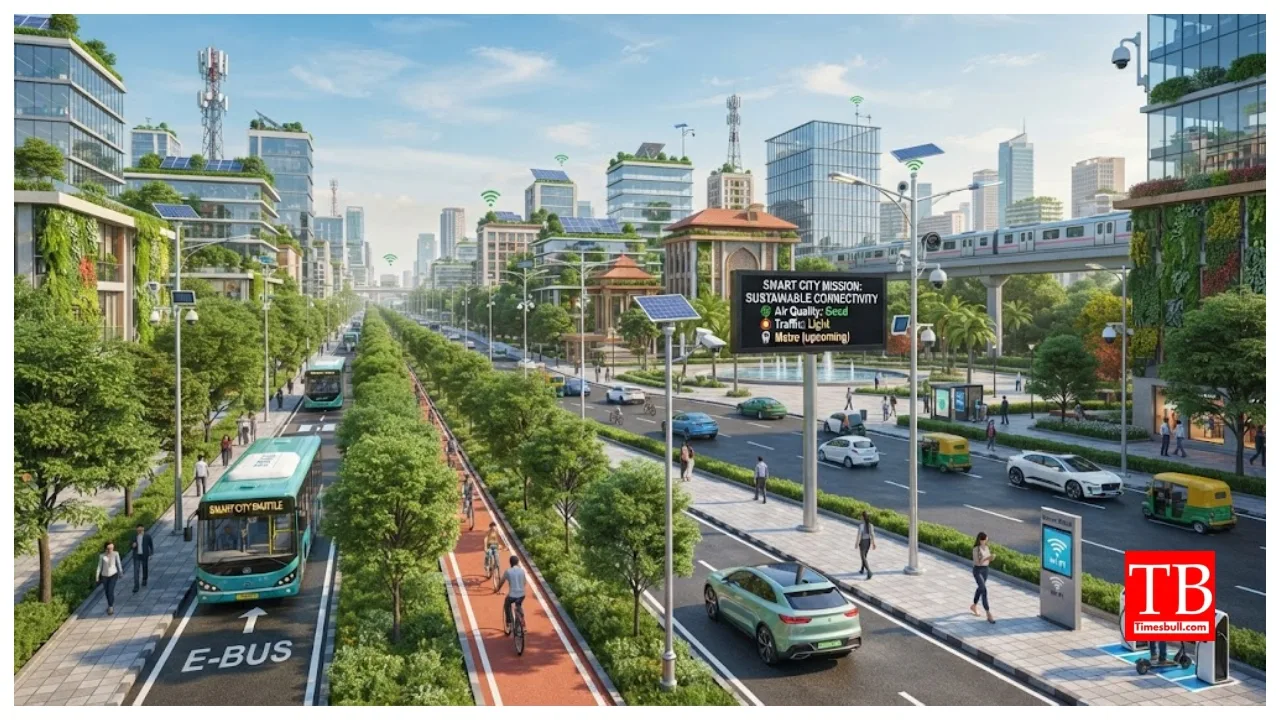
Smart City Mission: In 2015, Prime Minister Narendra Modi launched the Smart City Mission in India. The government introduced this project with the aim of improving the quality of life and accelerating economic growth across the country. According to 2011 Census data, approximately 31% of the population lived in urban areas, contributing 63% to the Gross Domestic Product (GDP). Projections indicate that by 2030, about 40% of the country’s population will reside in cities, contributing 75% to the GDP. Let us explore the details of India’s Smart City Mission.
What is the Smart City Mission?
The Smart City Mission was a flagship initiative launched by the government on June 25, 2015. Its primary objective was to enhance the quality of life in cities through superior infrastructure, technology, and sustainable urban development, making them more livable and efficient. The central government, state governments, and public-private partnerships (PPP) jointly funded the mission. Under this scheme, the central government provided funds of up to ₹500 crore over a five-year period to the selected cities, with states making a matching contribution.
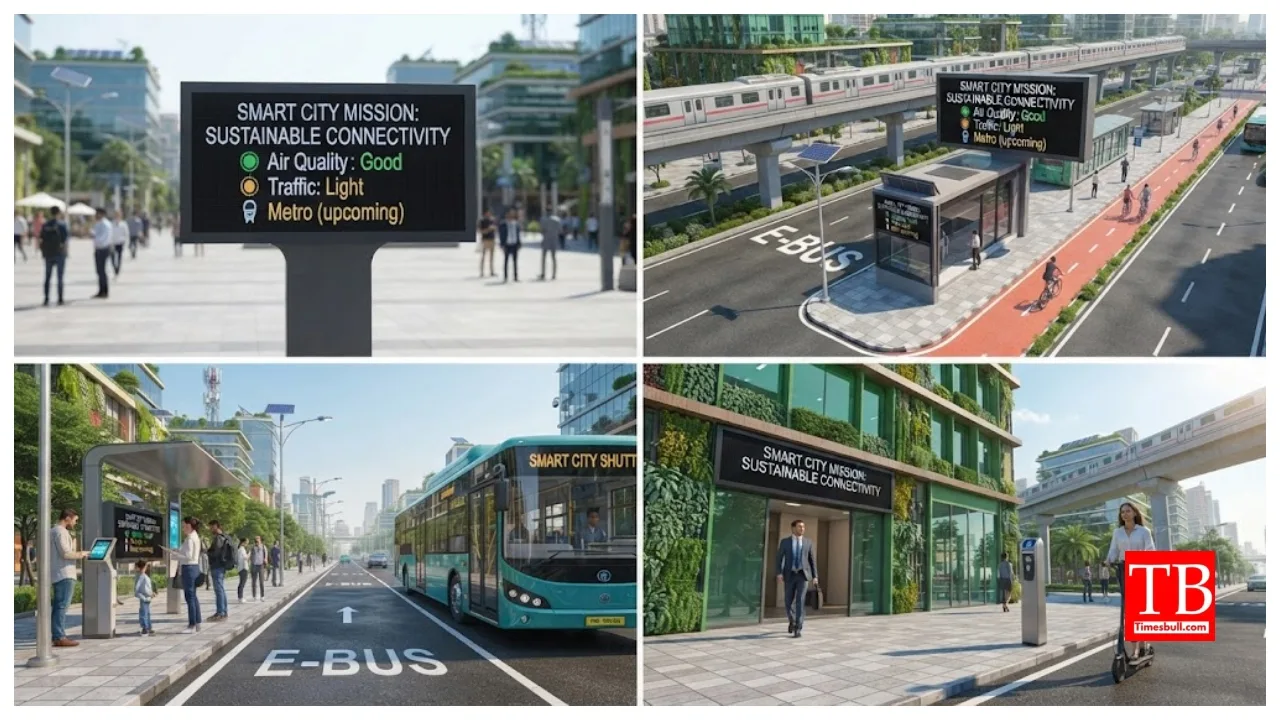
A total of 100 cities were selected for the Smart City Mission over the course of five years. West Bengal did not participate in the initiative, while Mumbai and Navi Mumbai later withdrew from the programme. The mission officially concluded on March 31, 2025, by which time the participating cities had completed the majority of their projects.
Smart City Mission Features
As previously mentioned, the mission aims to accelerate economic growth and improve the quality of life. Let us understand how this goal is achieved. The mission promotes area-based land use, granting states greater flexibility in land utilisation for various purposes and allowing them to frame by-laws that accommodate necessary changes and adaptations. At the same time, compliance with environmental safety measures must be ensured.
The primary objective is to expand housing opportunities for all. Housing is an essential requirement for the development of the Smart City Mission; smart cities need more housing projects to cater to the needs of both high- and low-income groups. Additionally, the aim is to reduce congestion and air pollution while fostering social interaction and boosting the local economy. New pathways for pedestrians and cyclists are also being constructed to minimise accidents. Furthermore, the development of playgrounds, parks, open gyms, and other recreational spaces is a key priority.
Online service launched for accountability
It is worth noting that the administration has launched an official online service to ensure transparency and accountability. For instance, citizens can use the online website instead of visiting municipal corporation offices. Additionally, the city is defined by its identity in areas such as education, healthcare, local cuisine, sports, art, furniture, and culture. Smart solutions are implemented regarding infrastructure and services to drive regional development.