



How to create a large fund with a small SIP? Understand all the mathematics
To invest in SIP, you can start with ₹500 or ₹1000. Let's say you start a SIP of ₹1000 every month at the age of 28 and increase it by 10% every year.
If you invest continuously till the age of 60 and you get an average annual return of 12%, then by retirement, a fund of about ₹1.05 crore can be created. The specialty of Step-Up SIP is that it teaches the discipline of increasing investment with your increasing income.
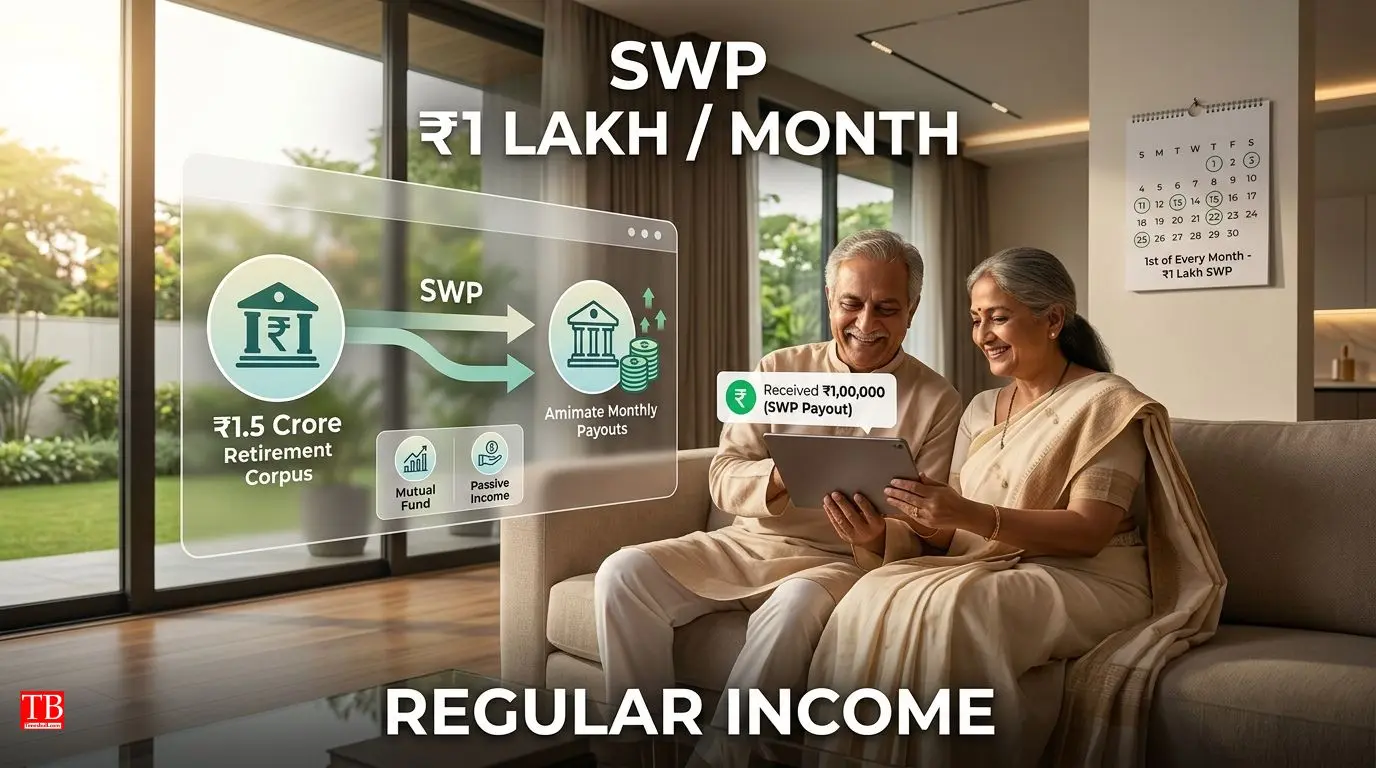
How to get Rs 1 lakh monthly income from SWP after retirement
If you have a corpus of ₹1.5 crore after retirement and invest it in a debt or conservative hybrid fund where you get an average return of 6% per annum, then through SWP you can withdraw ₹1 lakh every month.
SWP is a facility of mutual funds that withdraws a fixed amount from your investment at regular intervals (like every month) and sends it to your bank account. This is not like FDs, where the entire amount is taxed - SWP is taxed only on the gains portion, which makes it more tax-efficient.

What is SWP and how does it work? - - Beginner's guide
Systematic Withdrawal Plan (SWP) is the opposite of SIP. In SIP, you invest every month, while in SWP, you withdraw every month. This is not a separate product, but a feature of mutual funds that gives you regular income.
When you set up the SWP, the fund sends money to your bank account by selling units equal to your fixed amount each month. The rest of the money remains invested and grows. It is a great tool for regular income after retirement.

How much is the right amount to withdraw from SWP? The rule of 4%
According to financial advisors, one should not withdraw more than 3.5% to 4% annually through SWP. Suppose you have a corpus of ₹1.5 crore, at 4% per annum, you can withdraw around ₹50,000 per month (₹6 lakh per annum).
If you want to withdraw ₹1 lakh per month (8% per annum), you need a fund of at least ₹1.5 crore, which can give this amount at 6% per annum return. Remember, the success of SWP depends on the performance of the market - In a prolonged recession, the withdrawal rate may have to be reduced.

A combination of SIP and SWP Why is it the best way to retire?
A combination of SIP and SWP is a great way to plan for retirement. Through SIP, you create a corpus during your working life and after retirement, you get regular income from the same corpus through SWP.
This strategy not only makes you a disciplined investor but also gives financial security after retirement. The special thing is that the income from SWP is not taxed on the entire amount, but only on the gains part, which is more tax-efficient than FD.

Is SWP right for everyone? - - Be aware of the risks and warnings.
SWP is a great tool, but it also has risks. The biggest risk is the market... If the market remains bad for a long time, you will have to sell more units to meet your SWP, which can cause your corpus to fall sharply. Therefore, it makes sense to shift your portfolio from equities to debt or hybrid funds as you approach retirement.
Also, keep in mind the impact of inflation - Today's price of ₹1 lakh will be less after 20 years, so consider increasing the SWP amount from time to time.

Why is step-up SIP important? - - The Magic of 10% Increase
In a fixed SIP, you invest a fixed amount every month, which remains the same for years. But in step-up SIP you increase your SIP amount by a certain percentage (e.g. 10%) every year.
The advantage of this is that as your salary increases, your investment also increases and the benefit of compounding increases manifold. See an example: If you do a fixed SIP of ₹10,000 for 25 years, the 15% return works out to around ₹2.76 crore, but if you do a 10% step-up every year, the amount increases to ₹5.76 crore - almost double.

How to create a fund of ₹1.5 crore? - - A perfect example
Suppose you start SIP at the age of 30 and want to retire in 50 years (20 years time). If you start a SIP of ₹15,000 every month and do a 10% step-up every year, your fund can be around ₹1.5 crore in 20 years at a 12% annual return.
You can then invest this entire fund in a hybrid fund (8% return) through SWP to get a regular income of ₹65,000 to ₹1 lakh every month. This calculation explains how a small SIP started at a young age can also create a large fund.

What do you need to keep in mind when choosing a retirement fund?
Before investing, set your financial goals and understand your risk appetite. More equity exposure can be taken at a young age, but closer to retirement, the portfolio should be made conservative. Retirement mutual funds have a lock-in period of 5 years and allow withdrawals till the age of 60. Also, review your portfolio from time to time and don't ignore the impact of inflation.

What to do next? - - Let's start planning for your retirement today.
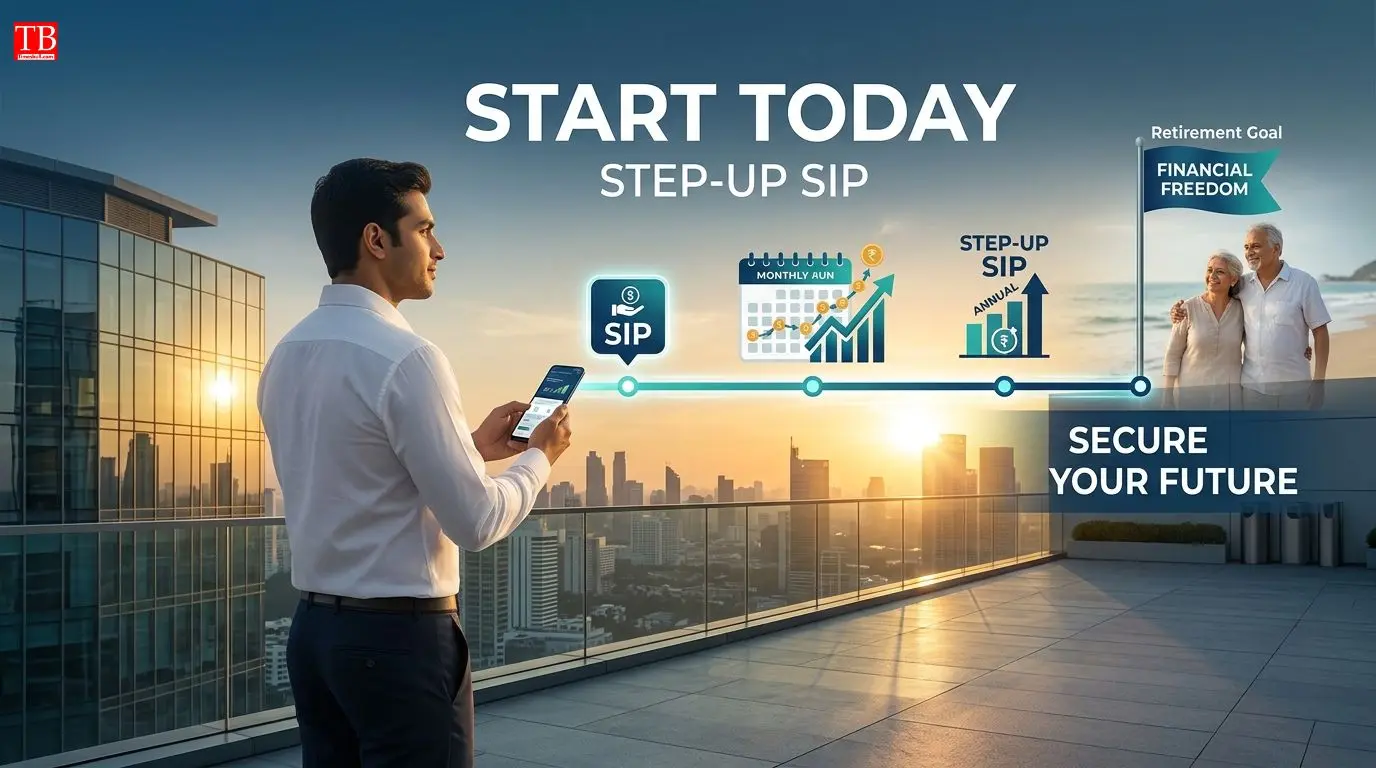
One of the biggest mistakes in retirement planning is thinking "will start later." The earlier you start, the more benefits you will get. Start investing a portion of your monthly income in SIP today - even if it's just ₹500.
Choose the option of Step-Up SIP so that the investment increases as the salary increases. Plan for SWP as you get closer to retirement. Remember, 10-15% annual returns and 20-25 years of time can make even your small savings a big fund.
Conclusion
The combination of SIP and SWP is a simple, disciplined and tax-efficient way of retirement planning. If you start a step-up SIP of ₹1000 at the age of 28, then by the age of 60 you can create a fund of ₹1.05 crore, and after retirement, you can get an income of up to ₹1 lakh every month through SWP.
Just remember... Start early, maintain discipline, use step-up SIPs, and make the portfolio conservative as you approach retirement. This small effort of yours today will make your tomorrow secure. timesbull.com will continue to provide you with similar accurate financial information. If you have any queries, let us know in the comments.