



What is Post Office FD? - - One-time investment, guaranteed return
Post Office FD, also known as Time Deposit (TD), is a scheme in which you deposit the entire amount in one go. The duration can be 1, 2, 3 or 5 years. The best part is that the 5-year FD is getting 7.5% annual interest, which is compounded on a quarterly basis.
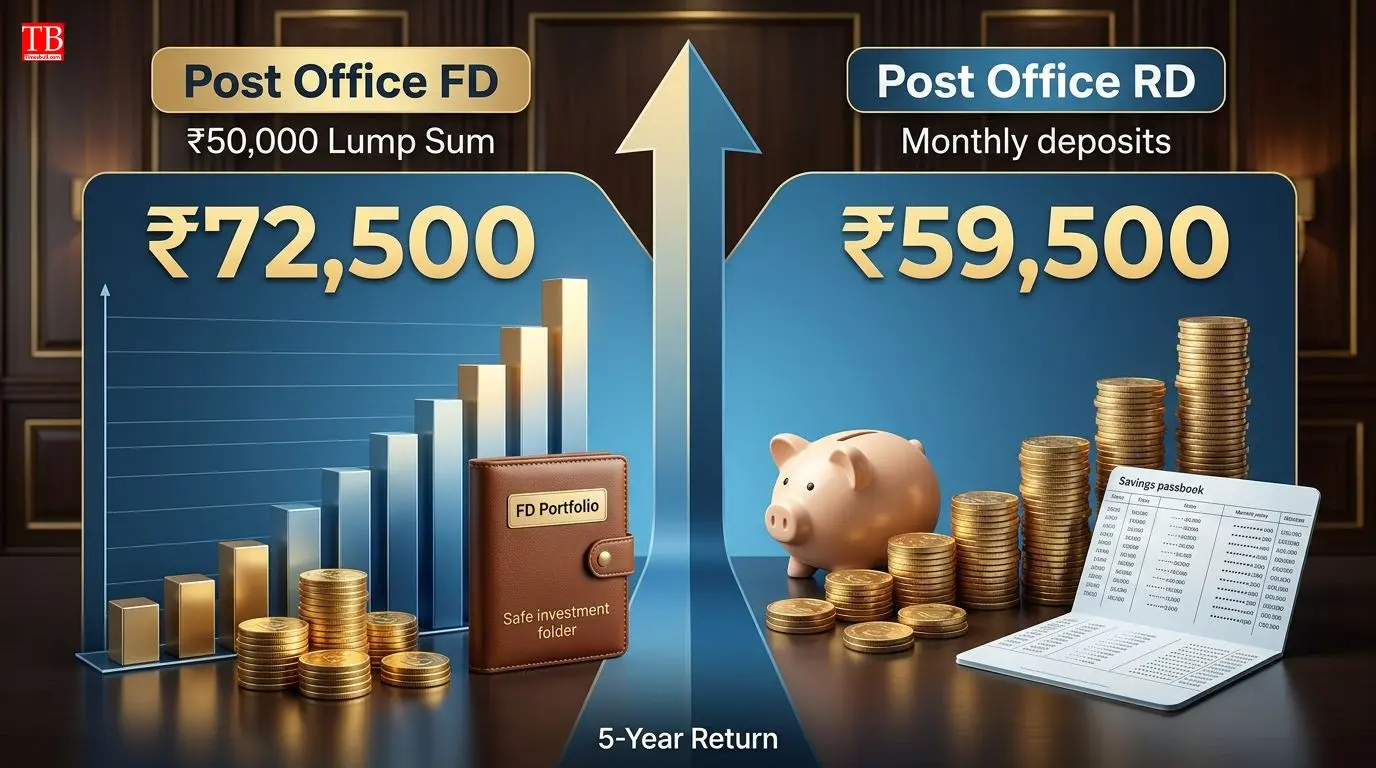
This means that your money starts earning interest from day one. The lump sum amount of ₹50,000 becomes around ₹72,500 at 7.5% interest over 5 years.

What is the post office RD. - - Small savings, large funds every month
Post Office RD (Recurring Deposit) is a 5-year savings scheme in which you deposit a fixed amount every month. It is ideal for those who want to get into the habit of saving regularly. At present, Post Office RD gets 6.7 per cent annual interest (quarterly compound).
The special thing is that the day you open the account, the interest rate on that day is locked for the whole 5 years - Changing interest rates in the future also has no effect on your account. To make a total investment of ₹50,000 you will need to deposit around ₹833 every month, which will make an investment of ₹50,000 over 5 years and get around ₹59,500 at 6.7% interest.
Comparison of interest rates Which one will give you the highest return?
For the April-June 2026 quarter, the interest rate is 7.5 per cent on 5-year Post Office FD and 6.7 per cent on RD. This difference directly affects the return:
In the FD: The lump sum amount of ₹50,000 becomes ₹72,500 (approximately) in 5 years. A benefit of around ₹22,500 from interest.
In RD: ₹50,000 (₹833 every month) becomes ₹59,500 (approx.) in 5 years. A benefit of around ₹9,500 from interest.
That is, FD gives more return on a lump sum amount because the entire amount starts compounding from the first day.

Tax saving - FD gets the benefit of 80C, not RD
There is a big difference that most people overlook. The 5-year post office FD gives the benefit of tax exemption under Section 80C of the Income Tax Act. You can claim a rebate of up to ₹1.5 lakh in a financial year. At the same time, there is no tax exemption under 80C on Post Office RD. This is the biggest drawback of RD. However, the interest earned on both is taxable as per your income tax slab.
Liquidity and Loans How easy is it to withdraw money?
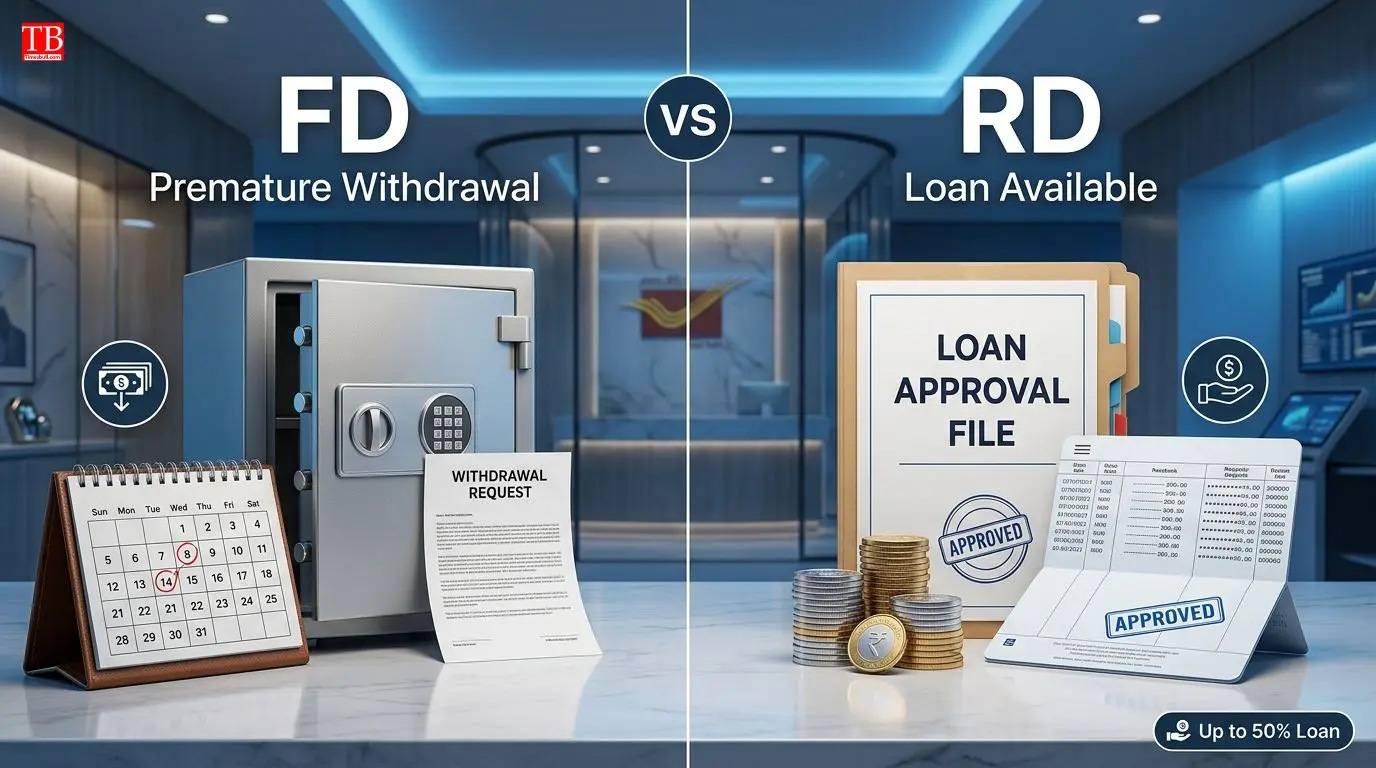
Premature withdrawal in FD: FDs can be closed prematurely after 6 months, but it gets less interest.
Premature Withdrawal in RD: RD can be closed only after completion of 3 years. Interest is not paid on closing before 3 years.
Loan against RD: After depositing 12 consecutive installments (1 year) in the RD account, you can take a loan up to 50% of the account balance. FDs usually do not have a loan facility.
The facility of loan in RD is a big advantage, because you can meet the need of money without breaking the investment.
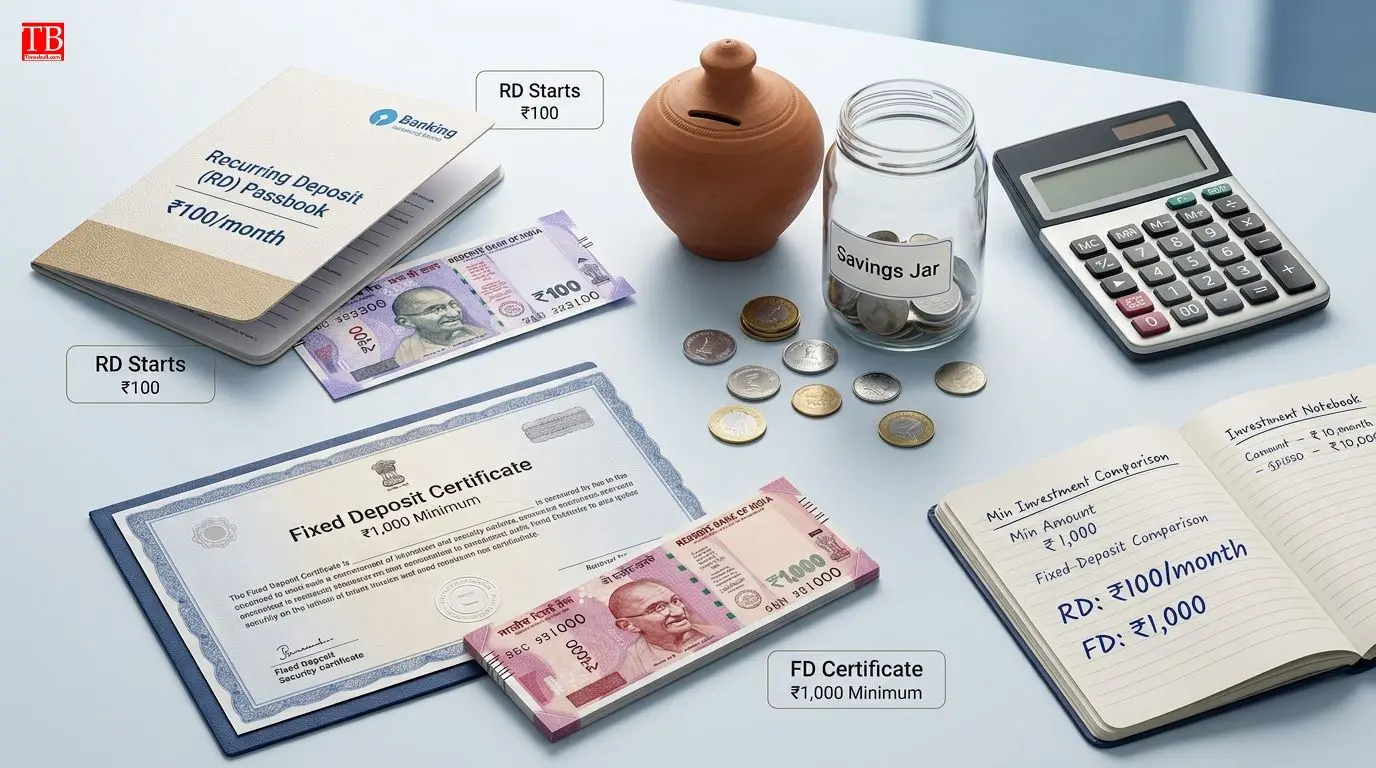
Minimum investment: Rs 100 in RD, Rs 1000 in FD
If you do not have a large amount of money and you want to start with small savings, then RD is better for you. You can start investing in Post Office RD with as little as ₹100 per month. At the same time, a minimum of ₹1,000 is required to open Post Office FD. There is no maximum investment limit in both.

Investment Objectives - What is the right investment?
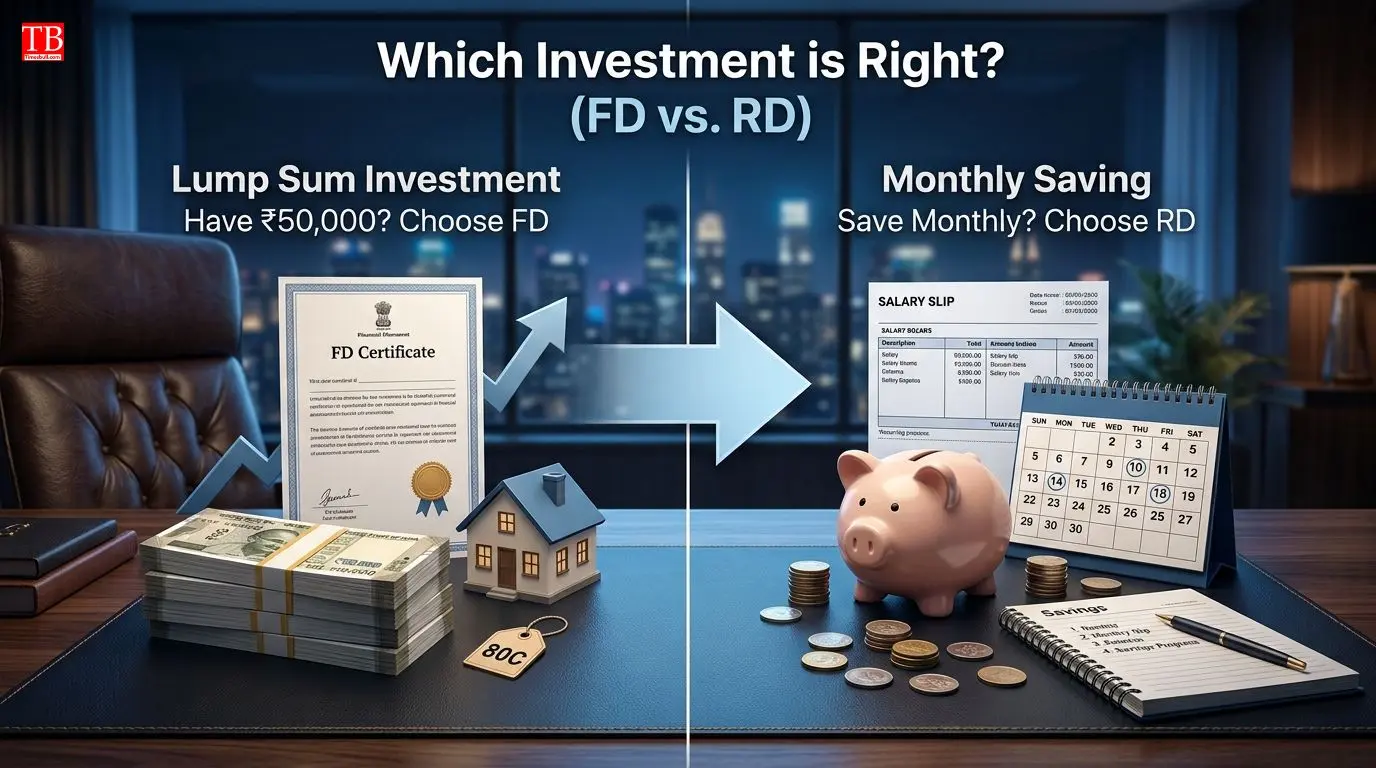
F.D. for whom? If you have a lump sum amount (like bonus, gift, or savings) and you want to keep it safe, then FD is better. It is suitable for medium-term goals of 5 years (such as children's fees, home renovation).
Who's the RD for? If you want to save a part of your salary every month and inculcate the habit of disciplined investing, then RD is for you. It is ideal for small investors, students and those whose income is not regular.

Inflation effect What are the benefits of FD / RD?
Experts say that FDs and RDs should be considered as instruments of capital preservation and not for wealth creation. In the long run, inflation can reduce your returns. If you invest for 20 years and get a return of 6-7%, the real return can be very low when inflation is taken into account. So, it makes sense to balance FD / RD with options like equity or mutual funds for the long term.

Different tenures and interest rates of post office FDs
In addition to 5 years, post office FDs also offer 1, 2, and 3 year tenures with different interest rates:
One-year FD: 6.9%
Two-year FD: 7.0%
Three-year FD: 7.1%
5-year FD: 7.5% (with tax deduction under Section 80C)
Keep in mind, the benefit of tax exemption is available only on 5-year FDs, not on 1, 2, and 3 year FDs.
What to do next? - - What's the right choice for you?
This decision is entirely dependent on your financial situation.
If you have ₹50,000 as a lump sum, then the 5-year Post Office FD is better for you. You will get 7.5% interest and also get the benefit of tax rebate under 80C.
If you can save ₹833 every month: Start a Post Office RD. Although the interest is low (6.7 per cent) and not tax-exempt, it will teach you disciplined saving habits and also facilitate loans in emergencies.
Mixed strategy: You can also split your ₹50,000 amount into two parts - Put some in FDs (for tax saving) and deposit some in RD every month (for disciplined saving).

Conclusion
Both post office FD and RD offer safe returns with government guarantees, but which option is better for you depends on your need. An FD for a lump sum of ₹50,000 is more beneficial as it has a higher interest rate (7.5%), the entire amount earns interest from the first day, and the 5-year FD gets tax exemption under 80C.
RD is for those who want to make small savings every month and can start investing from ₹100 per month. Just remember, the interest earned on both schemes is taxable.
Take any decision keeping in mind your income, financial goals and investment needs. timesbull.com will continue to bring you similar accurate financial information. If you have any queries, let us know in the comments.