


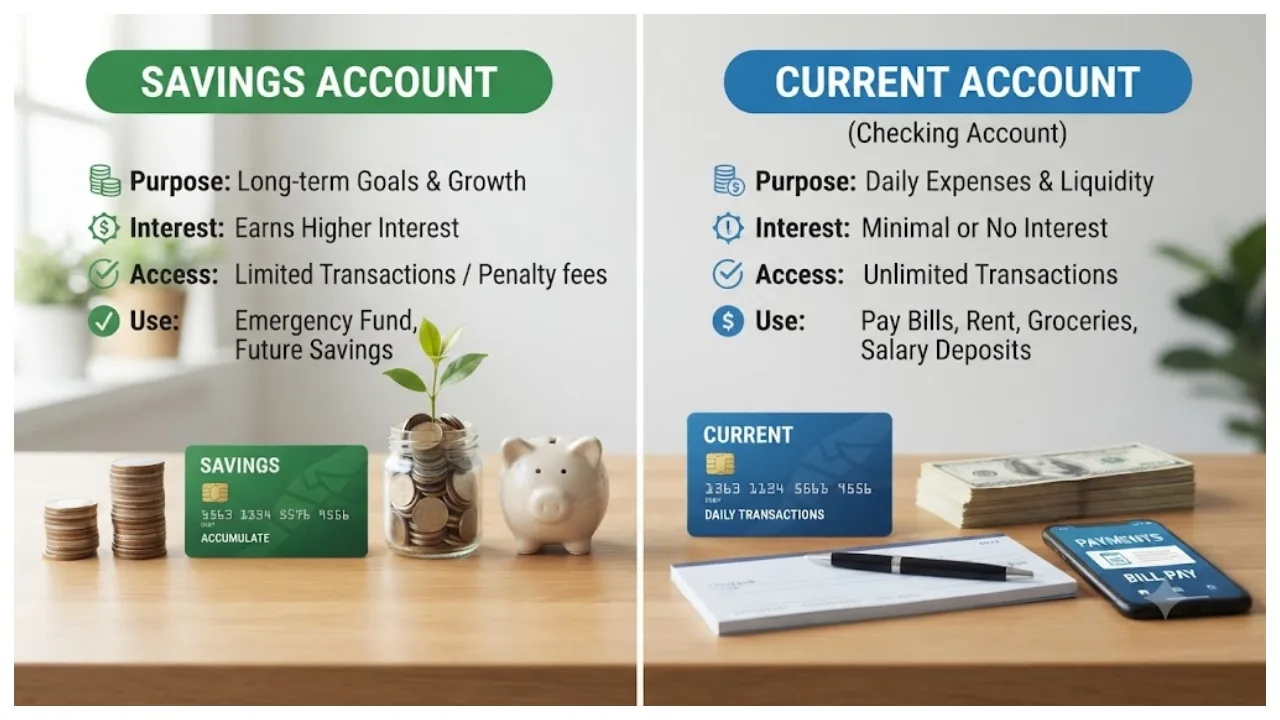
Savings Account vs. Current Account: Nowadays, everyone has a bank account. Most government scheme benefits are received directly through bank accounts. When opening an account, you receive an application form where you must specify whether you want to open a savings account or a current account. Naturally, most people opt for a savings account. Additionally, when withdrawing money from an ATM, you are prompted to select the specific account type on the screen.
At that moment, you must tell the bank which account type you want. People often wonder about the differences between savings and current accounts. Since many people are unaware of the distinctions, this article explains them in simple language to help you choose the account that best suits your needs.

Understanding the Savings Account
A savings account is designed to encourage saving money. It is highly beneficial for the general public, allowing individuals to save small amounts over time while earning interest on their deposits. These accounts can be opened either individually or jointly. They typically offer an interest rate of 4% to 6%, determined by the bank, with senior citizens often receiving preferential rates.
Understanding the Current Account
A current account is primarily used by businesspeople and traders. It is designed to handle frequent transactions and is considered ideal for regular business operations. Account holders are usually business organisations, firms, and the like. Notably, current accounts earn no interest on funds held.

Key Differences Between Savings and Current Accounts
In summary, savings accounts are designed for the general public, whereas current accounts are tailored for businesspeople. Savings accounts earn interest, while current accounts do not. Savings accounts offer transaction facilities up to a certain limit, whereas current accounts have no transaction limits; you can carry out as many transactions as you wish.