


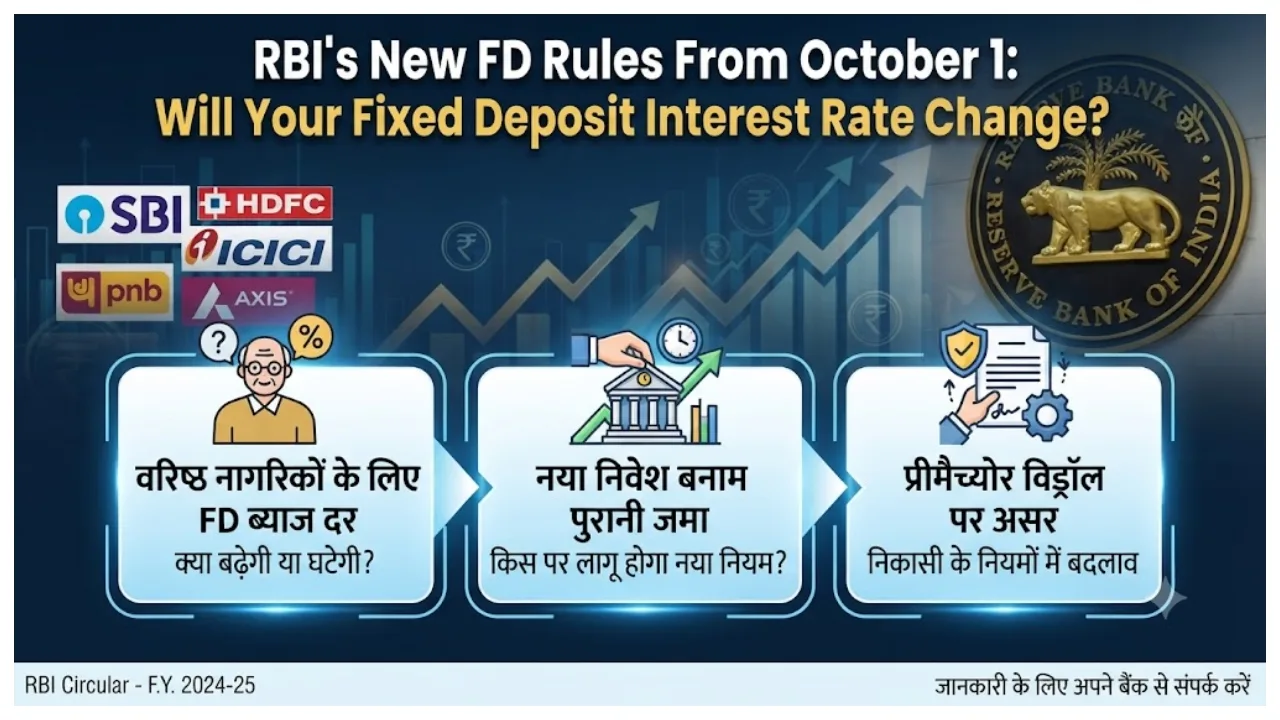
RBI FD New Rules: Nowadays, everyone seeks safe investment options, and Fixed Deposits (FDs) are considered a prudent choice. If you plan to invest, this news is important. The RBI has introduced major changes to FD regulations, effective October 1, 2026. The objective is to enhance transparency in FD interest rates and eliminate confusion regarding the varying rates offered by different bank branches.
Uniform Interest Rates Across All Branches
Under the new RBI rules, banks will no longer be permitted to offer different interest rates for FDs of the same amount and tenure across their various branches. This means that if you open an FD for a specific amount and duration at one branch, the applicable interest rate will be identical at any other branch of the same bank. Consequently, customers will no longer need to inquire about rates at different branches or negotiate for better terms.
Advance Knowledge of FD Interest Rates
Under the new RBI regulations, banks must publish their applicable interest rates on their official websites. This allows customers to check rates online and make informed investment decisions before opening an FD. By viewing the applicable rates on the bank’s website, customers can easily determine the interest they will earn based on their deposit amount and chosen tenure.
FDs Exceeding ₹3 Crore Classified as Bulk Deposits
According to the new RBI rules, FDs of ₹3 crore or more will be classified as “bulk deposits.” Investors placing large sums must understand the implications. Therefore, if you plan to open a high-value FD (in the range of crores), you should review the bank’s bulk deposit policy and applicable interest rates before investing.
Curbing Arbitrary Interest Rate Practices
The new rules aim to ensure transparency in the interest rates banks publish. The scope for arbitrary differences in interest rates offered to customers for Fixed Deposits (FDs) with identical amounts, durations, and tenures—under similar conditions—will be eliminated. However, under RBI rules, different interest rates may still apply based on specific categories; for instance, senior citizens may receive higher interest rates than regular customers.
Which banks will these rules apply to?
This RBI change is not limited to public and private sector banks; the rules apply to all banking institutions under the RBI’s regulatory purview. This includes cooperative banks, rural banks, small finance banks, and commercial banks. Consequently, customers opening FDs will be able to easily access information regarding applicable rules and interest rates, regardless of the bank’s category.
What will be the impact on existing FDs?
If you have already opened an FD, the new system will not cause any sudden changes to your existing deposit. Your existing FD will continue to operate under the terms and rules established when it was opened.