


Why PPF account is deactivated?
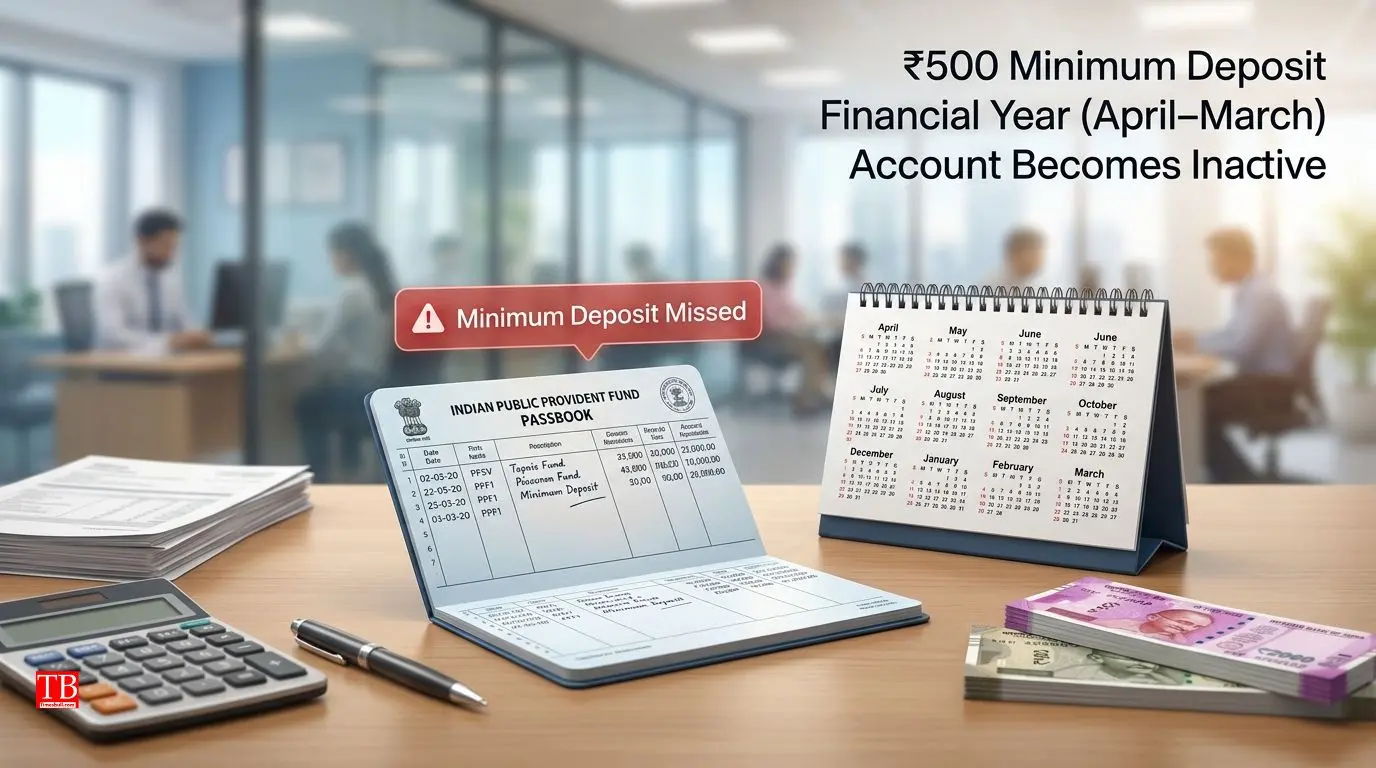
The tenure of PPF is 15 years and at present it gets 7.1% annual interest. As per the rules, it is mandatory to deposit at least ₹500 every financial year (April 1 to March 31) in the PPF account.
If you do not deposit even this minimum amount in a financial year, your account is deactivated. Keep in mind that the maximum annual deposit in the PPF account can be ₹1.5 lakh and you can deposit in a maximum of 12 installments in a financial year, but it is extremely important to meet the minimum condition of ₹500.
However, you continue to get interest on the amount deposited earlier, but till you reactivate your account, you are barred from making new investments in it.

5 disadvantages of not having a PPF account
Ban on new investments Until the account is active, you cannot deposit a single rupee in it.
Loss of compound interest - Stoppage of investment reduces the profitability of compounding and adversely affects the corpus.
Impact on loans and withdrawals With an inactive account, you cannot make a loan from the third year or a partial withdrawal from the sixth year.
Additional penalty A penalty of ₹50 has to be paid every inactive year to activate the account.
Waste of time - To activate the account, one has to fill the form, pay the penalty, and make rounds of the bank.

Who can open a PPF account?
A PPF account can be opened by any Indian citizen. If the child is a minor, parents or legal guardians can open this account in his name.
However, NRIs are not allowed to open a PPF account. This is only for Indian citizens. An individual can open only one PPF account in his / her name, and the spouse can open separate accounts.

How to reactivate your PPF account
If your PPF account is closed or inactive, don't worry. You can activate it again. All you have to do is follow these simple steps:
Step 1: Go to the bank or post office where your PPF account is open. There you have to submit an application to activate the account.
Step 2: For all the years your account has been inactive, a penalty of ₹50 has to be deposited with the application for each year. For example, if your account has been inactive for 3 years, you will have to pay a penalty of ₹150.
Step 3: Apart from this, you need to invest at least ₹500 for the current financial year. If you have not made even the minimum deposit of previous years, then it may also have to be deposited (with penalty).
Step 4: After completing all the necessary procedures, your PPF account can be reactivated and you can take advantage of all its features as before. However, you get interest on your investment during the period of inactivity, but further investment is possible only after the account is activated.

Important things to know about investing in PPF
Maximum deposit limit: A maximum of ₹1.5 lakh can be deposited in a financial year.
Number of installments: You can invest in a maximum of 12 installments in a year.
Date of minimum deposit: There is no obligation, but the sooner you do it, the more interest you will get.
Account Maturity: After 15 years, you can close the account or extend it in blocks of 5 years.
Interest rate: The government fixes the interest rate every quarter. Currently (Q1 FY 2026-27) it is 7.1%.

Conclusion
The PPF account is a safe long-term investment instrument with a government guarantee, but it demands its regularity. If you forget to deposit even the minimum deposit amount of ₹500 every financial year, your account may become inactive and you get a moratorium on new investments.
At the same time, to activate the account, you have to deposit a penalty of ₹50 for every inactive year and ₹500 for the current year. So, always remember... It is very important to maintain regularity to keep the PPF account active after opening it.
If your account has been deactivated, go to your bank or post office today to activate it so that you can get the full benefit of your investment. Stay tuned to timesbull.com for more such financial information, government schemes and investment tips.