


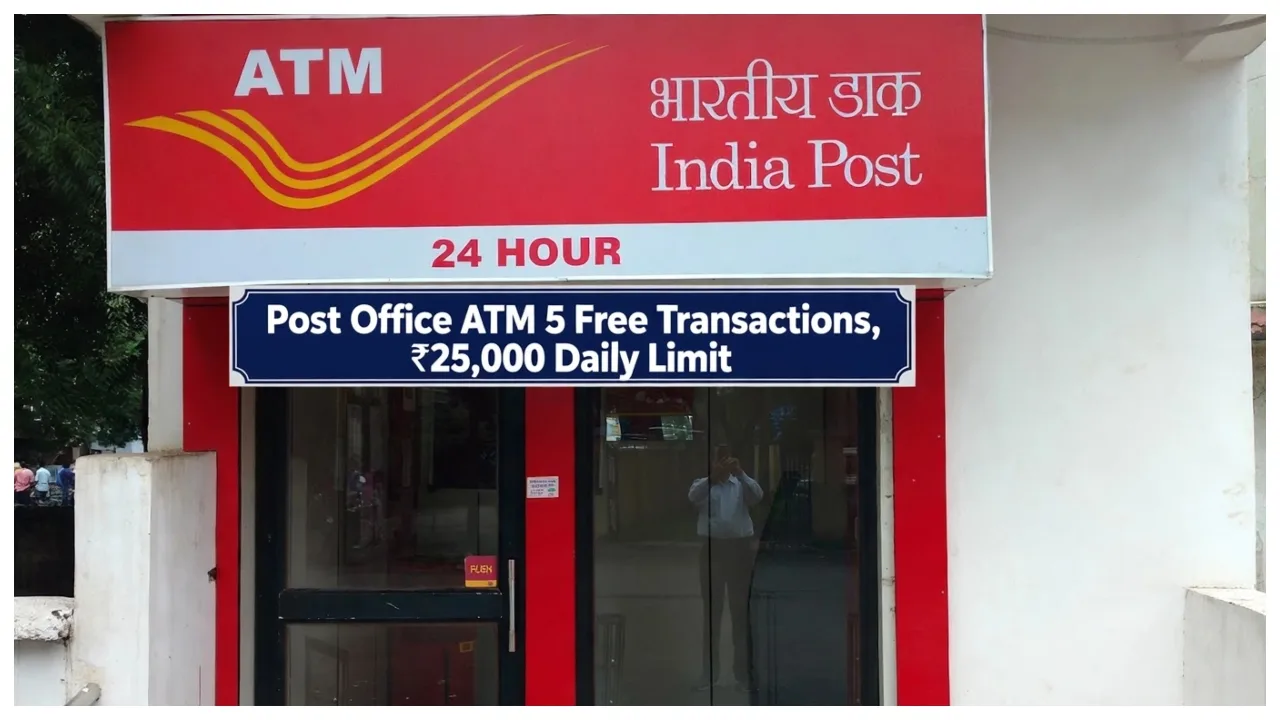
Post Office ATM Rules: If you have a savings account with the Post Office and use an ATM card, you should be aware of certain rules. The Post Office provides its savings account holders with the facility to withdraw money via ATMs. When using this service, it is crucial to keep in mind the daily withdrawal limits, minimum balance requirements, and any applicable additional transaction charges. Being informed ensures you can conduct your transactions without any hassle.
How many free transactions are allowed at post office ATMs?
The Post Office offers its customers 5 free financial and non-financial transactions per month at its own ATMs. The number of free transactions varies when using ATMs belonging to other banks. In six metro cities, 3 free transactions per month are permitted at other banks’ ATMs, while in non-metro cities, this limit is set at 5 transactions. These include services such as cash withdrawals and balance enquiries.
Read More:- Pensioners Update – How to Generate a Digital Life Certificate at Home
Read More:- Bank Holiday: Banks to Remain Closed on Friday, Know the Reason
Read More:- Amul Milk Price Hike: Milk Becomes Costlier by Rs 6, Check New Rates
How much money can be withdrawn?
Post Office savings account holders can withdraw a maximum of ₹25,000 per day via an ATM. However, the maximum limit for a single withdrawal transaction is set at ₹10,000. Therefore, to withdraw the full ₹25,000, a customer would need to perform multiple transactions. A minimum balance must be maintained in the account after any ATM withdrawal.
What are the charges once the free limit is exceeded?
Customers will be required to pay additional charges if they exceed the specified free transaction limit. According to the fee structure effective from November 1, 2025, an additional charge of ₹23 for financial transactions and ₹11 for non-financial transactions will apply when using ATMs of other banks. GST will be charged separately on these amounts.
For transactions exceeding the limit at the Post Office’s own ATMs, a fee of ₹10 for financial transactions and ₹5 for non-financial transactions will be applicable. GST will be charged extra.