


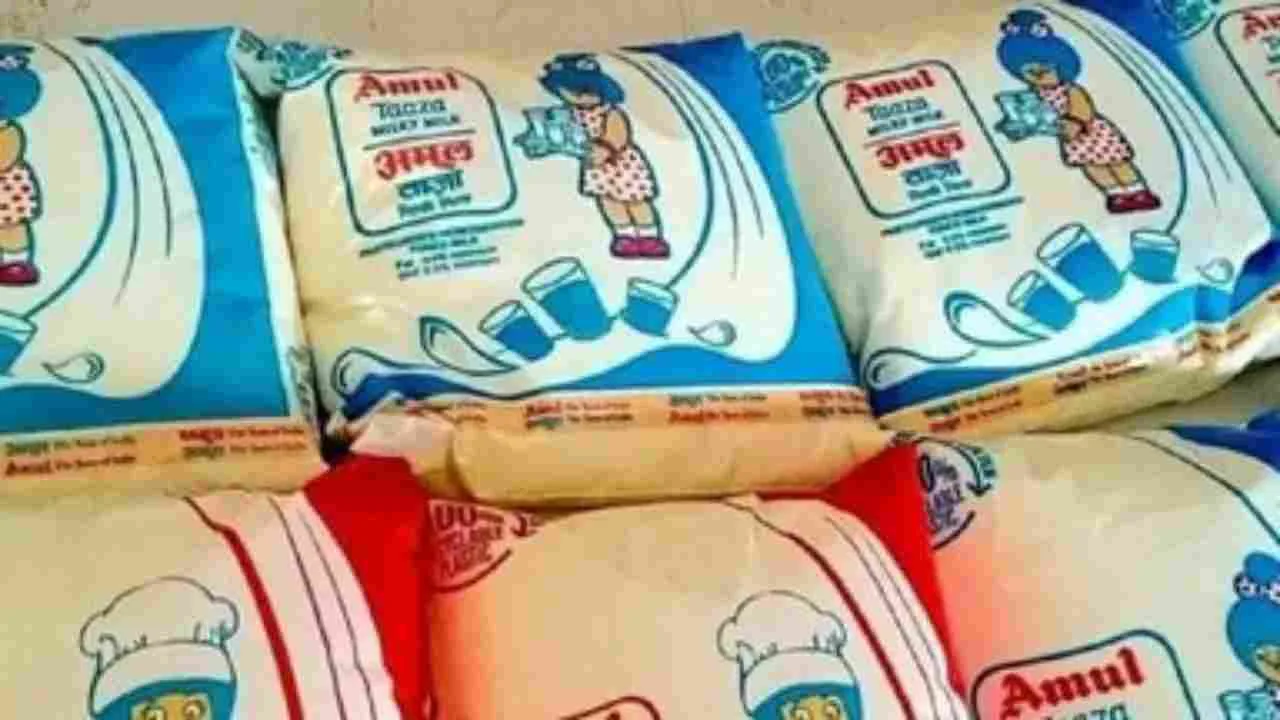
Amul Milk Price Hike: With the end of the festive season, rising inflation has placed additional strain on ordinary citizens. Both Amul and Mother Dairy, the two biggest dairy brands in the country, have declared a notable hike in milk prices. These revised rates are set to take effect from Thursday, 12 November. Consumers will now pay between Rs 2 and Rs 6 more per litre for milk.
Amul Milk Price Hike
As per reports that Amul has raised the cost of its full-cream buffalo milk by a substantial Rs 6 per litre. Previously sold at Rs 80 per litre, buffalo milk will now be priced at Rs 86. In addition, Amul’s standard full-cream packaged milk has seen a Rs 4 increase, while toned milk has gone up by Rs 2 per litre.
Mother Dairy’s revised price list
Customers of Mother Dairy, too, will not find any respite. The updated rate card shows that in Delhi-NCR, the price for Mother Dairy’s full-cream packaged milk has risen from Rs 72 to Rs 76 per litre. The cost of toned (tokenised) milk has increased from Rs 58 to Rs 60, while packaged toned milk is now Rs 62 per litre, up from Rs 60. Cow’s milk has also gone up from Rs 62 to Rs 65 per litre, and the price of double-toned milk has now reached Rs 56.
Why have milk prices surged during winter?
Although milk output generally goes up during winter months, this is not typically reflected in lower prices. However, this year the situation is different. Dairy companies have attributed the increase to a surge of up to 25% in milk fat prices over the last few months. Additionally, the cost of livestock feed and rations has soared.
Farmers are receiving higher payments from companies
Because fodder is now more expensive, dairy processors must pay increased procurement rates to farmers. Amul has actually raised the fat-based purchase rate to Rs 1,000 per kg, resulting in farmers earning over Rs 60 per litre. When there is a lack of fresh milk, processors add powder and fat; yet, since fat is so costly, the companies’ entire financial planning is disrupted and this increased expense is ultimately shifted directly onto consumers.