


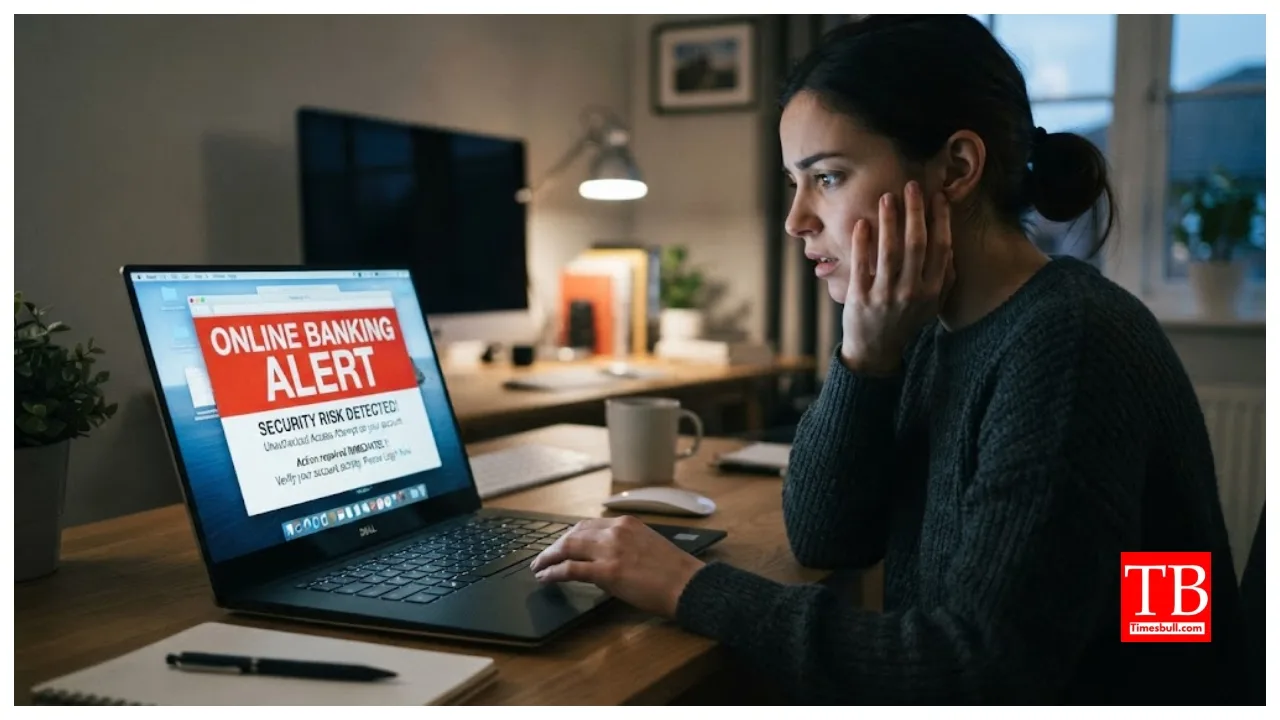
Online Banking Alert: Nowadays, most banking tasks have moved online. Activities ranging from money transfers and balance checks to bill payments, mobile recharges, and online shopping can easily be performed via mobile and internet banking. However, while digital banking has enhanced convenience, it has also increased the risk of online fraud and cybercrime.
Cyber fraudsters often attempt to target individuals using fake links, phone calls, counterfeit websites, messages, and emails. Even a moment of carelessness can lead to money being siphoned off from bank accounts. Therefore, exercising caution while using online banking is essential.
Exercise caution when accessing bank websites
Be careful when using online banking services. Cybercriminals often create websites that mimic legitimate bank sites to solicit sensitive information—such as user IDs, passwords, or other banking details—from customers. Instead of clicking on links sent by unknown individuals, always visit the bank’s official website directly. Avoid logging into internet banking via links received in text messages, WhatsApp, or emails.
Do not share passwords, PINs, or OTPs
A critical part of preventing banking fraud is keeping your confidential information private. Never share your internet banking password, ATM/debit card PIN, UPI PIN, OTP, CVV, card number, or banking login details with anyone.
Create strong passwords
If you use online banking, ensure you create a strong password. Avoid using easily guessable details like your name, date of birth, or mobile number. Incorporate a mix of letters, numbers, and special characters. Ideally, use unique passwords for different services.
Avoid using public Wi-Fi
Using internet banking over public Wi-Fi networks—such as those found at railway stations, airports, hotels, cafes, or cyber cafes—poses a significant security risk. Public Wi-Fi networks are not always secure. Therefore, use a secure network for net banking, mobile banking, or essential financial transactions, and avoid unknown Wi-Fi networks.
Check for HTTPS on the website
Check the browser’s address bar after opening the bank’s website. A secure website address begins with “HTTPS,” and the browser displays a security indicator. A website is considered fully secure only when it uses HTTPS.
Keep mobile devices and computers updated
Regularly update the mobile phone or laptop used for online banking. New updates for operating systems, browsers, and banking apps often include security enhancements.
Download banking apps from official sources
Download mobile banking apps only from official sources. Avoid downloading APK files from random websites, WhatsApp messages, or unknown links; always use official app stores.
Verify the transaction immediately upon receiving an OTP
OTPs verify transactions or logins. Carefully read the information displayed on the screen before entering the OTP. If you receive an unexpected OTP without having initiated a transaction, do not share it with anyone and contact your bank immediately.
Exercise caution with your UPI PIN
Millions of people use UPI, yet many remain confused about the UPI PIN. Generally, you do not need to enter your UPI PIN to receive money. Be cautious if someone claims you must enter your UPI PIN to receive a payment or a refund.
Beware of unknown calls
Cybercriminals often use various pretexts when calling; they may pose as bank officials, police officers, government employees, customer care agents, or representatives of other companies. These calls often create pressure to act immediately.
Block your card immediately if lost
Do not wait if you lose your debit or credit card; block it immediately using the bank’s official app, website, or customer care service. Also contact the bank if you suspect someone has obtained your card details.
Separate email for banking security
If possible, create a dedicated email account for using essential financial services. Secure it with a strong password and two-factor authentication. Also, use screen locks, PINs, or biometric locks on your mobile phone; these provide an extra layer of security if the phone is lost.
What to do in case of online fraud
If you have fallen victim to online fraud or money has been withdrawn from your account without authorisation, there is no need to panic. First, inform your bank about the incident and, if necessary, temporarily block your card, UPI, or internet banking services. You should also report the incident on the National Cyber Reporting Portal.