


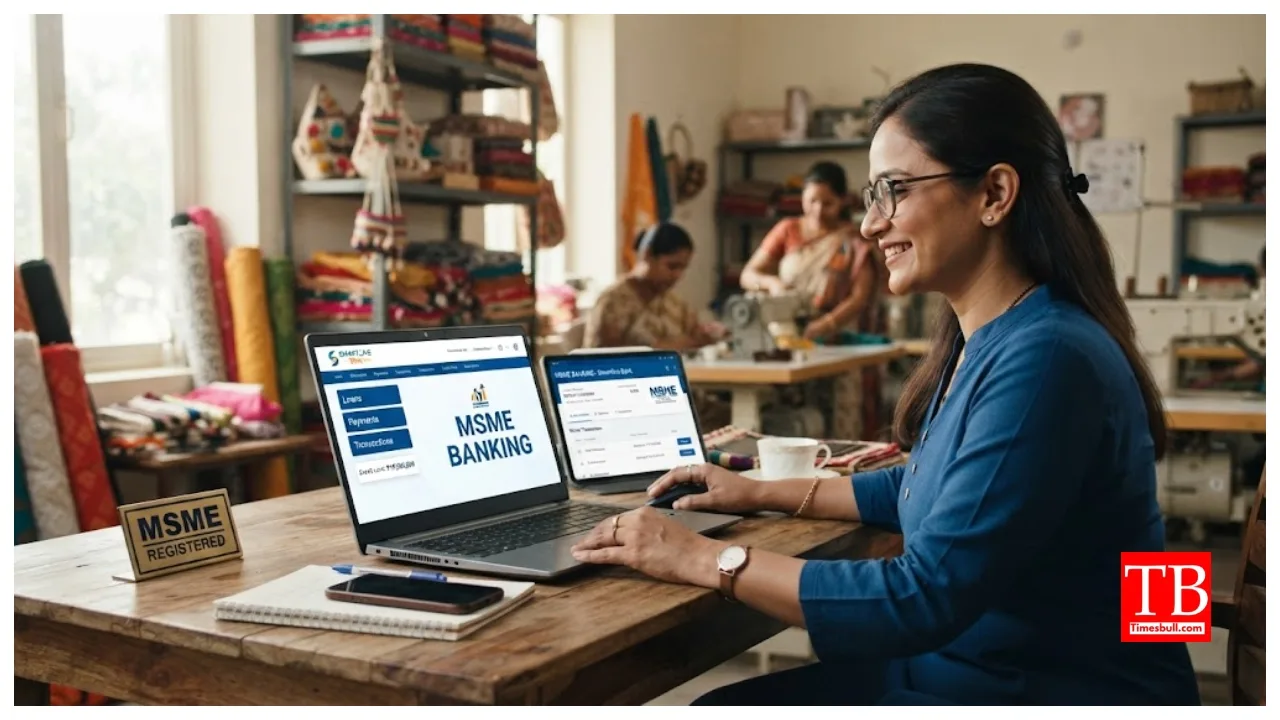
MSME Corporate Banking: Micro, Small, and Medium Enterprises (MSMEs) play a vital role in balancing the country’s economy. Small business owners handle various financial tasks daily, such as collecting payments from customers, paying suppliers, or disbursing employee salaries.
Additionally, they need to purchase raw materials and often require business loans. To streamline these operations, banks offer a range of corporate and business banking services tailored to MSMEs. These services enable business owners to separate business transactions from personal accounts and manage their business’s financial activities effectively.
What is MSME Corporate Banking?
MSME corporate banking refers to banking services designed specifically to meet the needs of small and medium enterprises. Through these services, business owners can access facilities such as current accounts, working capital finance, term loans, trade finance, internet banking, and digital payment solutions. The primary objective is to simplify financial management—including handling money, making payments, meeting funding requirements, and streamlining banking operations—for the business owner.
What is the Current Account Facility?
A current account is essential for business operations, as it provides access to a suite of banking facilities. Business owners use these accounts to handle business-related financial transactions, such as making or receiving payments. A key advantage of maintaining a current account is the ability to keep an accurate record of business finances.
Understanding Working Capital Finance
Running a business requires more than long-term investment; you also need funds to cover daily operational expenses. Working capital finance is designed to meet this specific need. These funds help cover essential business requirements, such as purchasing raw materials, maintaining inventory, paying suppliers, and managing day-to-day operational costs. What is a Term Loan?
If a business needs to purchase new machinery, open an office in a new location, or expand operations, it may need a substantial amount of capital. A term loan can meet these needs. The tenure of this type of loan is significantly longer than that of working capital finance.
What is the Trade Finance Facility?
Trade finance is essential for businesses involved in import-export activities or large-scale commercial transactions. Under this facility, banks provide services such as Letters of Credit, Bank Guarantees, and bill discounting based on requirements. For instance, a Letter of Credit enhances trust regarding payments between the buyer and the seller.
What is Internet Banking?
Today, a significant portion of business banking has moved online. With internet banking, business owners can perform numerous banking tasks from the comfort of their homes or offices. Whether it is checking account balances, viewing bank statements, transferring funds, making payments, or reviewing transaction details—there is no need to visit a bank branch for every minor task.
Vendor Payment Facility
Every business deals with various suppliers and vendors, and making timely payments to them is crucial. Through digital banking facilities, business owners can make online payments to vendors or suppliers, making it easier to maintain payment records.
Mobile Banking Facility
Many banks offer mobile banking—and in some cases, WhatsApp banking—facilities to MSME customers. This enables business owners to check balances and transaction details via their mobile phones and access various banking services.
Benefits of Government Schemes for MSMEs
The government and banks offer numerous schemes and loan facilities for business owners. These include the PM Mudra Scheme, Stand-Up India, and other loan programs, subject to specific requirements and eligibility criteria. Benefits under these schemes are granted based on eligibility and the submission of necessary documents. Documents Required for MSME Banking
Opening a business account with a bank requires specific documents. These include a PAN card, Aadhaar card, proof of business address, GST registration, Udyam registration, business registration documents, bank statements, income certificate, income tax return certificate, etc.