


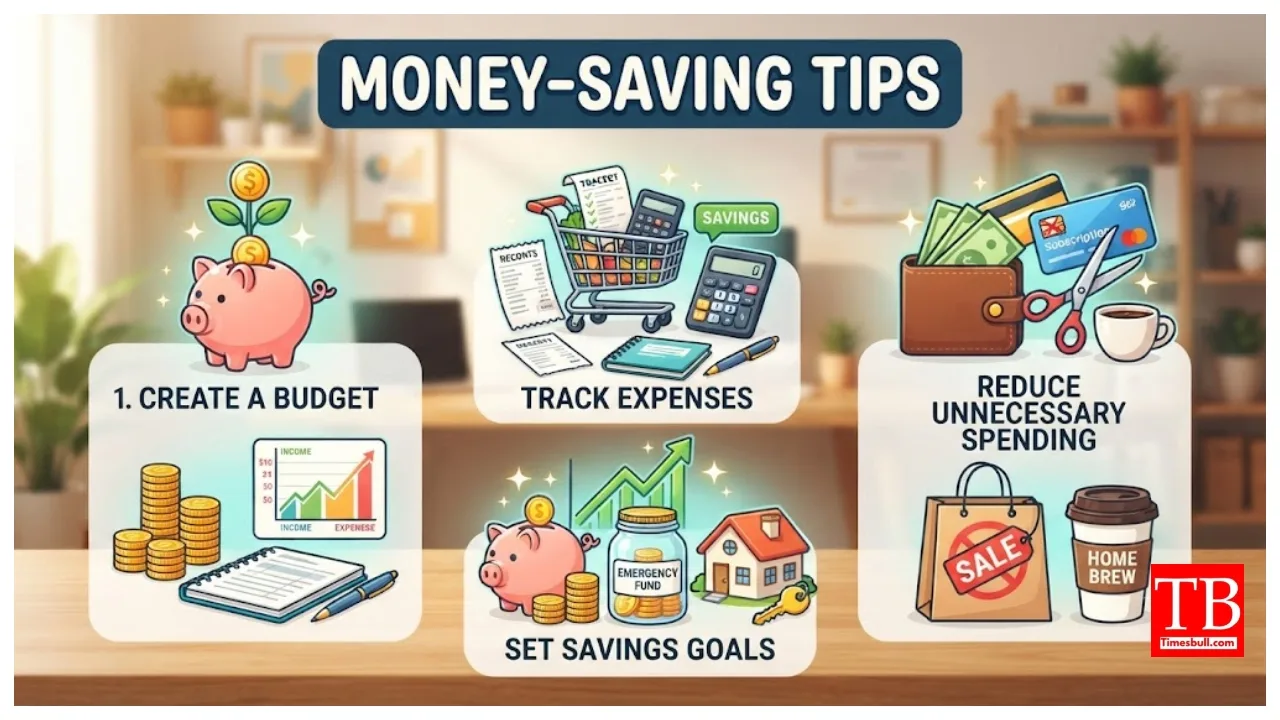
Money-Saving Tips: It is often observed that one’s salary runs out almost as soon as it is received, forcing you to rely on others to cover household expenses. This disrupts the budget for the following month as well. Here, we share strategies that will help you manage household expenses effectively and save money. If you manage the household budget, keep track of costs such as rent, electricity bills, groceries, and children’s school fees.
Small, seemingly insignificant expenses—like ₹50–100 spent on tea/coffee, milk, vegetables, auto-rickshaw or cab fares, or minor online purchases—can quickly add up to a substantial monthly total. You do not need complex methods for this task; simply cultivating the habit of recording daily expenses is enough.
Record Every Expense Immediately
Make an effort to note down expenses the moment they occur. You can use the notes app on your mobile phone or an Excel sheet for this purpose. For instance, if you spend ₹60 on milk, ₹80 on vegetables, ₹120 on auto-rickshaw fares, and ₹150 on online purchases, record these amounts on the same day. If recording expenses every time feels tedious, you can set aside 5 to 10 minutes at night to log the day’s total spending.
Categorise Your Expenses
Simply noting down the amount spent does not reveal where the bulk of the money is going. Therefore, categorise your expenses—such as household supplies, children’s expenses, commuting, dining out, and online shopping. When you review your accounts at the end of the month, you will easily be able to identify areas where spending is excessive relative to actual needs.
Track Both UPI and Cash Transactions
Nowadays, even the smallest purchases are often made via UPI. Consequently, tracking only cash expenses is insufficient; you must keep a record of digital transactions as well. Check your bank account and UPI transaction history once a week. This will help you spot any expenses you might have missed. For cash expenses, you can keep a note on your mobile phone or carry a small diary.
Review your expenses weekly.
Instead of waiting until the end of the month to review your finances, check them on a weekly basis. Analyse where you spent the most money during the week. If spending on online shopping, tea or coffee outside, or auto-rickshaws and cabs is rising, you can cut back on these expenses the following week.
Set limits for small expenses.
You do not need to spend money on every little thing. The easiest approach is to set a monthly limit for such purchases—for instance, by allocating a specific amount for non-essential online shopping or dining out. This helps prevent impulsive spending and ensures your monthly budget remains on track.