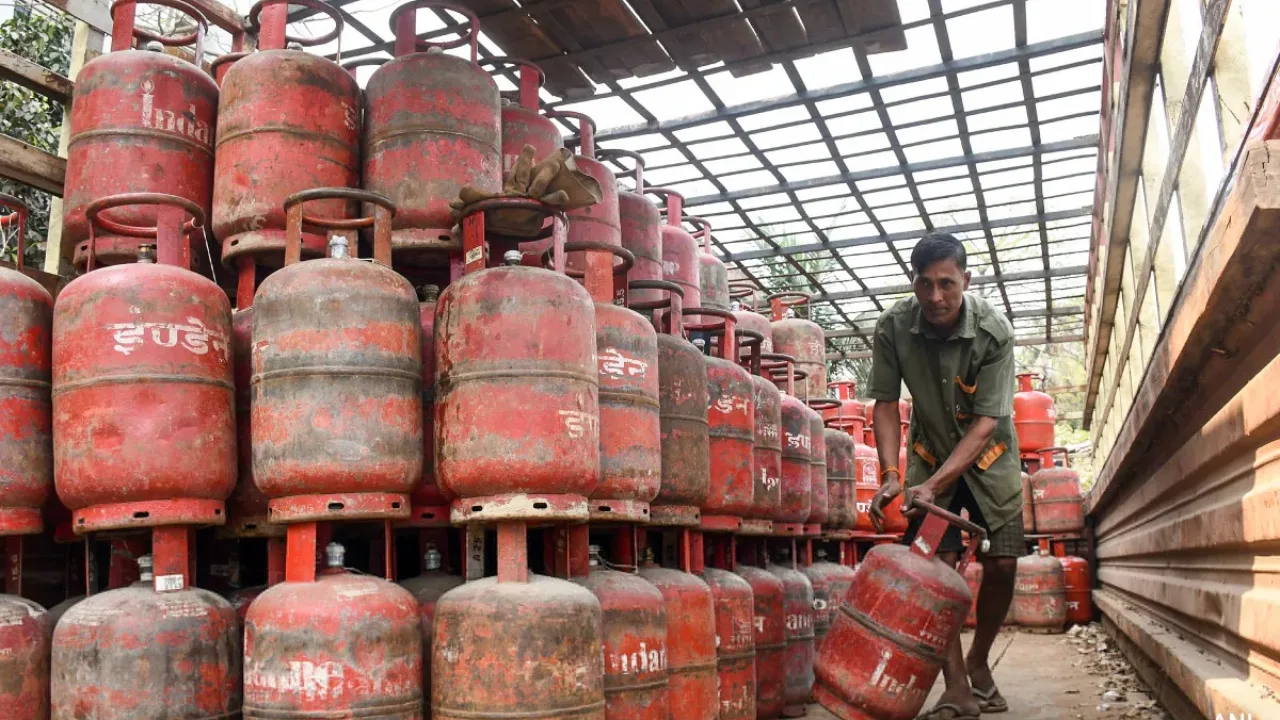
LPG Crisis: The government has approved an additional 20% allocation of commercial LPG to states and union territories, increasing the total allocation to 50%. The situation is returning to normal as domestic production improves. India’s energy supply was disrupted by the three-week war in West Asia. LPG supplies to commercial establishments were initially cut due to the war. This step was taken to prioritize domestic kitchens, where one-fifth of their supply was later restored. The government had offered an additional 10% supply to states if they accelerated piped gas projects.
The government on Saturday announced a 20 percent increase in supply to restaurants, hotels, industrial canteens, food processing units, community kitchens, and subsidized food outlets. The government also assured migrant workers of assistance with LPG. The government stated that the additional allocation of commercial cylinders would depend on commercial establishments registering with oil companies and applying for piped natural gas connections. An official statement also stated that domestic LPG supplies are stable and there is no shortage at present.
What changes were made after the West Asia crisis, what has changed now?
To mitigate the LPG shortage caused by the ongoing geopolitical tensions in West Asia (Iran-Israel conflict), the Government of India has increased the quota for commercial (19 kg) LPG cylinders by 50%. This move was taken to provide relief to hotels, restaurants, and small businesses, as after the outbreak of hostilities in West Asia, commercial LPG supplies in many states, including Delhi, were limited to only 20% of normal consumption (approximately 1,800 cylinders/day) to ensure priority for domestic cooking gas. Now, the Central Government has increased this quota to 50% by releasing additional quota.
Measures to reduce supply pressure
The government is promoting the transition to piped natural gas (PNG) to ease supply pressures. PNG is being encouraged, particularly for commercial establishments. States have been urged to expedite approvals for city gas distribution networks. All refineries are operating at high capacity. Adequate crude oil reserves are ensuring the availability of petrol and diesel. No fuel shortages have been reported at retail outlets.
Natural gas supply and other measures
Priority sectors, including domestic PNG and compressed natural gas (CNG) transportation, are receiving full natural gas supplies. Industrial consumers are receiving approximately 80% of their normal supply. Additional measures include increased domestic LPG production. Booking intervals have also been extended to facilitate consumers. Additional kerosene supplies have also been provided to states to provide alternative fuel options.
Surveillance and maritime status
States and Union Territories have been directed to maintain strict vigilance against hoarding and black marketing. More than 3,500 raids have been conducted across the country. These raids have resulted in the seizure of approximately 1,400 LPG cylinders. Most states have established control rooms and district-level monitoring committees to monitor supply and distribution. In the maritime domain, the government reported that 22 Indian-flagged ships and 611 sailors remain in the western Persian Gulf region. No untoward incidents have been reported in the past 24 hours.
Latest News
- How to Replace Siri with ChatGPT on iPhone: Step-by-Step iOS Setup

- Petrol-Diesel Price Today: 24 मई को कितना बदला पेट्रोल-डीजल का भाव, चेक करें 1 लीटर की कीमत
- America Update: व्हाइट हाउस के दरवाजे पर 25 राउंड फायरिंग से मची खलबली, संदिग्ध हमलावर की मौत

- Tata Tiago Facelift Launching Soon – Aggressive Design And High-Tech Cabin Revealed

- LPG Gas Connection Transfer Made Easy, Learn the Complete Process
- New Honda City Facelift 2026 Launched – Sporty Coupe Look And ADAS Safety Revealed

- 8th Pay Commission: केंद्रीय कर्मचारियों की बढ़ेगी बंपर सैलरी! आयोग ने उठाया यह बड़ा कदम

- China: चीन के कोयला खदान में भयंकर विस्फोट, 90 लोगों की गई जान, पीएम मोदी ने भी जताया दुख

- Weather warning – Heavy Rain, thunderstorms, lightning Alerts for 13 States Over Next 3 Days
- UP TGT Exam City Slip 2026 Released – Download at upessc.up.gov.in, Exam June 3-4