


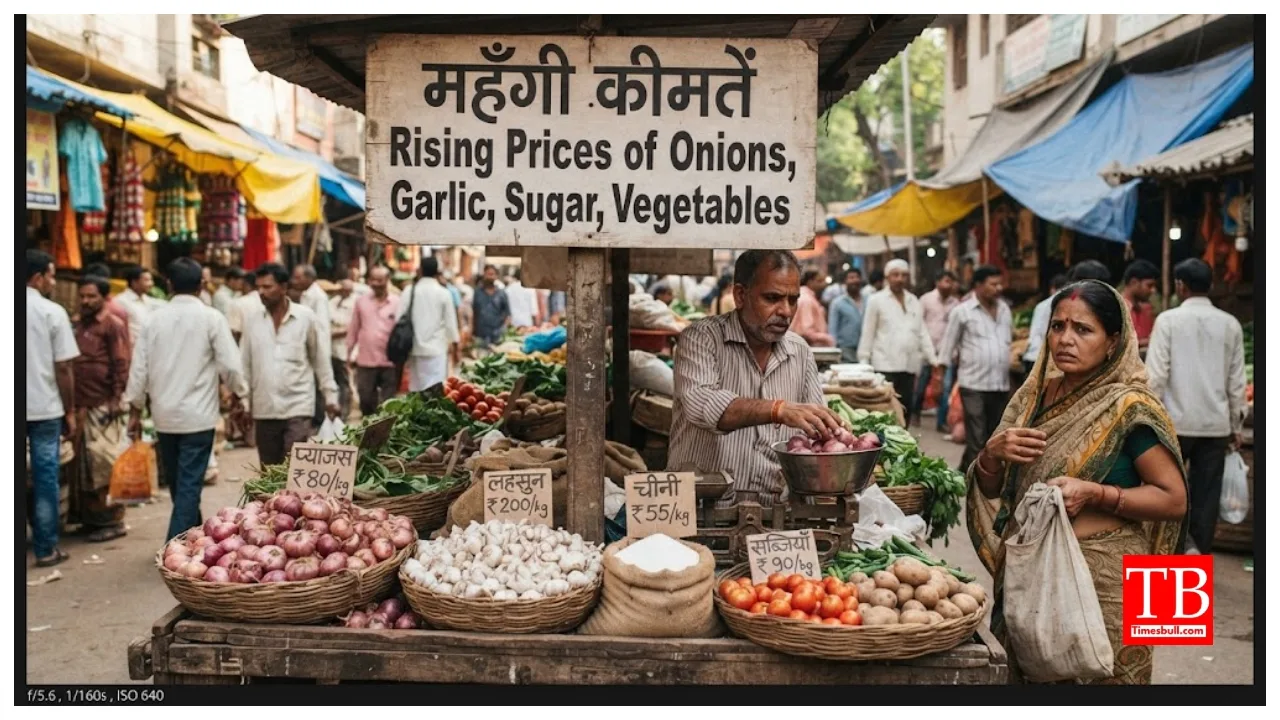
Food Inflation: In these times of high inflation, people’s daily budgets have been disrupted, leaving the common man feeling quite helpless. Families are bearing the brunt of this skyrocketing inflation. Previously, people managed their households by making minor cutbacks—often compromising on items like protein-rich foods, milk, and nutritious meals—but the relentless rise in prices has pushed them into an even more difficult situation.
Women managing the kitchen are now forced to reconsider how much cooking oil to use or how much lentil curry (*dal*) to prepare. They have to decide whether to switch to cheaper vegetables or cut back on spending on milk and fruits. This is impacting not only people’s pockets but also their health.
What has become expensive?
If you look at grocery and vegetable bills from the past few months, it becomes clear that rising inflation isn’t limited to one item; it has disrupted the kitchen budget.
Onion and garlic prices
Onion and garlic prices are shocking the common man. Garlic prices have doubled in many cities, and onions are selling at nearly twice their usual rates. Additionally, the prices of fresh coriander and ginger have risen, further straining household food budgets.
Green vegetable prices
Prices for green vegetables—such as tomatoes, cauliflower, okra (ladyfinger), bottle gourd, and beans—have soared well beyond the reach of the average consumer. The monsoon season and rising transportation costs are driving a continuous increase in vegetable prices.
Cooking oil and sugar prices
Cooking oils—such as mustard, soybean, and sunflower—are essential commodities. Prices for these oils, as well as sugar and other basic household necessities, have increased by 10% to 15%.
Milk and dairy product prices
Furthermore, milk and dairy product prices have risen significantly compared to last year. Rising milk prices have increased the cost of curd, butter, paneer, and buttermilk.
Festive Budgets Strained
Inflation has gripped the common man even before the festive season. Prices of essentials—ranging from sugar, lentils (dal), rice, and cooking oil to vegetables—have surged. Between July and August 24, the price of sugar rose from ₹45 to ₹65 per kg, while rice prices climbed from ₹90 to ₹105 per kg. Arhar dal (split pigeon peas) rose from ₹120 to ₹150 per kg, and mustard oil reached ₹200 per litre.
Additionally, tea leaves have risen from ₹350 to ₹450 per kg. Among vegetables, onion prices have doubled from ₹30 to ₹60 per kg, and okra (bhindi) has also risen from ₹30 to ₹60 per kg. Cauliflower prices have jumped from ₹50 to ₹100 per kg, and bottle gourd (lauki) from ₹40 to ₹80 per kg. Continuous rains and floods have further contributed to this significant price hike.
Rising Prices of Dry Fruits
The cost of dry fruits—staples during the festive season—has placed a heavy burden on household budgets. Cashew prices have risen from approximately ₹1,000 to ₹1,500 per kg, meaning an extra expenditure of ₹500 per kilogram. Almond prices have also increased from ₹800 to around ₹1,100 per kg. Given these rates, buying dry fruits for the festival has become as difficult as buying land on the moon.
A ₹10,000 Kitchen Budget Now Feels Hefty
If your kitchen budget is ₹10,000, recent hikes in the prices of lentils, oil, sugar, and vegetables mean the actual cost of maintaining the kitchen has risen significantly. Families now face two options: either increase their kitchen budget or cut back on food consumption.