


India Railways: Railway Minister Ashwini Vaishnav announced on Saturday that Indian Railways plans to upgrade seven major corridors to four parallel tracks, enabling more than 1,000 additional regular trains to operate. The corridors include routes linking Delhi, Mumbai, Kolkata, and Chennai, along with three diagonal routes: Delhi–Chennai, Mumbai–Kolkata, and Delhi–Guwahati.
Vaishnav said the four-track expansion will boost railway capacity, ease congestion, and reduce pressure on passenger waiting lists and reservation availability. The additional trains will begin operating only after the expansion is completed. The minister also outlined preparations for the festive season, including 18,000 special trains, around 700 AI-enabled cameras, and dedicated passenger holding areas at about 20 railway stations.
Plan to add four tracks to seven major corridors
Explaining the railway’s long-term plans to expand capacity, Vaishnav said seven major corridors are being upgraded to four lines to support more train services. The projects cover routes connecting Delhi, Kolkata, Chennai, and Mumbai, which form part of India’s “Golden Quadrilateral” railway network. The plan also covers three diagonal corridors: Delhi to Chennai, Mumbai to Kolkata, and Delhi to Guwahati.
“Four-lining” refers to adding parallel tracks to railway routes, expanding sections that currently have two lines to four. The additional infrastructure will create more capacity for passenger and freight trains and help reduce congestion on busy routes.
Vaishnav said the government has prioritised these corridors to increase capacity and tackle delays caused by heavy traffic on existing lines. He also noted how frequently the Union Cabinet approves railway infrastructure projects, saying the Prime Minister often clears new projects at every second or third Cabinet meeting.
Over 1,000 additional regular trains after track expansion
The minister said that after the completion of four-lining on these seven corridors, Indian Railways will be able to run more than 1,000 additional regular trains. Vaishnav said, “Once this four-lining is complete, we will be able to run more than 1,000 additional regular trains. This will significantly reduce the pressure on waiting lists and reservation availability.”
These proposed additional services will be regular trains, distinct from special trains operated during festivals or other times of heavy passenger traffic. The expansion is intended to increase capacity on busy routes, allowing the railways to accommodate freight traffic as well as additional passenger services.
Pressure on railway lines due to coal transportation and heavy passenger rush
Responding to questions about train delays and network congestion, Vaishnav said that Indian Railways is currently facing the most pressure due to the heavy movement of coal and other goods. He said that freight, especially coal, is putting pressure on the existing network, and this is happening at a time when passenger traffic is also very high.
He said that we are currently going through a period of peak congestion. The movement of coal and other goods is at its peak. The Minister explained that in an effort to increase capacity, the Railways has laid 36,000 kilometers of additional tracks in the last 10 years. He stressed that laying more tracks and expanding railway infrastructure is essential to permanently address this congestion problem. He said that laying new tracks and increasing capacity is crucial. This is the only permanent solution. We must continue laying more tracks.
Railways runs 18,000 special trains for passengers during the festive season
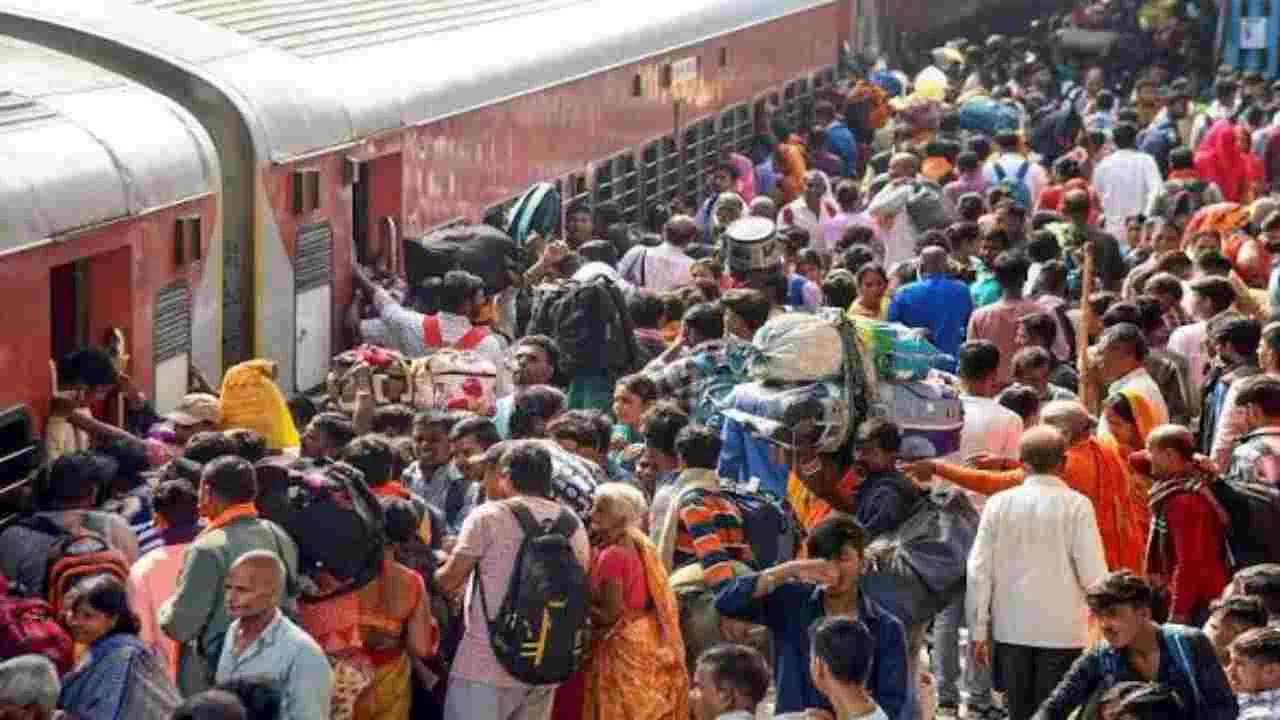
Additionally, to handle the extra rush of passengers during Durga Puja, Diwali, and Chhath, the Indian Railways has deployed 18,000 special trains this festive season. This number is higher than the 12,000 special trains operated during the same festive season last year. Vaishnav explained that special trains have been stationed at several locations in Delhi, including Shakur Basti, Nizamuddin, Anand Vihar, Anand Vihar Terminal, and the areas around New Delhi Railway Station. He also stated that in the last financial year, the Indian Railways operated approximately 75,000 special trains. This number is expected to exceed 80,000 in the current financial year.