


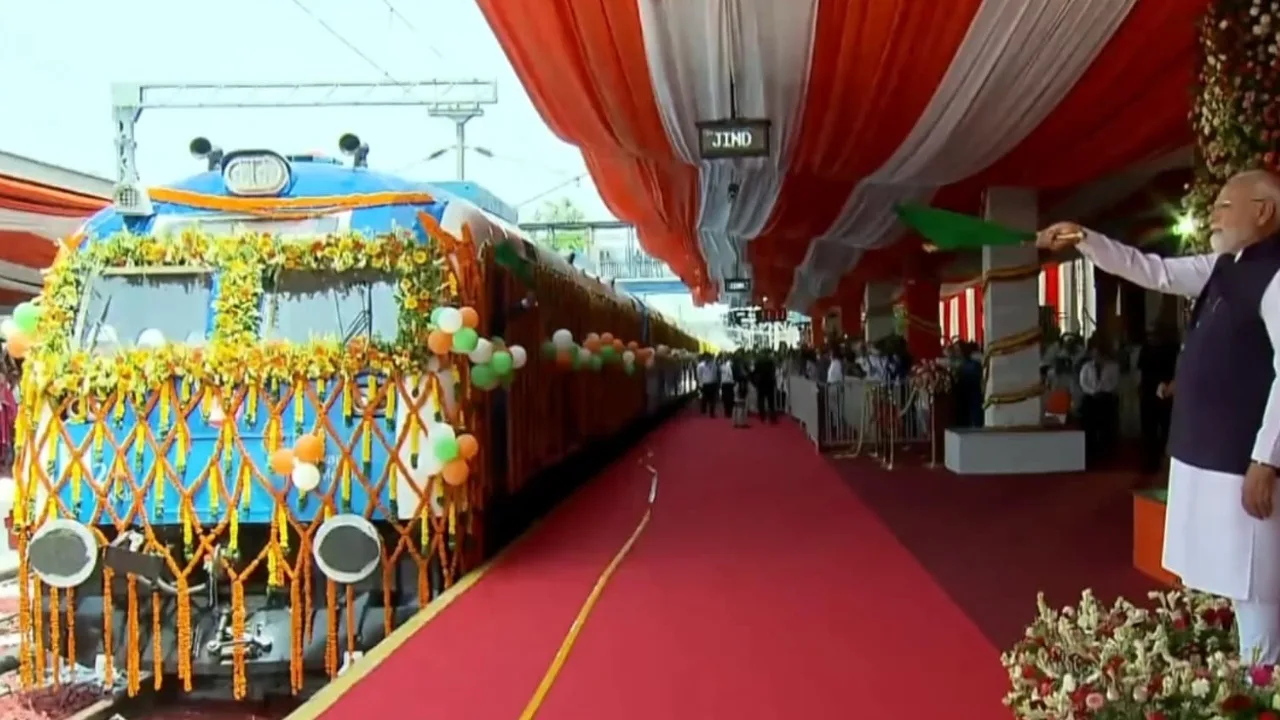
Hydrogen Train: Picture a train that has the capacity to transport 2,600 individuals, but sometimes only carries 40 to 60 passengers during its journey. The sole hydrogen-powered train in the country is facing a similar situation. The train, which operates between Jind and Sonipat in Haryana, is experiencing low passenger numbers, prompting the railways to consider extending its route to Delhi to boost ridership. However, there are technical and operational challenges associated with this proposed extension.
Currently, the hydrogen train is in operation on the 89-kilometer Jind-Sonipat section. Despite having the capacity for 2,600 passengers, it typically only accommodates 40 to 60 passengers on the entire trip. Due to the low number of passengers, the train is only making one round trip per day instead of the initially planned two trips. The Northern Railway has been managing the train for the last two months, with a team of experts overseeing its operations and the new technology.
The decision to extend the train to Delhi is driven by the desire to increase passenger numbers. The Railways are considering extending the route to Azadpur station in Delhi, a major wholesale market for fruits and vegetables. Local residents have long been requesting this extension, believing it would be more convenient. The Railways are evaluating various aspects of this proposal, including safety, technical requirements, and operational feasibility, before making a final decision.
The hydrogen train, a milestone in clean and sustainable transportation technology, was inaugurated on July 17th. Unlike traditional diesel engines, this train uses hydrogen to generate electricity, making it a more environmentally friendly option. India is among the few countries actively developing hydrogen-based rail transport technology.
Low passenger traffic is not a new issue on this route, as even the DEMU trains before the hydrogen train faced similar challenges. Despite operating three other DEMU trains on the same route, passenger numbers remain low, attributed to the limited daily commuters and industrial workers in the area.
While extending the route to Delhi seems straightforward, there are practical challenges for the Railways. The current hydrogen train with 10 coaches and a capacity of 2,600 passengers may not be sufficient for the demand originating from Delhi, which typically requires trains with 18-20 coaches. Additionally, Delhi’s busy rail network and track availability pose scheduling challenges for the new train.
Fuel availability is not a significant concern as the hydrogen train can cover approximately 250 to 300 kilometers on a single tank. However, refueling facilities are currently only available in Jind, necessitating careful planning for refueling arrangements if the service is extended to Delhi.
In case the Delhi route proves to be problematic, an alternative route via Panipat-Safidon has been suggested. Local passengers propose running the train from Sonipat to Panipat, then through Safidon to Jind, creating a circuit of around 180 kilometers. This alternative route is seen as a way to increase daily commuters and enhance train utilization.
Railway officials say that the hydrogen train is based on new technology, so there will be no rush to expand it. A team of experts is monitoring the train’s current operations, as well as the trials and technical aspects of the extension to Delhi. According to the Railways, passenger safety is the top priority. This means that the Railways is currently facing the question not only of why a 2,600-seater train is receiving only 40-60 passengers, but also of how to change its route to reach more passengers. Extension to Delhi is one option, while the Panipat-Safidon circuit could be another route. The final decision will be made after reviewing all these aspects.