


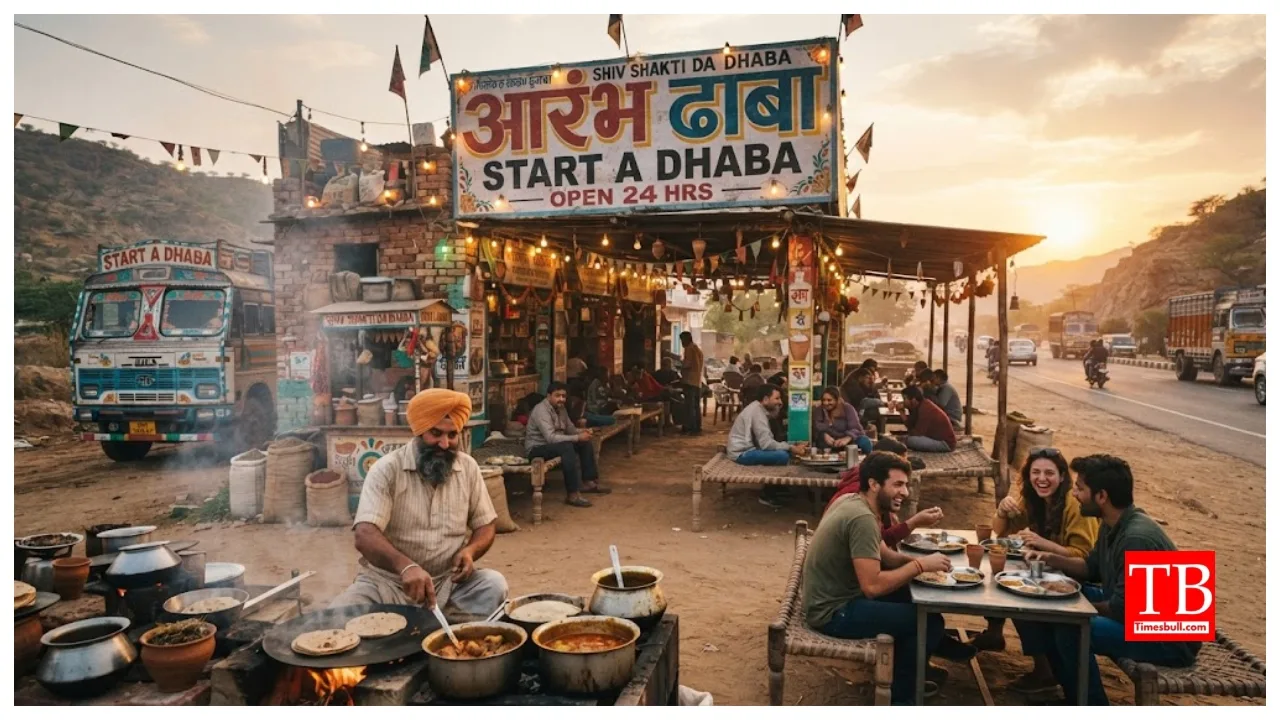
Dhaba Business: Opening a dhaba (roadside eatery) is currently a lucrative and low-risk business venture. Dhabas have always enjoyed immense popularity in our country because they offer tasty, filling meals at affordable prices—unlike large hotels, which are often beyond the financial reach of many. Consequently, dhabas appeal to people from all walks of life.
However, simply opening a dhaba is not enough. To ensure your business runs smoothly in the long run, avoids legal complications, and has the potential for future expansion, obtaining the necessary government licences and registrations is crucial.
Many people start dhabas without a licence, only to receive notices later from the municipal corporation, the Food Department, or GST authorities, which can lead to the business being shut down. Let us look at the licences required to start your own dhaba and the associated procedures.
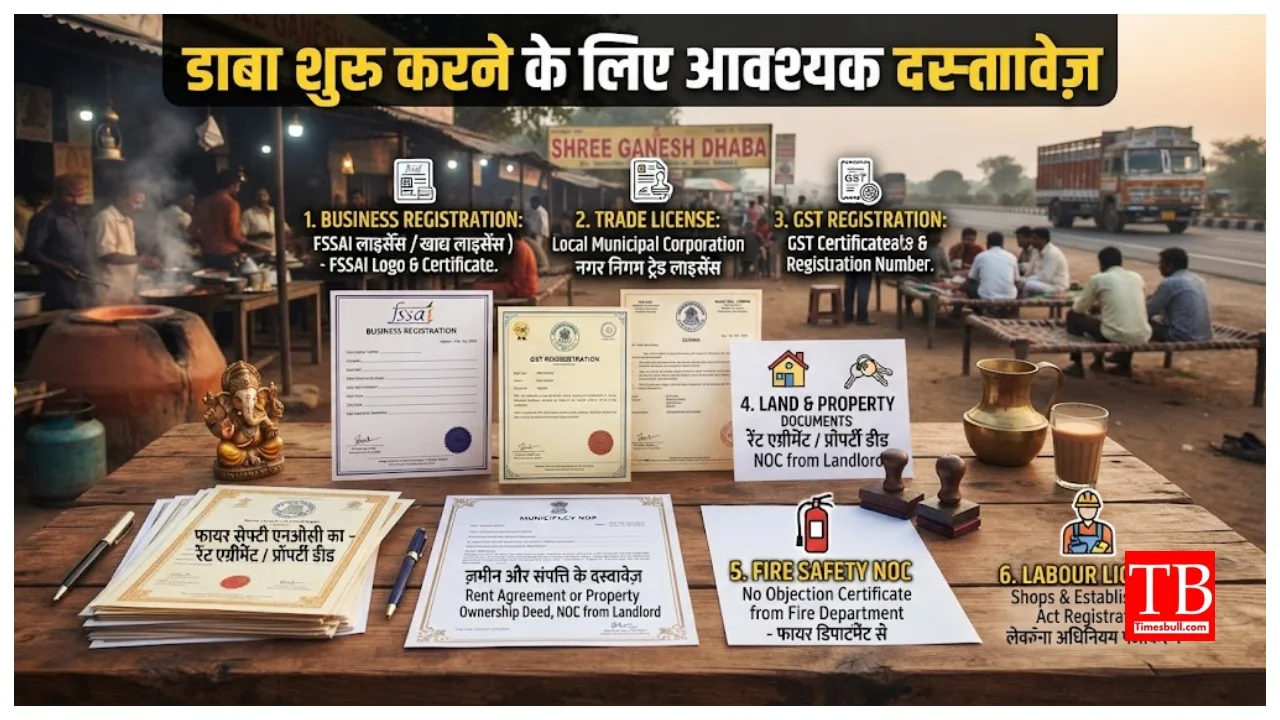
Essential Licences and Registrations for Starting a Dhaba
FSSAI License (Food License): An FSSAI licence is mandatory for opening a dhaba. FSSAI stands for the Food Safety and Standards Authority of India. This licence certifies that the food prepared at your dhaba is safe for consumption, that hygiene standards are maintained, and that the food is free from adulteration. Operating a *dhaba* without an FSSAI licence is illegal. You can apply for this licence online through the official website.
Trade Licence: A trade licence is issued by your local municipal corporation, municipality, or *panchayat*. It grants you permission to operate a *dhaba* in that specific area and certifies that your business complies with local regulations. Applications for a trade licence can be submitted at the municipal corporation office or, in many places, via an online portal.
Health Trade Licence: A health trade licence is issued by the Health Department. The primary objective of this licence is to ensure that hythe dhaba maintains hygiene and sanitation standardsThis ensures there is no risk of filth or contamination spreading and that standards for water, utensils, and kitchen hygiene are maintained; in many cities, the health licence is linked to the trade licence.
GST Registration: If your dhaba’s annual turnover exceeds the government-mandated limit, GST registration becomes mandatory. While it may not be required at the initial stage of setting up the dhaba, it becomes necessary later on.
Shop and Establishment Act Registration: This registration is obtained from your state’s Labour Department. It establishes your dhaba as a legal business entity, ensures the government has records of your employees, and sets regulations regarding working hours and leave.
Fire Department NOC: If your dhaba is large and involves the use of LPG gas, tandoors, or significant open-flame cooking, you must obtain a Fire Safety NOC.
Learn the procedure for obtaining a dhaba licence:
First, decide on a name for your dhaba.
Next, finalise the location.
Apply online for the FSSAI licence.
Apply to the municipal corporation for a trade licence.
Obtain permissions from the health and fire departments.
Register for GST and under the Shop Act if required.
An inspection is conducted after all documents are submitted.
You receive the licence once everything is found to be in order.