


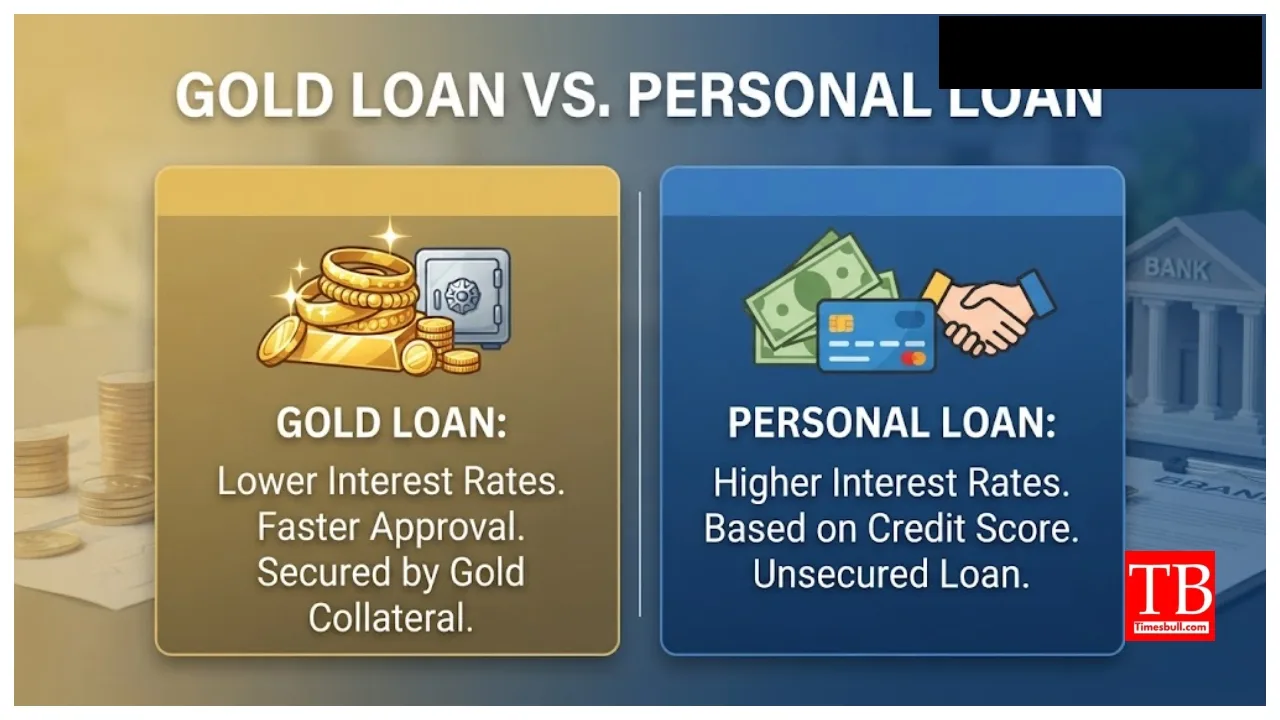
Gold Loan vs. Personal Loan: People often face sudden financial crises and wonder how to resolve them. In such situations, they might turn to close friends or family for money. Borrowing often becomes a necessity for expenses like children’s education, essential home repairs, or other major needs. Personal loans and gold loans are two common options available at such times. However, the costs associated with them differ. Especially when the loan amount is large and the tenure is long, even a small difference in interest rates can result in a variation of thousands of rupees.
For instance, if you take a loan of ₹5 lakh for 3 years, and the personal loan interest rate is 12% while the effective gold loan rate is 9.95%, the gold loan could work out to be cheaper by approximately ₹17,500. This is due not only to the lower EMI but also to the lower total interest paid over the loan tenure.
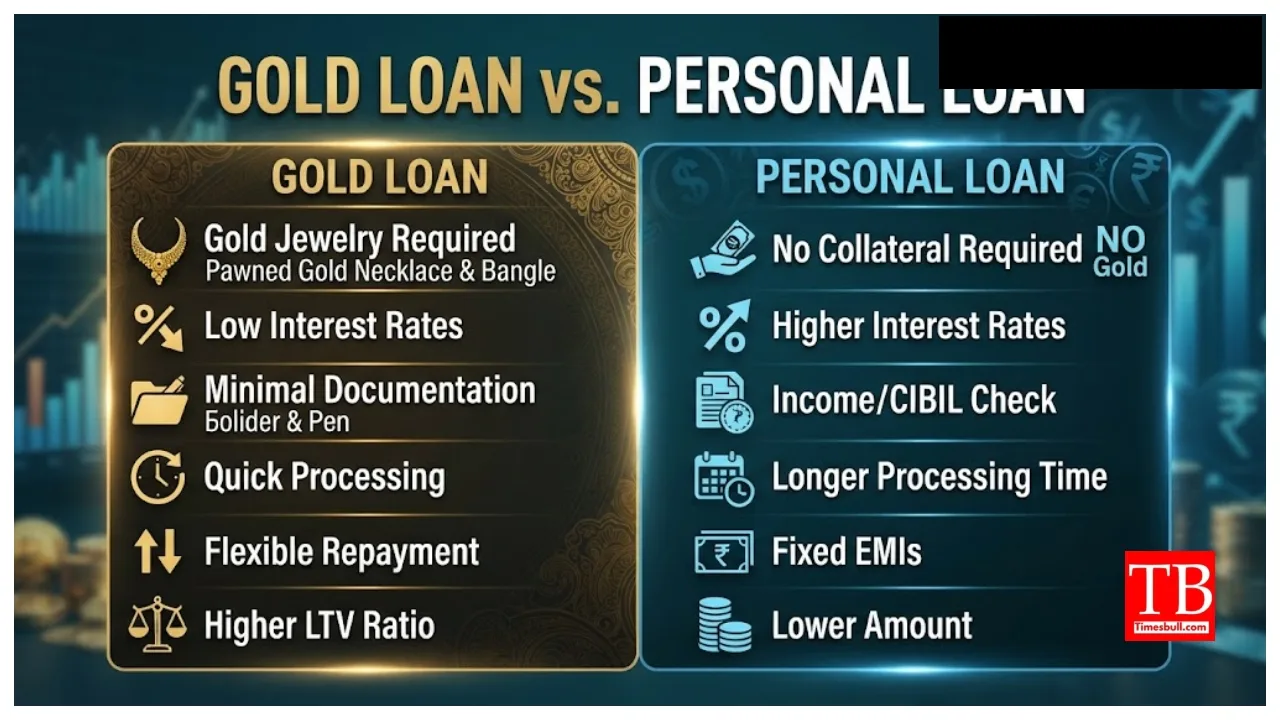
Difference between Gold Loan and Personal Loan
The difference between a gold loan and a personal loan can be easily understood. For a personal loan of ₹5 lakh with a 3-year term and 12% interest, the EMI would be about ₹16,607. The total payment over three years would be around ₹5.98 lakh, with interest accounting for approximately ₹97,850.
In contrast, for a gold loan with an effective rate of 9.95%, the EMI comes to approximately ₹16,122. The total payment over the tenure would be around ₹5.80 lakh, with total interest amounting to approximately ₹80,387. In this example, the monthly EMI for the gold loan is about ₹485 lower. Over 3 years, the total difference in interest costs amounts to approximately ₹17,463—or roughly ₹17,500.
Don’t decide based solely on the interest rate.
It is important to understand that the starting interest rate displayed on a bank’s website does not guarantee you will receive the loan at that same rate; for instance, as of September 2026, SBI’s personal loan rates range from approximately 10% to 15%. Your actual rate depends on factors such as your credit score, income, existing loans, relationship with the bank, and repayment capacity. Consequently, if you secure a personal loan at 10.5% or 11% instead of 12%, the entire financial calculation changes. Similarly, the actual cost of a gold loan is not determined solely by the interest rate advertised in promotional materials.
What are the benefits of a personal loan?
A key feature of a personal loan is that it does not require you to pledge assets or gold as collateral; it is classified as an unsecured loan. Banks typically approve these loans based on your income, financial history, credit score, existing EMI obligations, and repayment capacity. If you have a decent credit profile and a steady income, you may qualify for a lower interest rate. Many customers also receive offers for pre-approved personal loans; however, it is crucial to consider not just the rate but also processing fees, prepayment charges, and other associated costs.
Why might a gold loan be cheaper?
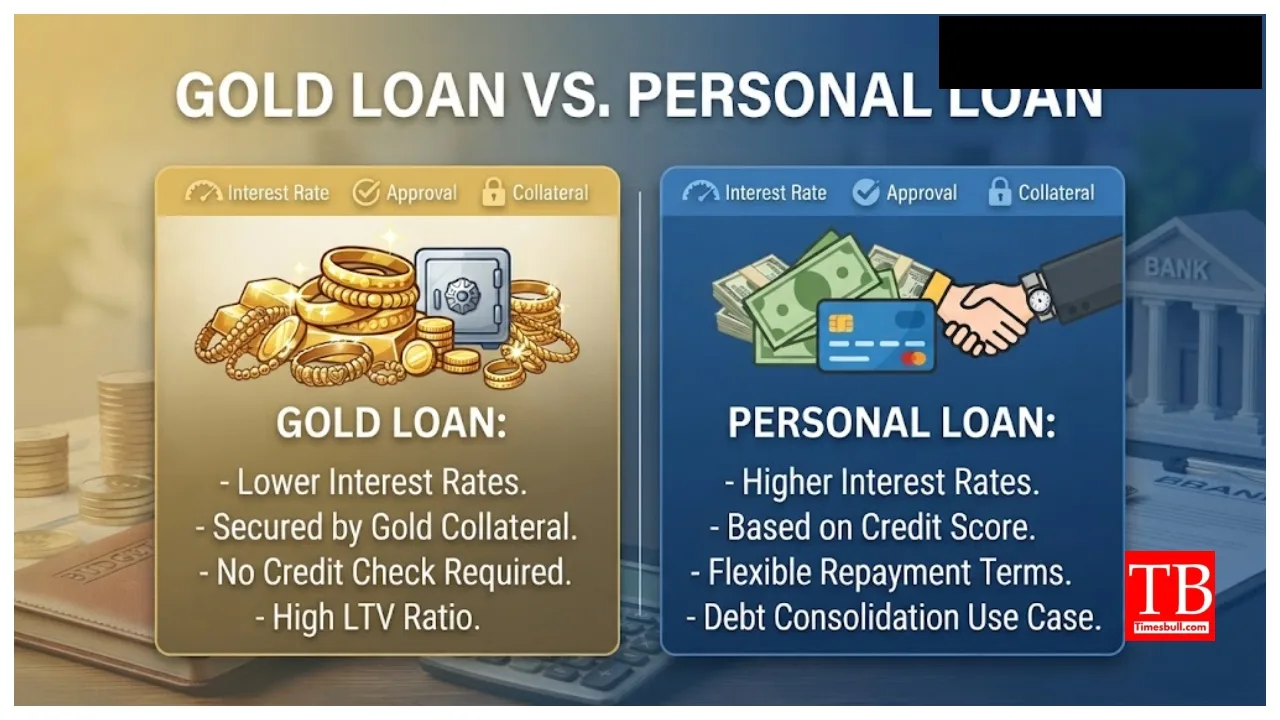
With a gold loan, a customer pledges gold jewellery to the bank or lending institution, which makes it a secured loan. From the bank’s perspective, the risk is significantly lower because the gold serves as collateral. Consequently, gold loan interest rates are often lower than those for personal loans. However, a lower interest rate does not mean there are no risks involved.
What is the biggest risk?
The most critical aspect to consider when taking a gold loan is that you are pledging your jewellery as collateral. If you fail to pay the outstanding EMI amount on time, the lending institution may take action against the pledged gold in accordance with the rules and terms of the agreement. This implies that, alongside lower interest rates, there is also an associated financial risk. If the jewellery is very important to your family, consider this before taking out the loan.