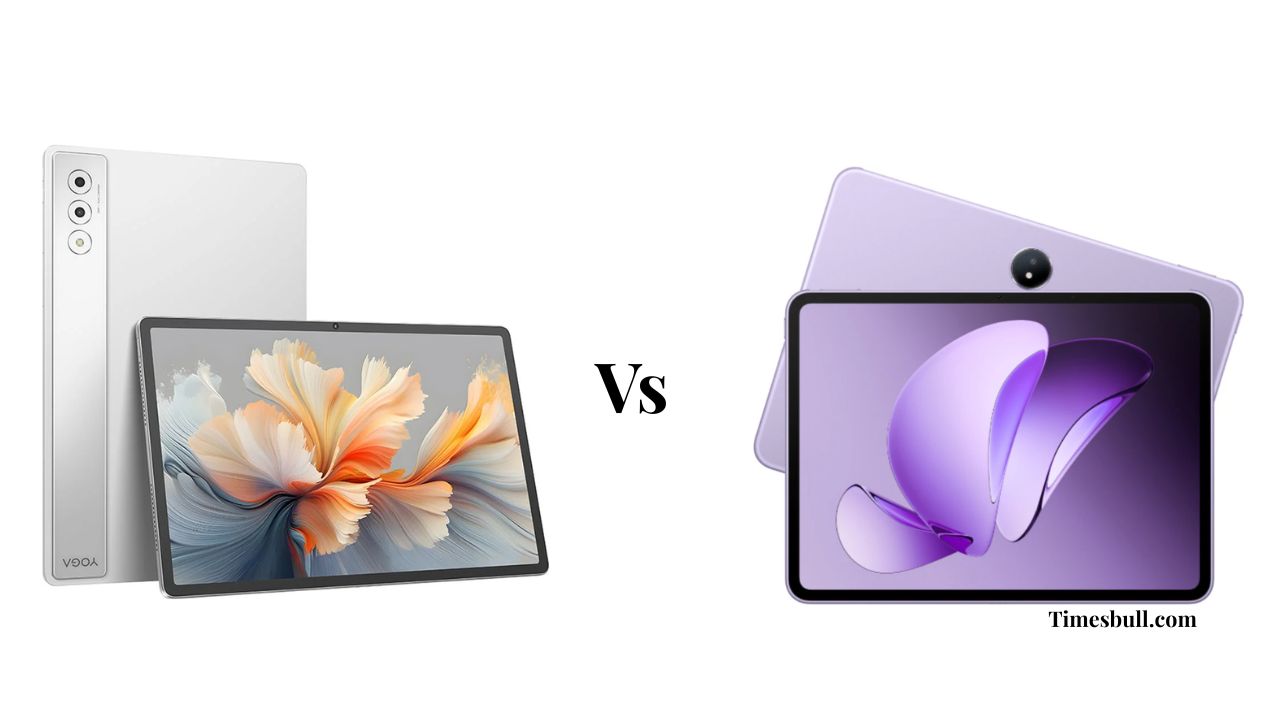
Lenovo Yoga Pad Pro AI 2024 vs Oppo Pad 3: Lenovo Yoga Pad Pro AI (2024) and Oppo Pad 3 are two solid contenders if one is eyeing a high-end Android tablet in 2025. While both the Android tablets boast premium hardware and software upgrades, the way they appeal to users may differ. Let’s take a look at more of what offers better performance, display, and value.
Read More: Canon R6 Mark II or Lumix BS1H: Which Full-Frame Camera Should You Buy?
Read More: Insta360 Go 3 vs GoPro Hero 11: Lightweight Innovation Meets Raw Power
Lenovo Yoga Pad Pro AI (2024) Processor vs Oppo Pad 3
The 2024 Lenovo Yoga Pad Pro AI is powered by the Snapdragon 8 Gen 3-a powerhouse chip known for flagship-level performance. Paired with 12GB RAM, this device gives you absolutely smooth multitasking, gaming, and productivity. Oppo, on the other hand, uses a MediaTek Dimensity 8350 chip, paired with 8GB RAM; while capable, it falls a step behind in raw power. If performance and speed are important, Lenovo leads here without question.
Display and Battery
Lenovo has squeezed in a big 12.7-inch display with a resolution of 2944×1840 that promises crystal clear visuals and a better viewing experience. The larger screen makes it perfect for streaming and work tasks. Oppo’s 11.61-inch display offers a slightly higher pixel density with a 2800×2000 resolution that looks sharp but feels smaller. Lenovo also comes with a huge 10,200mAh battery promising long hours of usage, while Oppo’s battery details are yet to come. For now, Lenovo clearly leads in both size and endurance.
Camera Comparison
The Oppo Pad 3 offers an 8MP rear camera and an 8MP front camera, good enough for video calls and light photography. Lenovo Yoga Pad Pro AI, on the other hand, does not mention anything about the camera and thus seems to focus more on performance and productivity at the expense of camera capabilities. If you do care about camera features, then the Oppo Pad 3 might be at an advantage here.
Software and Storage
Software-wise, Oppo Pad 3 runs Android 15 with ColorOS 15, meaning users get the latest version of Android right out of the box. Lenovo arrives with Android 14 and its interface known as ZUXOS. Both are user-friendly, but Oppo manages to take a lead in terms of freshness in software. Speaking of storage, Lenovo has 256GB while Oppo has only 128GB. For those people who need some extra room for files, apps, and content, Lenovo is a better bargain.
Connectivity Features
Both offer Wi-Fi, GPS, Bluetooth, and USB Type-C. In contrast, Oppo gains a slight lead with NFC support and Bluetooth 5.4, whereas Lenovo’s wireless connectivity stays solid but not quite as feature-rich.
Conclusion
The Lenovo Yoga Pad Pro AI (2024) seems to be more performance-oriented, with a Snapdragon 8 Gen 3 chipset, a larger display, and bigger storage. Meanwhile, the Oppo Pad 3 impresses with a well-rounded Android experience, modern software, and superior cameras. If productivity and power are what users want, then Lenovo wins. But for a smooth, light experience with the latest Android version, Oppo sure makes a compelling offer.