


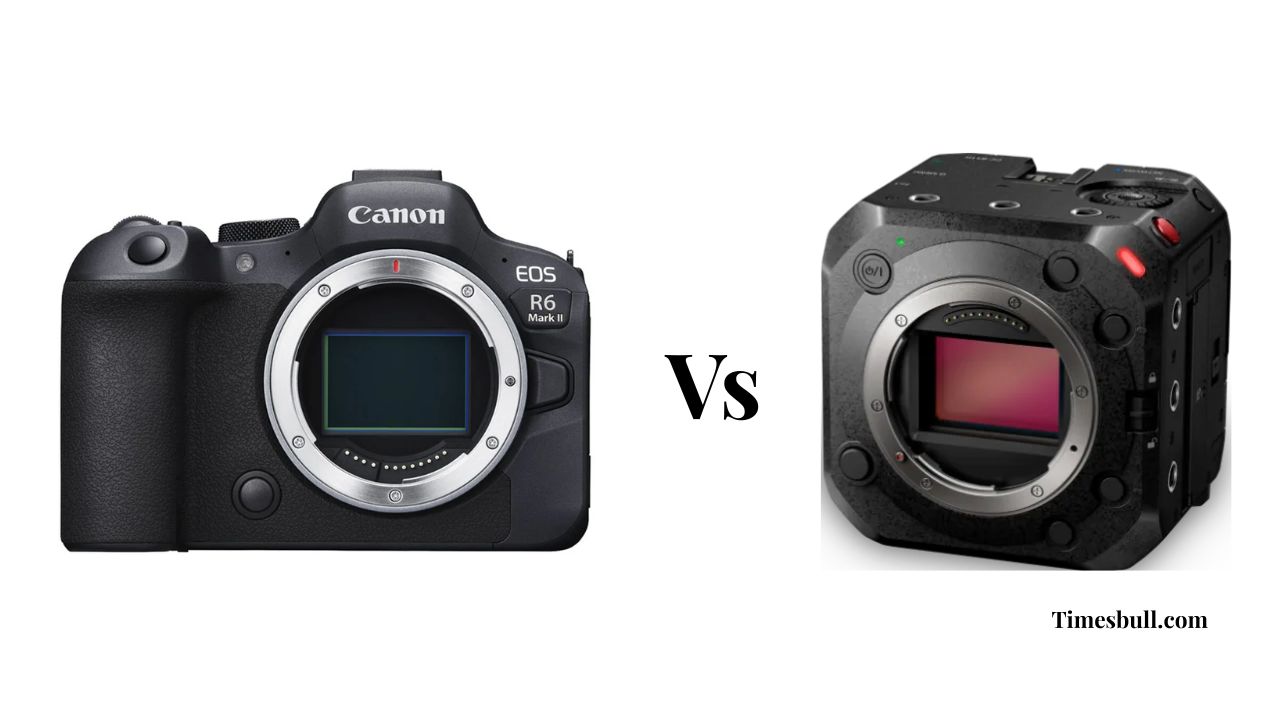
Canon EOS R6 Mark II vs Panasonic Lumix BS1H: Whether for professionals or advanced amateurs, some of the most exciting options in full-frame cameras for 2025 come down to two names Canon EOS R6 Mark II and Panasonic Lumix BS1H. Each promises professional image quality and realizes some of the most advanced video capabilities yet seen, but each takes a different approach to performance, design, and usability. Let’s dive into their key differences to see which one suits your creative needs better.
Processor and Performance
The Canon EOS R6 Mark II uses Canon’s Digic X image processor, which is intended to deliver exceptional speed and detail. It offers continuous shooting at up to 40fps with the electronic shutter and 12fps with the mechanical one, which will work for action, wildlife, or sports photography. Meanwhile, the Panasonic Lumix BS1H is designed with filmmakers in mind and focuses more on cinematic video capture rather than burst photography. Although both are fitted with full-frame CMOS sensors, Canon’s real-time autofocus system boasts 1053 phase-detection points that provide faster and more accurate subject tracking.
Display and Build Quality
The Canon EOS R6 Mark II features a 3-inch LCD touchscreen with 1.62 million dots for sharp previews and intuitive menu navigation. It also features an OLED viewfinder with 100% coverage and 0.76x magnification to aid framing. On the other hand, Panasonic Lumix BS1H doesn’t feature an integrated display or viewfinder since it’s essentially a box-style camera designed for use in rig-based shooting arrangements. The Canon weighs 935 grams, while Panasonic is lighter at 585 grams, making it more flexible for custom video rigs.
Image and Video Capabilities
The cameras are capable, and they both execute their mandates impressively, albeit in different fashions. The Canon EOS R6 Mark II includes a 24.2MP sensor capable of high-quality JPEG, RAW, and HEIF captures. It also supports 4K UHD and Full HD video recording with HDR and in-body image stabilization. Panasonic Lumix BS1H ups the ante, though, with up to 6K at 24fps, which can be ideal for filmmakers who need rich detail and dynamic range. Both support HDR, but Panasonic’s focus on video gives it an advantage in that regard.
Connectivity and Storage
Canon provides various methods of connectivity, including USB Type-C, Micro HDMI, Wi-Fi, and even a 3.5mm headphone and microphone port. The Panasonic Lumix BS1H matches that with an HDMI Type-A, USB Type-C, and wireless options such as Bluetooth and Wi-Fi. Both cameras support SD card storage, though Canon supports faster UHS-II cards to keep data handling smooth on a 4K shoot.
Battery and Handling
Both cameras use lithium-ion batteries, but Canon’s system has a slight edge in power optimization for hybrid use, combining photography and video. With Panasonic’s smaller body and modular design, integration with external batteries or power adaptors will be much easier for longer professional video shoots.
Conclusion
The Canon EOS R6 Mark II is more suited for hybrid creators who need an all-around performer with top-notch autofocus, image stabilization, and high-speed burst shooting. The Panasonic Lumix BS1H, on the other hand, is targeted at filmmakers who require 6K recording, modular flexibility, and professional-level control sets. Ultimately, it comes down to whether you shoot more stills or videos-but either way, both excel in their respective classes.