
Fridge Running But Not Cooling? 6 Common Reasons and Simple DIY Fixes to Save Your Food
Fridge Running But Not Cooling: If your refrigerator is running but it’s not really cooling, it doesn’t automatically mean you have to ditch the whole appliance. Here are 6 of the most common reasons for this kind of chill failure—like dirty condenser coils, blocked air vents, and worn door seals.

 Join Us
 Add as a preferred
Fridge Running But Not Cooling
It is a classic, frustrating household nightmare you hear your refrigerator humming, the internal lights come on, but the milk is warm, and the ice cream is melting. When a refrigerator runs continuously yet doesn’t actually lower the internal temperature, it usually means the mechanical side is working hard, but something is getting in the way, like a blockage in the cooling loop or the air distribution network.
Before you start scrambling to call an expensive appliance technician, a bunch of cooling problems can be pinned on everyday maintenance oversights. Here are 6 of the most common reasons behind a fridge that won’t cool, plus the step-by-step ways to address each one.
1. Dust-Choked Condenser Coils
The condenser coils, usually stuck underneath the appliance behind a kick plate, or sometimes mounted on the back wall, are the ones that handle sending the heat removed from inside the cabinet back out into the room. Over time, those coils start collecting thick layers, like dust pet hair and bits of kitchen grease, you know the usual mix.
The Problem: when the coils get insulated by all that gunk, they really can’t shed heat the right way. Then the compressor keeps running nonstop, trying to make up for it, but the fridge itself will slowly begin to get warm.
The Fix: unplug the refrigerator from the wall socket first. Then use a specialized coil brush, or a vacuum cleaner with a narrow crevice attachment, and clean out the accumulated debris gently. For best performance, redo this little routine every six months.
2. Blocked Internal Air Vents
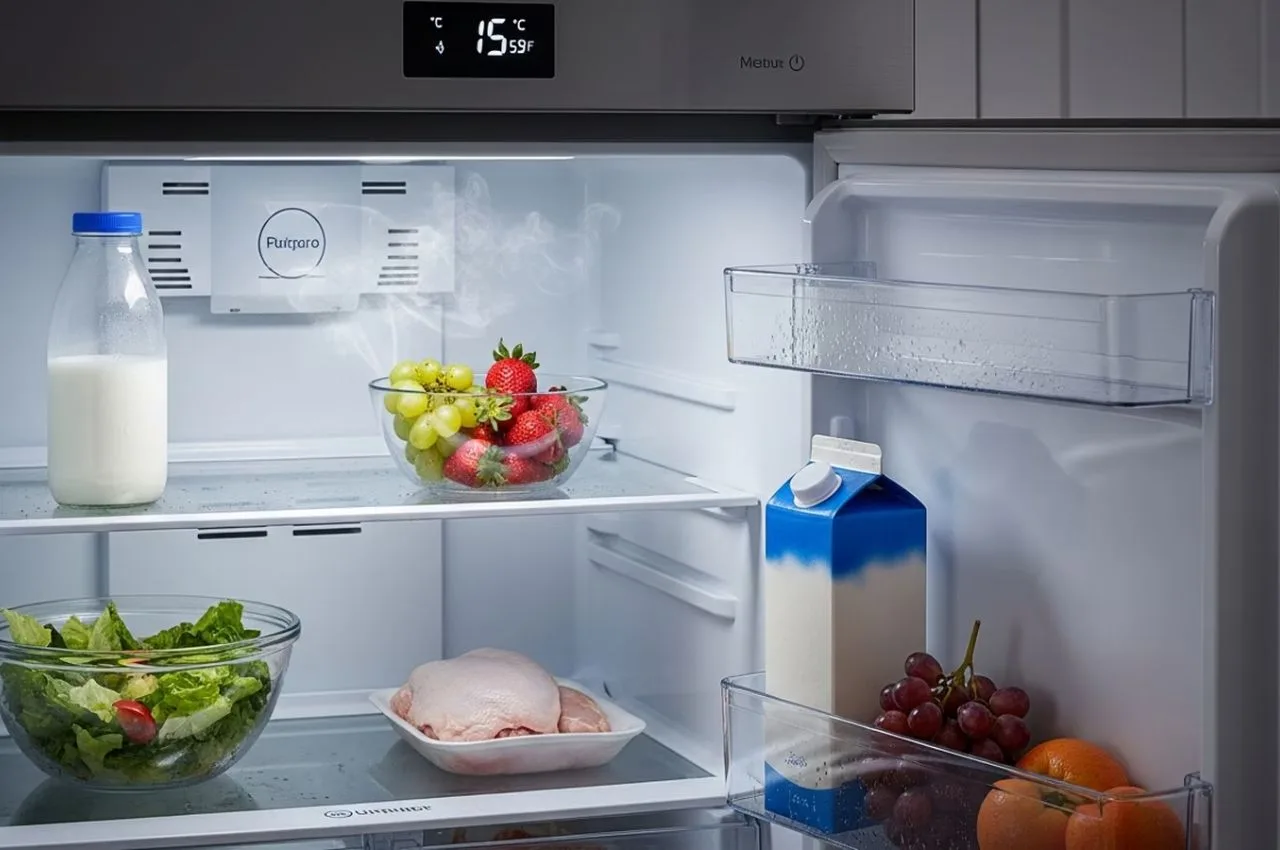
Cold air starts in the freezer compartment, then it gets pushed into the fresh food section through inner circulation routes, basically vents, you know.
The Problem: If you over pack the refrigerator or stuff in big items, like a family sized milk carton or those bulky leftover boxes, right up against the vents, airflow gets sort of choked. So the freezer can stay cold, like actually freezing, but the main compartment will feel lukewarm instead, kind of flat and warm.
The Fix: Find the small slatted plastic vents on the back walls of both the freezer and the fresh food sides. Then, move things around so there is at least a 2-inch clear space around each vent. That little buffer lets the cold air keep moving freely , without being blocked.
3. Cracked or Dirty Magnetic Door Gaskets
The rubber strip that runs along the edge of your refrigerator door is, well, a magnetic gasket thing meant to grab and hold the cold air inside, while also keeping out warm room moisture.
The Problem: is basically this: if that gasket gets coated in sticky food spills, or it starts to show physical tears, then cold air keeps escaping and warm air keeps sliding in. After a while you get heavy frost building up and the cooling feels weaker than it should, you know, like it never really catches up.
The Fix: first inspect the seal for any obvious cracks or little gaps. If it’s dirty, wipe and clean it well using warm soapy water and a soft microfiber cloth. Then do a quick test to see if the seal is failing. Close the door on a currency note; if you can pull the note out easily with zero resistance , the magnetic gasket has lost its grip and it’s time for a replacement.
4. Faulty Evaporator Fan Motor
The evaporator fan sits in the freezer section, kind of behind that back panel inside. Basically it’s meant to tug air over the frosty cooling coils, then move that air around through the whole appliance.
The Problem: you may notice a low hum from the compressor down at the bottom of the fridge, but no real sound from the internal fan blowing. Or the freezer might start doing a loud squeaking noise, like some tiny hinge is fighting back. In those cases, the fan motor could be failing or maybe it’s jammed up with ice, no big surprise.
The Fix: start by unplugging the fridge, then pull off the freezer rear access panel. After that, check whether the fan blades can move by hand. If the blades feel frozen in thick ice blocks, you’ll need to run a manual defrost cycle first. But if the blades move freely, yet they still won’t run once power is back on, then the motor winding is likely dead and a replacement part is needed.
5. Accidental Thermostat Adjustments
This might sound a bit too simple, but dial shifting is incredibly common when you are loading groceries ,or doing routine cleaning.
The Problem: Boxes get moved around and they can easily nudge those mechanical temperature dials, like turning the setting down ,or worse, shutting the cooling unit completely off.
The Fix: Check your internal controls again. Per food safety guidelines, your fresh food compartment should always be holding steady between 35°F and 38°F (1.6°C to 3.3°C), while the freezer really needs to be set at exactly 0°F (-18°C) to help prevent bacterial growth.
6. Failed Compressor Start Relay
The compressor is basically the heavy-duty pump that moves the refrigerant fluid around in the cooling loops. The start relay is this small electrical piece, mounted right onto the side of the compressor, and it kinda helps kick start the motor when everything needs to go.
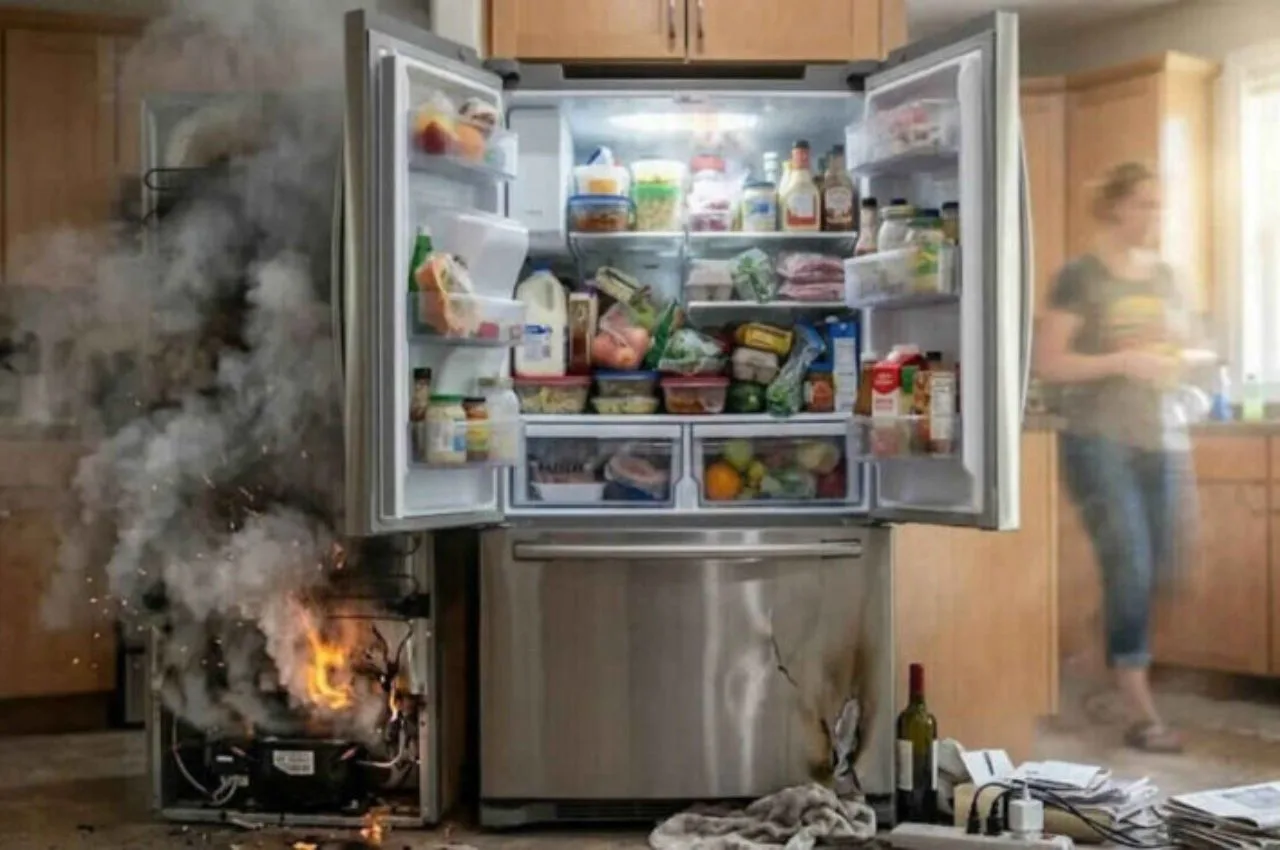
The Problem: If the start relay burns out, the compressor won’t come on at all, or it will keep trying to start, then you get that metallic clicking sound every few minutes. After that, it shuts off quick, even though the internal fans keep running.
The Fix: What you need to do is check the component sitting at the back of the fridge. First unplug the unit, remove the lower rear guard, then unclip the small plastic start relay from the compressor housing, and give it a gentle shake. If the relay rattles like a broken lightbulb, the internal solids have shattered. Swapping in a start relay is a cheap, straightforward plug and play DIY repair, and it can save you from purchasing a new compressor.
When to Call a Certified Professional
If your condenser coils are spotless, the fans are blowing, the vents are clear, but the fridge remains warm while running constantly, you are likely dealing with a refrigerant leak or an internal compressor valve failure. Because handling chemical refrigerants requires specialized EPA certifications and closed-loop pressure gauges, these internal mechanical issues cannot be tackled as a DIY project and require an expert technician.

Sachin Kumar
Next Article
Cockroach Janta Party – Meet Abhijit Deepke, Who Founded Viral ‘Cockroach Janata Party’, His AAP Connection Full Story”
Cockroach Janta Party:- Meet the Man Behind ‘Cockroach Janata Party’: Boston-Returned Abhijeet Deepke & His Surprising Political Background, Full Story Revealed.


Cockroach Janta Party: For the past three days, a peculiar name has been trending across social media platforms (specifically X and Instagram): the ‘Cockroach Janta Party’ (CJP). Its remarkable content is making this “party” incredibly popular on social media. It is not a political party in the traditional sense, but rather an X (formerly Twitter) handle.
To date, over 100,000 young people across the country have joined this “humorous” and satirical political front, and its Instagram account has already amassed over 2 million followers. How did the idea for this “party”—which claims to be the “voice of the unemployed and the lazy” on the internet—originate in Abhijit’s mind, and what is his background? Let us tell you about it in detail.
Write a Comment