



What is FD and who is it for?
Fixed Deposit (FD) is a banking scheme in which you have to deposit the entire money at once for a certain period of time (e.g. 1 year, 3 years, 5 years). The bank gives you a fixed interest rate for the period, which is fixed at the time of deposit. On maturity, you get your entire money back along with interest.
FDs are better for people who have a lump sum of money - like a bonus, the maturity amount of an old FD, any large savings, or inherited money. If you have a large amount of money together and you want to keep it safe for some time, then FD is a great option.
Another feature of FD is that senior citizens get 0.50% extra interest compared to ordinary citizens, which makes it a good source of income after retirement.

What is RD and who is it for?
Recurring Deposit (RD) is a scheme in which you have to deposit a fixed amount every month (like ₹1000, ₹2000, ₹5000) for a fixed period of time (like 1 year, 5 years). This scheme is made for those people who want to save regularly in a disciplined way, but they do not have a large amount of money to deposit together.
RD is best for people who are employed, salaried employees, students, or young professionals - who want to save a little money from their earnings every month and gradually build a large fund. The biggest feature of RD is that it has a very low minimum deposit amount (even starting at ₹100 in some banks) making it accessible to everyone.
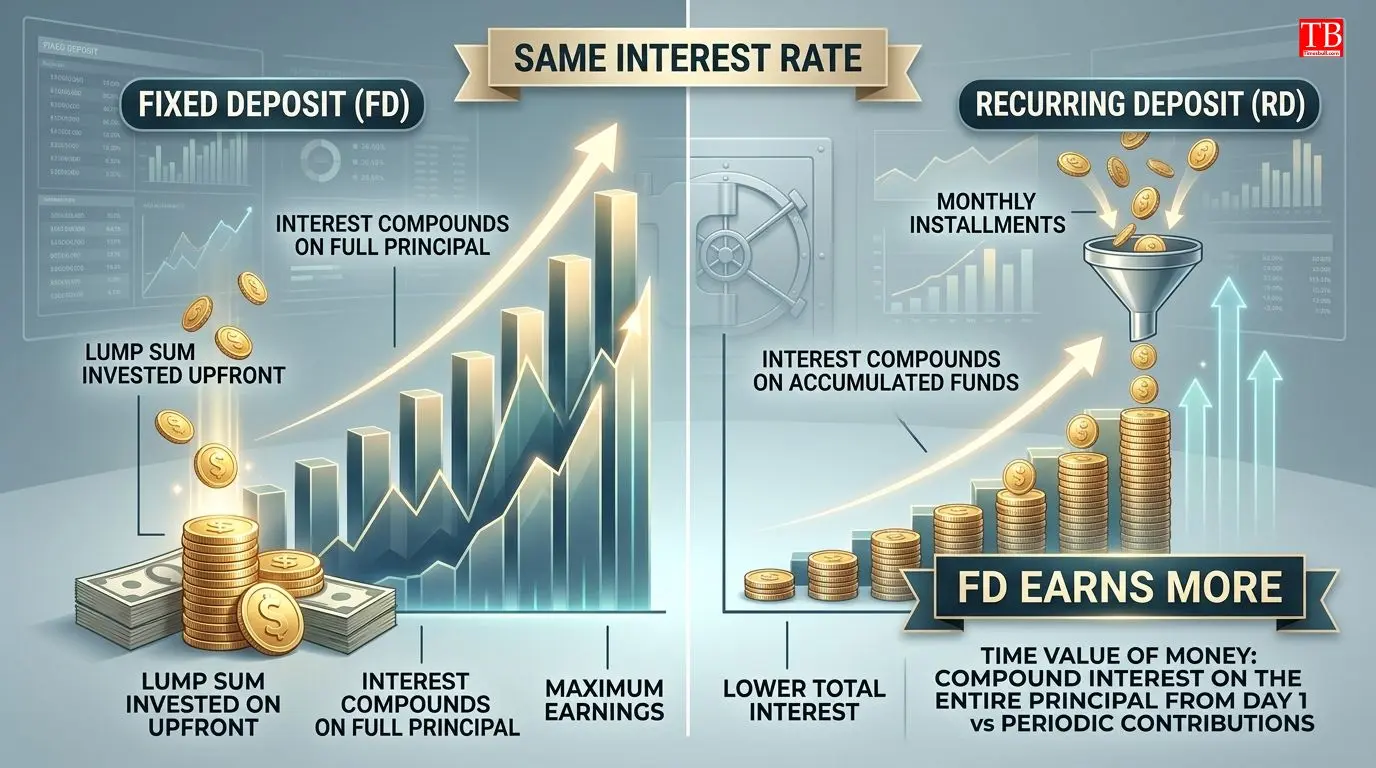
Why do FDs earn more even though interest rates are the same?
Many people think that if the interest rates of FD and RD are the same, then the profits will also be equal. But that isn't so. Your entire money in FD starts earning interest from the very first day. While in RD you put a little bit of money every month, so the money that is deposited in the later months, gets short-term interest.
This is the reason why FD returns are higher even if the interest rate is the same. For example, if you make an FD of ₹1,00,000 for 5 years and get 7% interest, you will get around ₹1,40,000 on maturity.
At the same time, if you make an RD of ₹1,667 (which is the monthly part of ₹1,00,000) for 5 years and get 7% interest, then you will get about ₹1,19,000. That is, you get about ₹21,000 extra in FD. This difference is due to "Time Value of Money" - The faster the money is deposited, the more interest it earns.

If you take out the money ahead of time, it will be a shock!
Whether it is FD or RD - the full benefit of both is available only if you do not touch them till the maturity period. However, you can close them prematurely if needed, but for this, banks charge you a penalty or reduce the interest rate.
Usually, the bank pays you interest at the interest rate at the time (which is lower than the rate at the time of deposit) on premature FD closing and some banks also deduct a penalty ranging from 0.5% to 1%. RD also incurs penalty on premature withdrawal and in some cases less interest is paid on the entire amount.
So, choose the time frame carefully while investing. Choose a time when you don't need money.
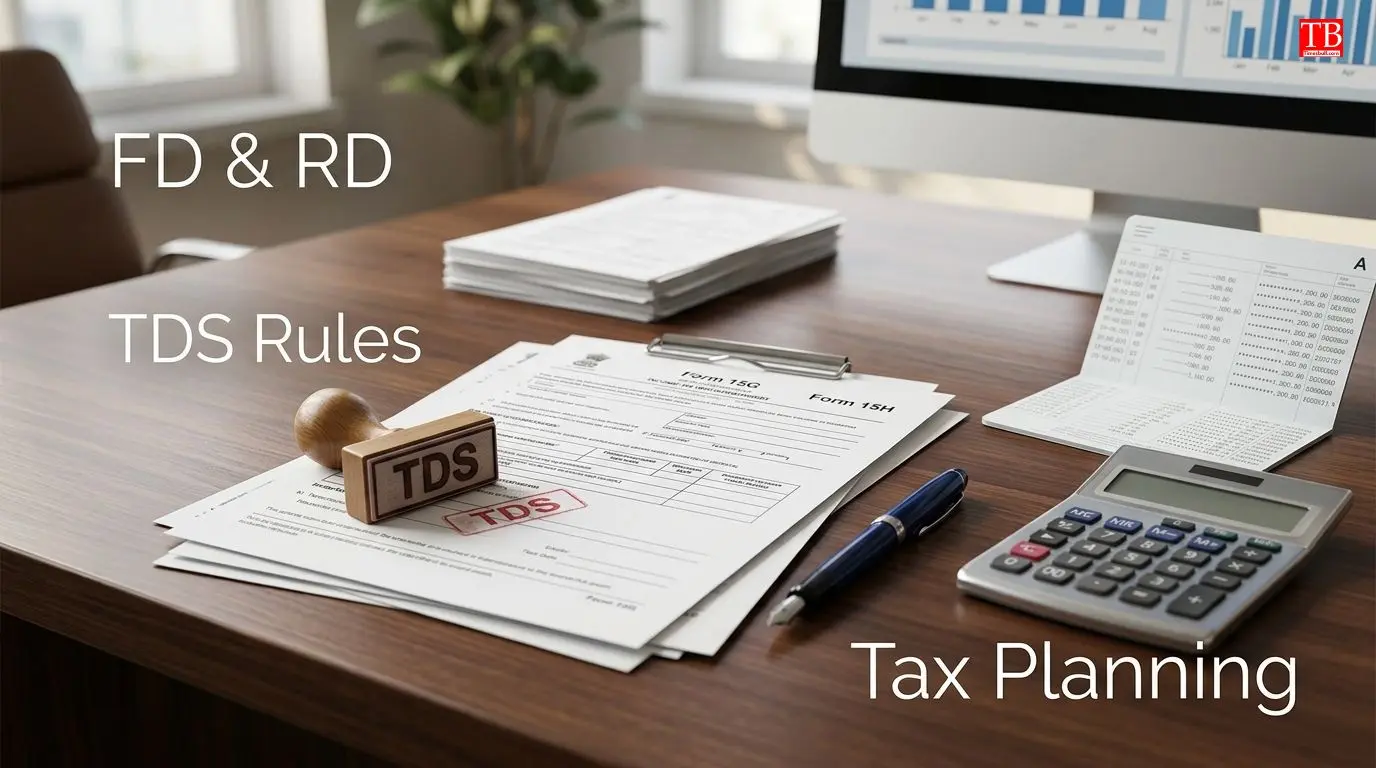
Also, keep in mind that interest earned on both FD and RD
comes under the purview of income tax. The bank deducts 10% TDS (Tax Deducted at Source) on the interest earned on your FD or RD, if the total amount of interest exceeds ₹40,000 (for general citizens) or ₹50,000 (for senior citizens) in a financial year.
If your total income is less than the taxable limit, you can avoid TDS by submitting Form 15G or 15H. However, keep in mind that this TDS is adjusted against your total tax liability. That is, if your total tax becomes less than 10% on your total income, you can claim a refund. So, choose FD or RD keeping in mind your tax planning as well.
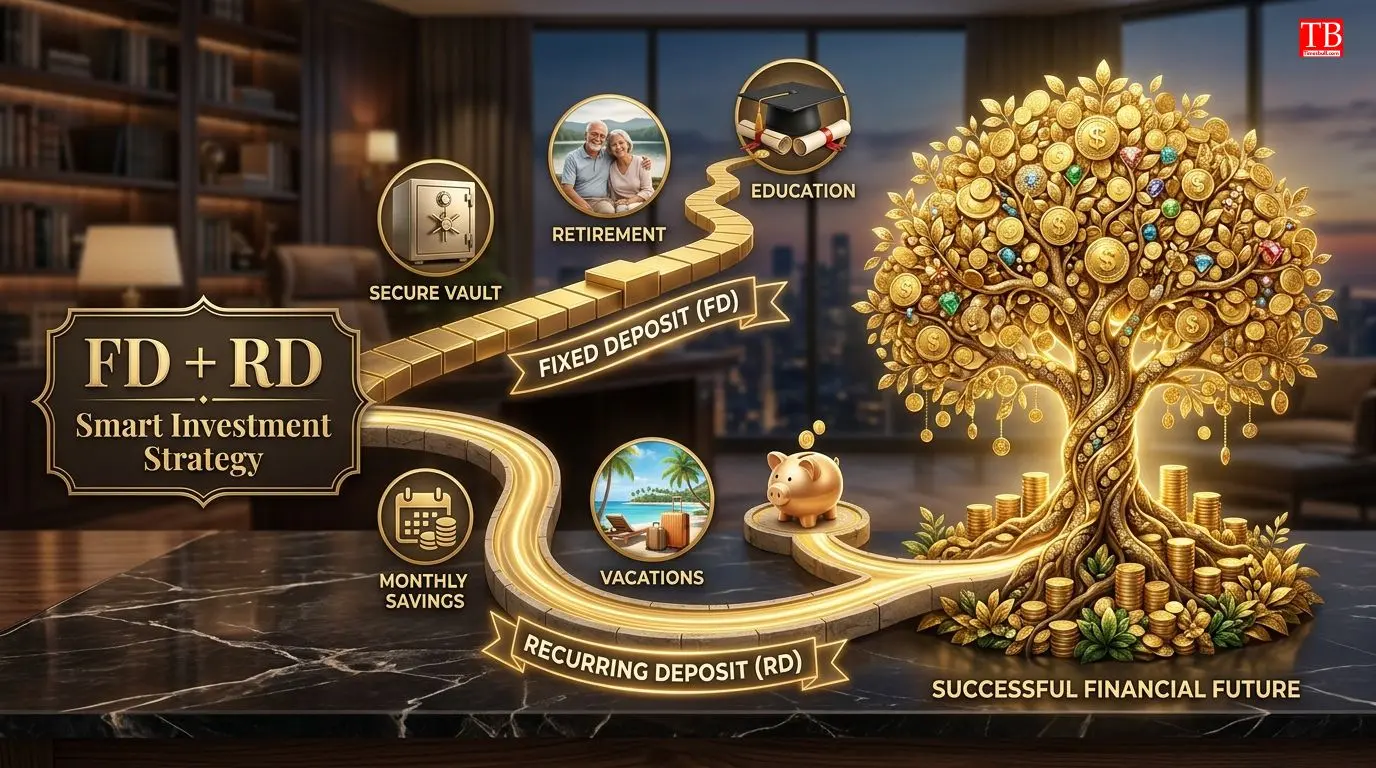
Both can be chosen at the same time
Smart people use these two for their different needs. For example, if you received a bonus, you made an FD of it as well as started an RD for the next year's holidays or festivals from the salary coming every month.
You can do both investments at the same time.
Start an RD for a short-term goal (e.g. no large purchases in 1-2 years), with a regular amount of money deposited each month.
Make a lump-sum investment in FDs for long-term goals (such as retirement plans, children's education), which give good returns in the long run.
This way you can diversify your portfolio and take advantage of different amounts maturing at different times.

Conclusion
Both FD and RD are safe, reliable and guaranteed return yielding investment instruments, but both cater to different needs. FD is for those who have a lump sum amount and want good returns by investing in one go, while RD is for those who want to build funds gradually by making regular savings from monthly income.
Having the same interest rate gives higher returns in FDs, but RD is more convenient for those who can save a small amount every month.
Both can be used simultaneously. One in FD and the other in RD - with which you can balance your savings. Choose either FD or RD, or make a smart combination of both, according to your need, budget, and time frame.
If you are looking for a safe investment, then these two schemes are the best option for you. Stay tuned for more such financial information, investment tips and savings plans on timesbull.com.