


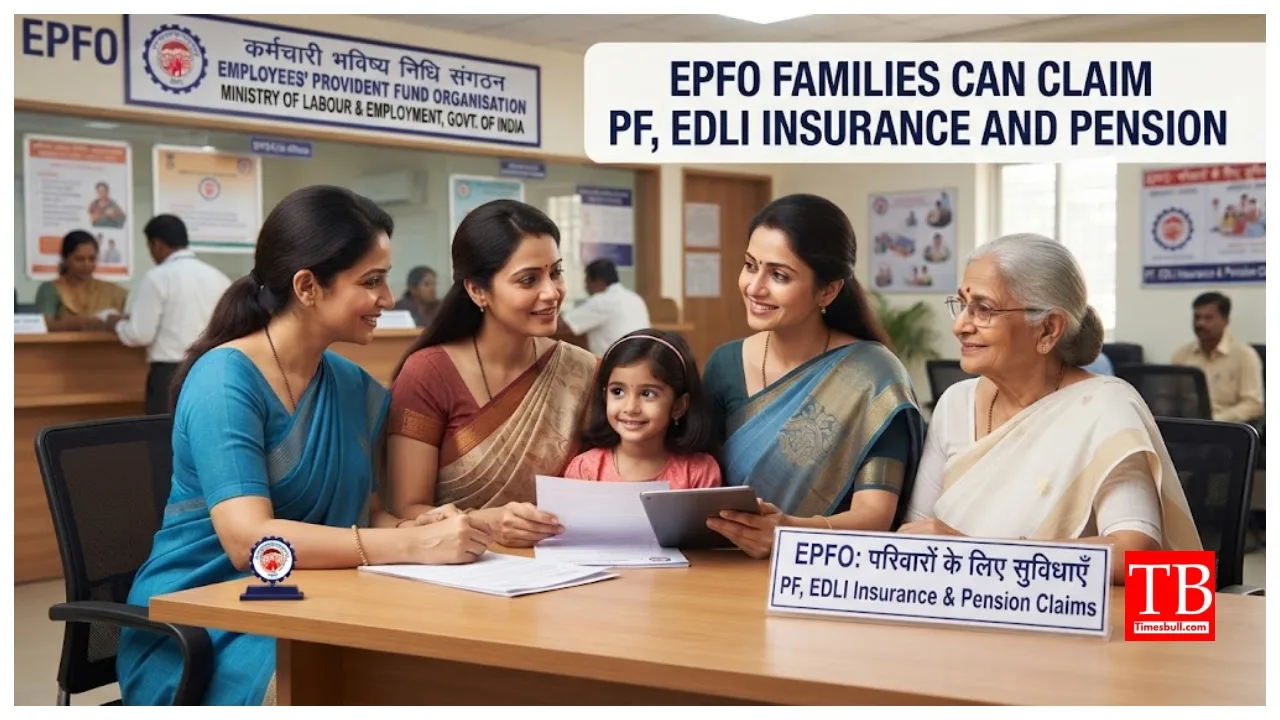
EPFO Member Death Benefits: If you are a PF account holder, this news could be critical for you. Often, if the sole breadwinner of a family passes away, the family’s life is thrown into disarray, and they face significant hardships in making ends meet. However, if the deceased was employed in the private sector and had PF contributions deducted, the EPFO provides the nominee with insurance coverage worth lakhs of rupees, the accumulated PF fund, and a lifelong pension. In such a scenario, it is crucial to know the steps required to avail these benefits—insurance money, the PF fund, and the lifelong pension.
Obtain the Death Certificate First
It is essential to obtain the deceased’s death certificate before initiating any financial claim or legal process; the certificate is the most critical document. Following a loved one’s passing, one should immediately apply for the death certificate—either online or offline—through the hospital, local municipal corporation, or Gram Panchayat. Subsequently, keep multiple copies of the death certificate handy for EPFO claims, bank account transfers, and life insurance procedures.
EPFO Benefits: PF Balance, Insurance, and Pension
Upon the death of an EPFO member, the nominee or legal heir primarily receives three major financial benefits: the accumulated PF fund, free life insurance coverage of up to ₹7 lakh, and a lifelong pension for dependents. The procedure to claim these benefits is outlined below.
Full Withdrawal of PF Funds
The amount accumulated in the deceased’s PF account—comprising contributions from both the employee and the employer, along with accrued interest—is paid to the nominee. A claim for this benefit can be filed online or by submitting Form 20.
Free Life Insurance of ₹7 Lakh
Under the EPFO’s Employees’ Deposit Linked Insurance (EDLI) scheme, the family of an employed individual who passes away is entitled to free insurance benefits of up to ₹7 lakh. To avail of this, Form 51F must be filled out.
Lifetime Pension
If the employee was covered under the Employees’ Pension Scheme (EPS) 1995, the surviving spouse is entitled to a lifetime pension. Additionally, two children in the family receive monthly pension benefits until they reach the age of 25. Form 10D needs to be submitted for this purpose.
What Happens to Loans and Credit Cards?
If the deceased held an active home loan, personal loan, or car loan, the family need not panic. First, check with the bank or financial institution to see whether you purchased loan protection insurance when you took out the loan. If the loan was insured, the bank can settle it by claiming the amount from the insurance company, and no recovery will be sought from the family.
People often withdraw money using the deceased’s ATM card after their passing, but this is legally not allowed. Instead, visit the bank branch with the death certificate, Aadhaar card, and passbook. The entire amount will be legally transferred to the account of the nominee registered with the bank.