


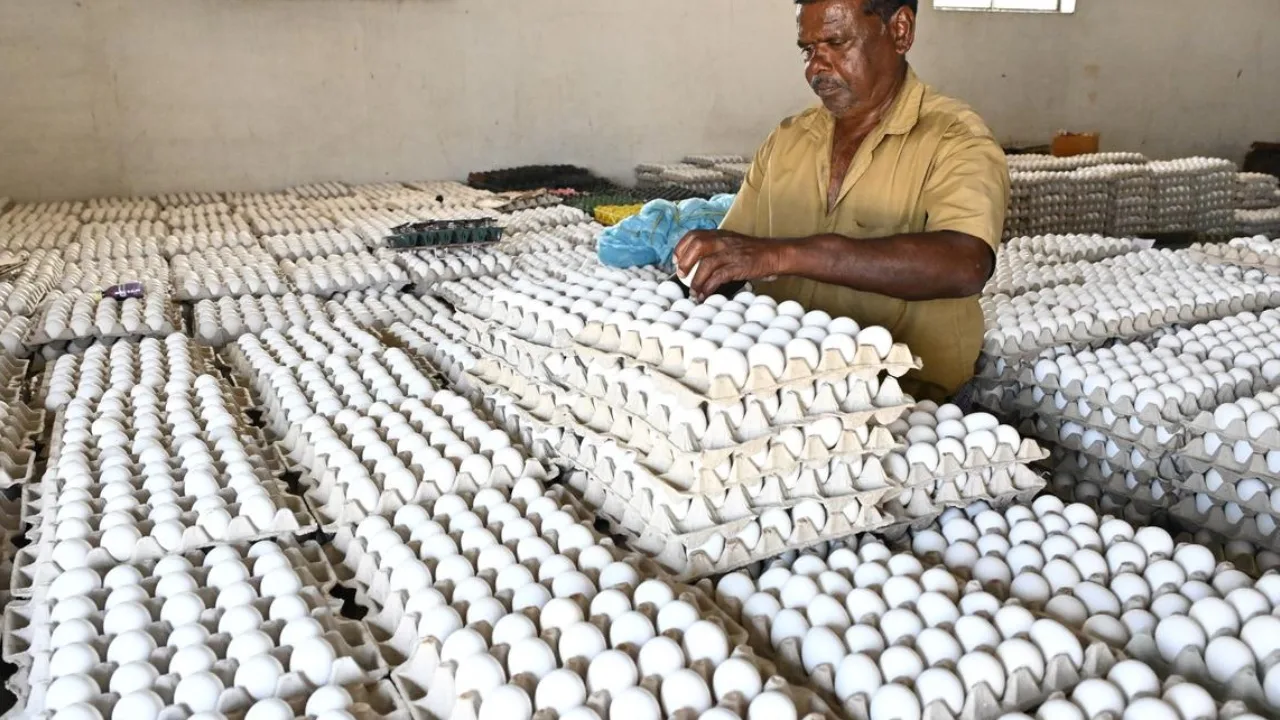
Egg Price: Egg prices across India have dropped by 10–20% over the past 8–10 days, largely due to the bird flu outbreak in Tamil Nadu and the resulting disruption to exports. With fewer eggs being exported, supplies in the domestic market have increased. Seasonal weakness in demand has added further pressure on prices, affecting poultry farmers’ earnings.
Egg Prices Drops
According to a report, the price of an egg in Namakkal, Tamil Nadu, stood at Rs 6.70 on November 11. However, after bird flu was confirmed in Cuddalore on November 13, the price fell to Rs 5.60, marking a decline of nearly 19%. Egg prices have dropped by more than 15% in several South Indian states, while Delhi, West Bengal, Gujarat and Maharashtra have recorded declines of around 6–10%.
The H5N1 outbreak in Cuddalore district has reportedly led to the death or culling of around one lakh chickens. Authorities have taken containment measures, including culling poultry within a one-kilometre radius of affected areas, disposing of carcasses and carrying out cleaning operations. Poultry farming and the introduction of new birds have also been restricted in the affected areas for three months. Officials have not reported any human infection so far.
Meanwhile, poultry farmers are facing rising production costs. Over the past year, maize prices have increased by around 50%, while soybean meal has become approximately 30% more expensive. These are key ingredients in poultry feed, making chicken production increasingly costly. The cost of producing chicken is estimated to be above ₹120 per kg, while farmers are reportedly receiving around ₹80 per kg.
The All India Poultry Breeders Association has urged the government to impose stock limits on maize and soybeans and release three million tonnes of maize from government reserves at subsidised rates. The association has also warned that if the crisis continues, chicken prices could rise by ₹40–₹50 per kg and egg prices by ₹3–₹4 per piece.
The poultry industry is therefore facing a difficult situation: falling egg prices, disrupted exports and rising feed costs are putting pressure on farmers. While consumers may benefit from cheaper eggs in the short term, prolonged losses could create fresh challenges for the poultry sector.