


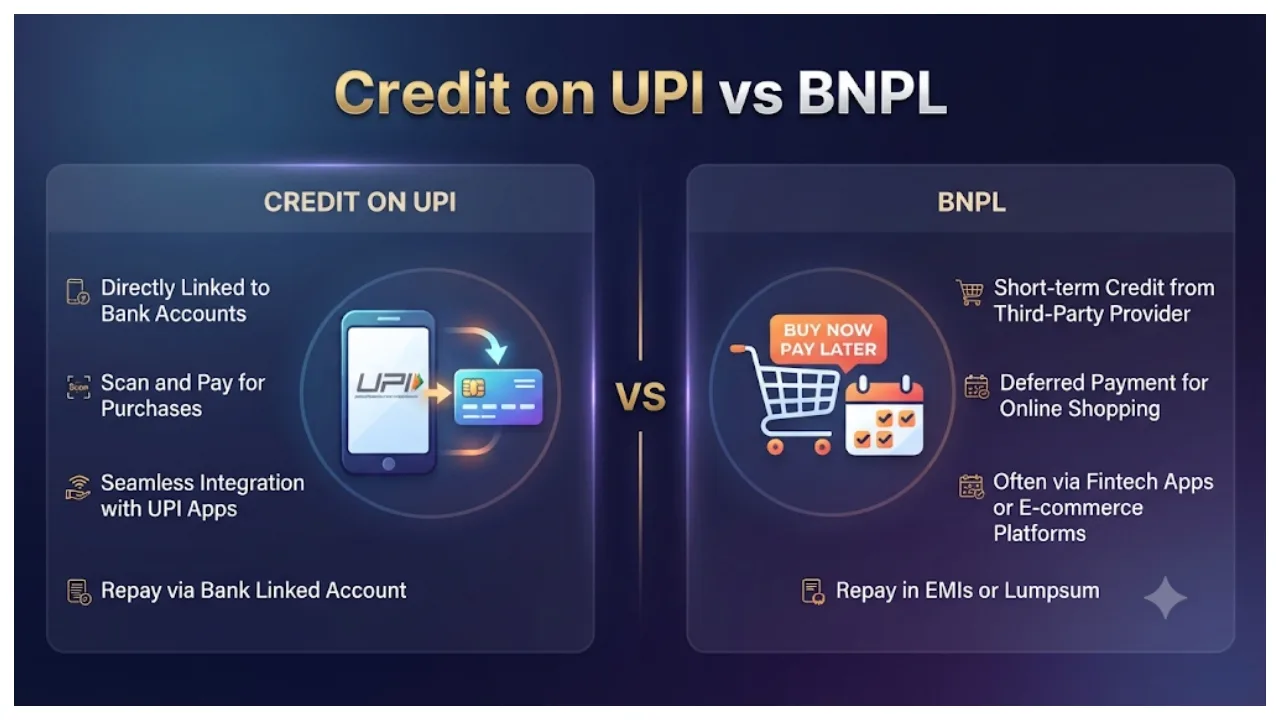
Credit on UPI vs BNPL: Making payments via UPI has become very convenient these days. Many banks and financial companies now allow users to make UPI payments using credit cards or credit lines. Additionally, the ‘Buy Now, Pay Later’ (BNPL) option is rapidly gaining popularity; it enables customers to purchase products and pay for them at a later date. Are you aware that using credit or BNPL services via UPI can significantly impact your CIBIL score?
Importantly, using these facilities does not automatically harm your credit score. In fact, if you pay your bills and instalments on time, it will strengthen your credit history. Conversely, delaying payments can cause your CIBIL score to drop. Let’s explore in detail how using credit or BNPL services through UPI affects your CIBIL score.
What happens when you use credit via UPI?
Typically, making payments via UPI directly from your bank account has no impact on your CIBIL score. However, when you use a credit card or a bank-provided credit line through UPI, it is considered a form of borrowing. In such cases, your spending habits and the way you settle your bills can influence your credit history.
When can it be beneficial?
Paying your credit card bills in full and on time improves your payment history. Keeping your credit utilisation low can also improve your credit profile. Using credit regularly and responsibly can prove beneficial for your future financial standing.
When can it be detrimental?
Failing to pay your credit card bills on time can lead to a significant drop in your CIBIL score. If you only pay the ‘minimum amount due’, the remaining balance will incur interest. Furthermore, utilising a very high proportion of your available credit limit can negatively affect your credit profile.
What is the impact of ‘Buy Now, Pay Later’ (BNPL)?
‘Buy Now, Pay Later’ (BNPL) is a facility that allows you to purchase goods and pay for them at a later date. Some companies offer this service through banks or Non-Banking Financial Companies (NBFCs). The amount availed under BNPL is often recorded as a credit line or a small loan. Consequently, this information may be reported to credit bureaus, which can impact your CIBIL score.
When can it be beneficial?
Paying all your BNPL installments on time can help build a positive payment history. Making regular payments assists in establishing a solid credit history. When used responsibly, it can improve your eligibility for future loans.
How to maintain a healthy CIBIL score
If you use UPI-based credit, credit cards, or BNPL services, keep the following points in mind: try to keep your credit utilisation low, avoid opening too many BNPL accounts, and regularly check your credit report. Furthermore, do not rely solely on making the ‘minimum payment’—doing so can lead to an increased burden of interest.
How long does it take for a CIBIL score to update?
CIBIL scores are not updated on a daily basis. Changes to your credit score typically become visible within 30 to 45 days. However, this depends on when the bank or the lending institution submits your information to the credit bureau. Therefore, if you have paid off a credit card bill or a BNPL installment, it may take some time for this to be reflected in your credit report.