


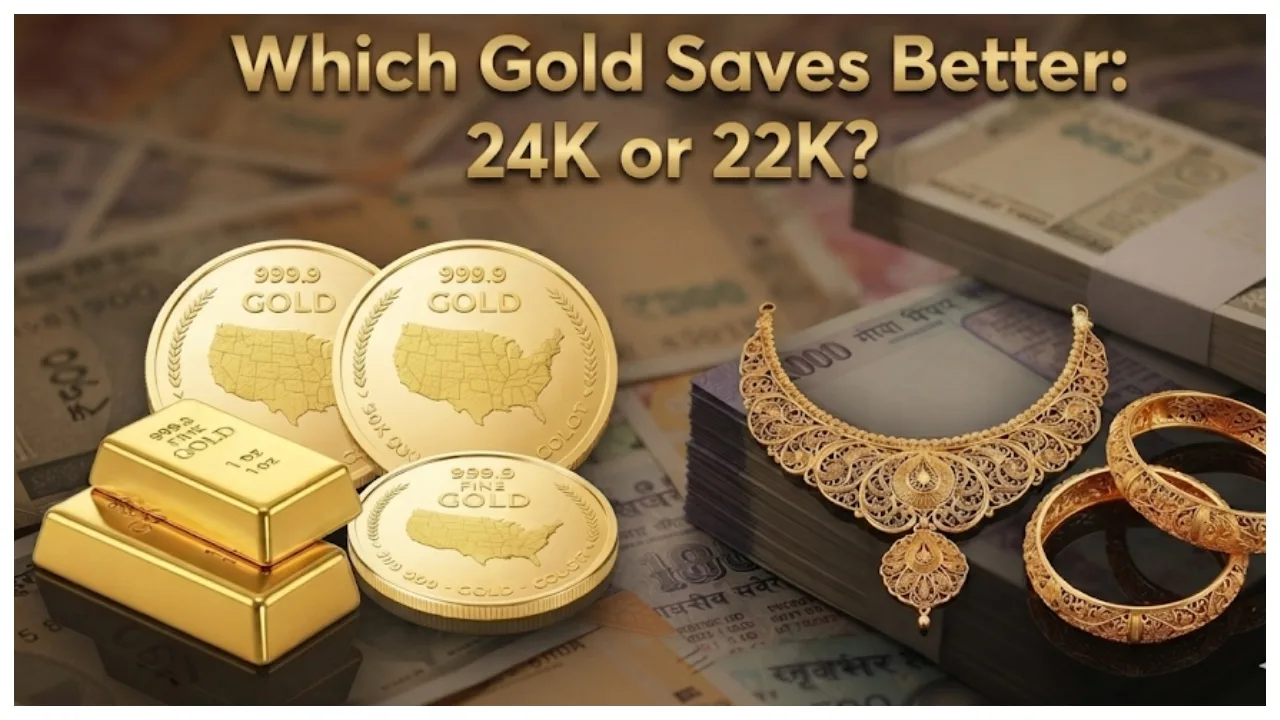
24K vs 22K Gold: Gold prices are constantly fluctuating. However, prices fell in the last nine trading days. However, today (Monday), after two days, prices started rising as soon as the market opened. The 24-carat gold futures price on the Multi Commodity Exchange (MCX) rose by 2.75%, or Rs. 3,347, to Rs. 125,125 per 10 grams by noon. It had closed at Rs. 121,778 per 10 grams the previous trading day.
According to Bullions.co.in, the price of 24-carat gold is Rs. 125,670 per 10 grams, while the price of gold in the international market has reached $3,619.50 per ounce. The price of gold in Delhi’s bullion market has fallen to Rs. 1,29,300 (including all taxes) per 10 grams. But there is a question: 24K vs. 22K gold, which is better for long-term savings in 2026? Check Now.
24K vs. 22K Gold: Which Is Better?
In India, gold holds significant importance in weddings, festivals, and savings. However, when we visit a jewellery shop, the jeweller often uses terms like 18K, 22K, or 24K, which can be confusing. These “karat” figures indicate the purity and durability of gold. Let’s explore what they mean and how they differ.
What does ‘karat’ mean in gold?
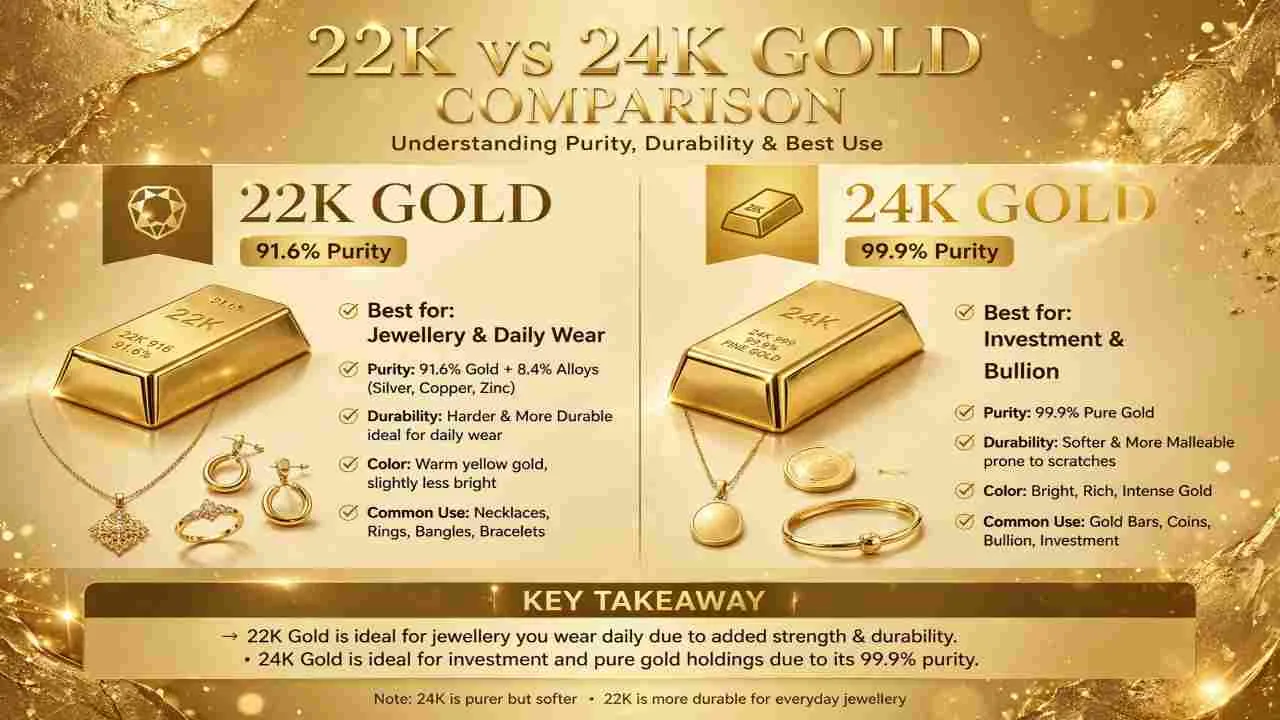
To begin with, karat (K) denotes the purity level of a piece of gold.
24K = pure gold (approximately 99.9%)
22K = 91.6% gold
18K = 75% gold
14K = 58.5% gold
Pure gold is very soft, so metals like copper or silver are mixed in to increase its strength. The higher the karat, the purer the gold, but the less durable it becomes.
Why is 24K gold the priciest?
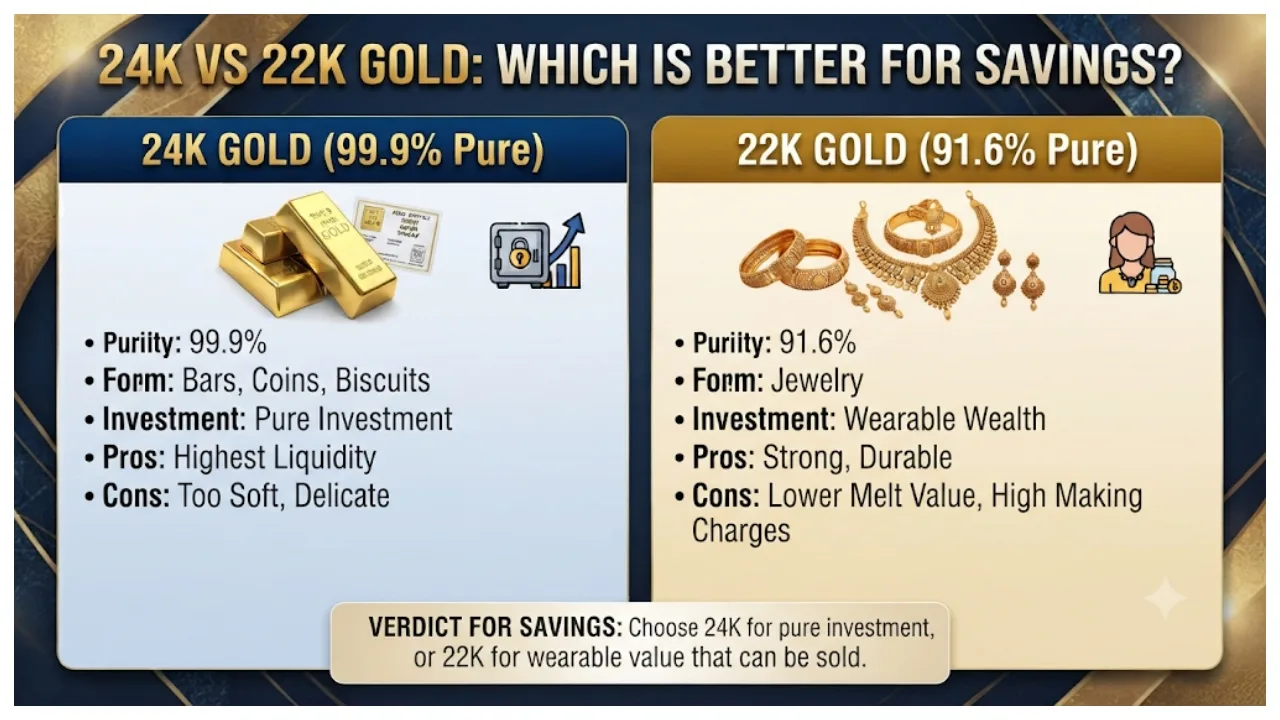
24-karat gold is completely pure, unblended with other metals, giving it a rich, bright yellow hue. Because it is very soft and delicate, it is not used in jewellery. For those looking to save money or grow their wealth, 24K gold is an ideal choice. It can be purchased as gold coins, bars, or digital gold. It commands the highest resale value due to its purity.
22K gold jewellery is the most favoured
In India, 22-carat gold is the preferred choice for heavy or wedding jewellery. It contains 91.6% pure gold with other metals added for strength, making it slightly tougher. Traditional items like necklaces, bangles, and mangalsutras are commonly made from 22K gold. It retains its shine and has a strong resale value, though it may be a little soft for very delicate diamond work or heavy gemstones.
What about 18K and 14K gold purity?
With busy lifestyles, many prefer jewellery that is suitable for daily wear, and 18K and 14K gold are ideal. According to the e-Bullion website, 18K gold is 75% pure, making it ideal for diamond and designer jewellery. It offers excellent lustre and durability.
14K gold, which is 58.5% pure, is the toughest and most economical choice. In Western countries, people prioritise durability over purity, making it popular. If you want an everyday ring or bracelet that resists breaking and scratches, this type is a cost-effective option. Purchasing gold is more than a fashion choice; it is a smart investment.
For long-lasting jewellery, 14K or 18K gold is the recommended choice. For weddings or special occasions, 22K gold is ideal. And for wealth building or investment, 24K gold is the best option. Nowadays, many investors are including silver alongside gold to diversify and strengthen their portfolios. While all gold is valuable, it’s important to select the type that best suits your needs.