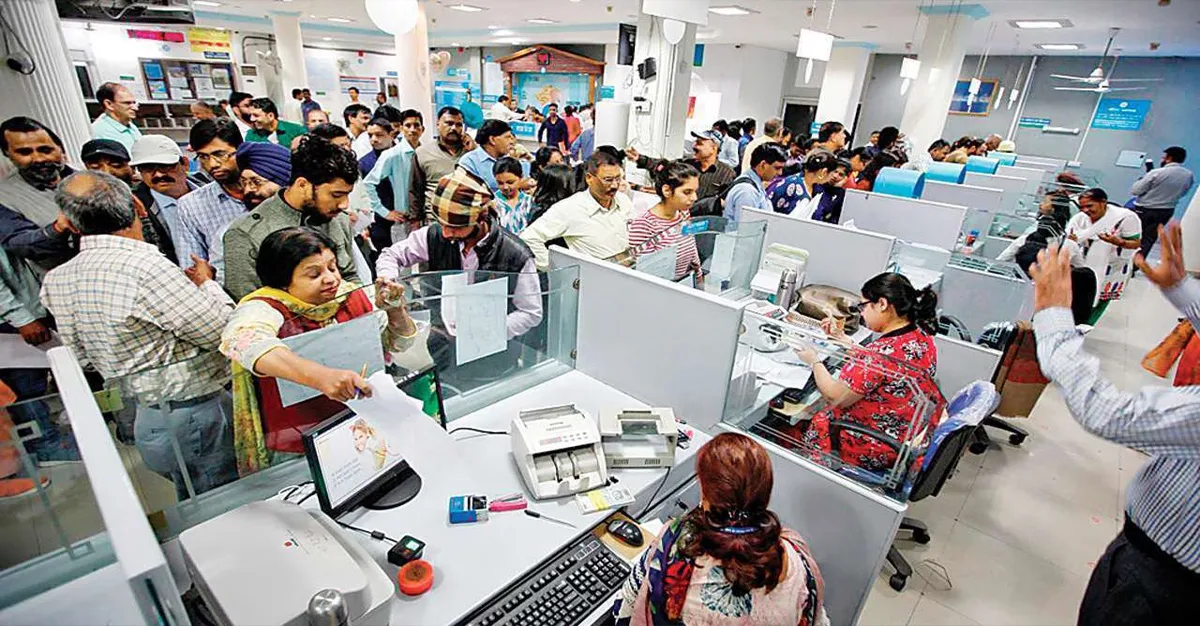
Savings Account : You have probably wondered about the maximum amount of money that can be stored in a savings account. A question that continues to linger in people’s thoughts is the maximum amount of cash that can be withdrawn from an individual in a single day. Today we will address both of these queries.
Know what experts said
Personal finance specialists indicate that under the Income Tax Rules, the combined cash deposit or withdrawal in a savings account within one financial year must not surpass Rs 10 lakh. In addition to this, as per section 269ST, an individual cannot receive a cumulative amount of Rs 2 lakh or more in cash from another person in one transaction or in transactions connected to an event on the same day. If you have a total cash deposit exceeding Rs 10 lakh across all your savings accounts in a financial year, specifically from April 1 to March 31, you must notify the Income Tax Department.
What will happen if over Rs 10 lakh cash deposit in your savings account?
Banks must reveal these transactions, even if they are distributed among various accounts. Now the question is, what occurs if over Rs 10 lakh cash enters your savings account in a financial year? Any sum exceeding this threshold will be deemed a high value transaction. Banks or financial organizations must notify the Income Tax Department regarding this under Section 114B of the Income Tax Act of 1962. In addition to this, you must provide your PAN number to deposit over Rs 50 thousand in a single day.
In case you don’t have a PAN card
If you lack a PAN, you must submit Form 60/61 as an alternative. You need to provide adequate evidence to back your claim about the origin of funds. These may include bank statements, investment records, and documents related to inheritance. If you’re uncertain or worried about the origin of cash, you may seek advice from a tax professional.
Latest News
- Motorola Edge 60 Fusion Review: Mid-Range King or Outdated?

- FD Update– Breaking Your FD Early? Know the consequences

- Bank Holiday–RBI Announces Closure of SBI, HDFC and All Banks Next Week, Save the Dates

- Samsung Galaxy S26 Ultra Amazon Deal – Get ₹23,509+ Discount with Bank Offers and Exchange Benefits

- Best Scooters For College Girls 2026 – Perfect Mix Of Mileage, Style And Lightweight Design
- Kodak Matrix QLED Google TV 2026 Series Launched in India Just Under 10,999

- Senior Citizen FD Rates: सीनियर सिटीजन को यहां से मिल रहा बंपर ब्याज, जल्द करें निवेश

- UGC NET 2026 – How to Apply for UGC NET June 2026? Last Date May 24 Till 11:50 PM at ugcnet.nta.nic.in

- Mahindra Thar New Version Leaked – Powerful Engine And Advanced Features Coming

- Jio 5G Unexpected Speed Drop: Network Slowdowns Frustrate Users