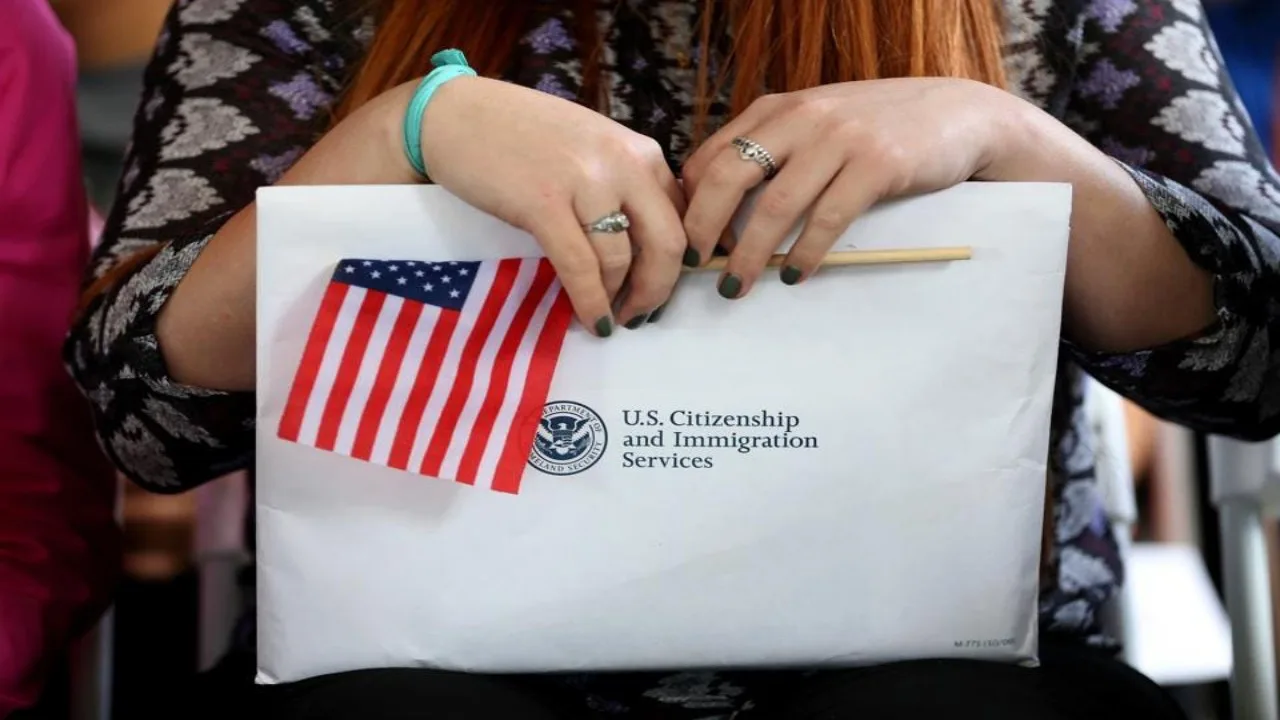
On September 19, 2025, President Donald Trump announced a record-breaking fee of $100,000 (approximately ₹8.3 million) on every new H-1B visa application, sending shockwaves through the global IT industry. This historic decision, effective September 21, 2025, is the most affected country, as Indians received 71% of all H-1B visas issued last year. This exorbitant fee is having a direct and profound impact on the profits of both Indian and American IT companies.
Sharp decline in shares of Indian and American companies
This explosive fee hike has harmed both Indian and American tech companies alike, but the magnitude of the impact has been quite different. Two major Indian IT companies, TCS (Tata Consultancy Services) and Infosys, were the hardest hit. Within just a week of the fee announcement, TCS shares fell 8.9% and Infosys shares fell 6.1%.
This significant decline reflects their long-standing reliance on H-1B visas. Two major American tech companies, Amazon and Microsoft, also make extensive use of H-1B visas. Following the fee announcement, Amazon shares fell 4.9% and Microsoft shares fell 1.4%. The question is why the impact on American companies was less pronounced. The obvious reason is the significant salary disparity.
Significant Salary Disparity
The average salary figures for H-1B employees illustrate this disparity. TCS H-1B employees earn an average annual salary of $78,000, while Infosys employees earn an average salary of $71,000. Meanwhile, Amazon employees earn an average salary of $143,000, and Microsoft employees earn $141,000. This means that the fees are nearly double the salaries of Indian companies.
This substantial fee directly impacts the profits of Indian companies. The coming times could be challenging for Indian IT companies that rely on H-1B visas. It appears that US policy is now shifting toward granting visas to companies that pay higher salaries. This new $100,000 fee is seen as a first step in that direction.
Will this increase jobs in India

One positive aspect of this crisis could be that Indian IT companies will now hire more people within the country. The shortage of H-1B visas could be compensated for by the domestic workforce. It’s worth noting that US tech companies did not oppose this fee because H-1B visas are awarded through a lottery system, and if this fee discourages Indian companies from applying, it increases the chances of US companies obtaining visas.
Meanwhile, TCS’s HR chief said in a statement that the company’s business model can easily adapt to the H-1B visa changes, as the IT giant is now expanding its local workforce in the US and significantly reducing its dependence on H-1B visas. If companies quickly adapt their business models to accommodate this change, their stocks could rebound, and the current decline could prove to be a good opportunity for investors.