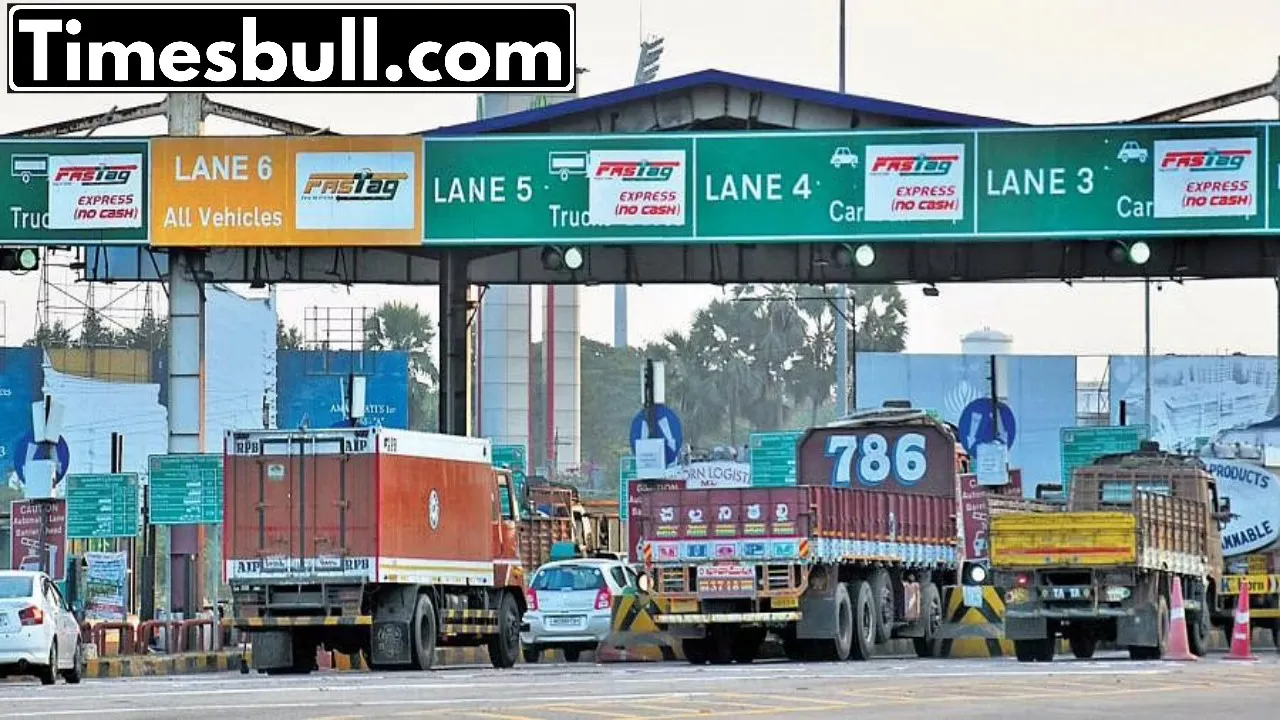
Toll Tax Big Update: New highways and expressways are being constructed rapidly in the country, along with this the toll tax is also increasing. Many people want to avoid paying the fee while crossing the toll booth. According to NHAI, in certain circumstances, drivers can proceed without paying toll tax.
Toll Tax Big Update
According to NHAI, if the line of vehicles from the toll booth is up to 100 meters long, then the vehicles will be taken out from there without payment so that the line can be shortened.
NHAI tweeted, stating that a maximum time of 10 seconds has been fixed for toll payment. Along with this, the length at the toll should not exceed 100 meters during peak hours. To implement this system, a yellow strip is drawn at a distance of 100 meters from the booth in each toll lane, as soon as the line of vehicles starts going out of this line, the toll is made toll free. As soon as the line comes within 100 meters, toll tax starts being collected again.
What is the 60 km rule-
The Ministry of Road Transport and Highways has said that according to the Fee Rule 2008, the minimum distance between two toll plazas on any highway should be 60 kilometers. Union Minister Nitin Gadkari justified this rule and said that his aim is that there should be only one toll plaza within 60 kilometers on the highway.
At present, the distance between them can be reduced. The ministry has argued behind this that sometimes there can be 2 toll plazas within a radius of 60 kilometers due to lack of space, traffic, congestion etc.
Difference between toll tax and road tax-
Road tax is paid by the drivers to the RTO, which is for the use of various roads within the state. In contrast, toll tax is levied exclusively on special roads such as highways and expressways. The amount of toll tax does not go to any one state government, but it is collected by the company building that highway or the National Highways Authority of India.
Latest News
- Weather warning – Heavy Rain, thunderstorms, lightning Alerts for 13 States Over Next 3 Days

- UP TGT Exam City Slip 2026 Released – Download at upessc.up.gov.in, Exam June 3-4

- ATM Alert: एटीएम में फंस जाए डेबिट कार्ड तो घबराएं नहीं, फटाफट यह काम करने से होगा समाधान

- Post Office Scheme – 7.5% Interest Rate, ₹5 Lakh Becomes ₹7,24,974 in 5 Years, Start with Just ₹1,000
- Best AI Video Editing Laptops Under 60,000 INR: Top Picks Her

- Best CNG Cars: पेट्रोल के बढ़ते दाम के बीच ये सीएनजी गाड़ी खरीदकर खर्च करें कम, माइलेज भी जबरदस्त

- Samsung Stable One UI 8.5 Update to Galaxy Tab S10 FE and Tab S10 FE+

- बुढ़ापे की लाठी बनेंगी ये तीन स्कीम्स, निवेश से पहले जानिए कितना मिल रहा ब्याज

- OnePlus Nord CE 6 vs Samsung Galaxy A57: Which Mid-Range 5G Phone Wins?

- Lenovo LOQ 15 Gen 11 Review: Best Budget Gaming Laptop?