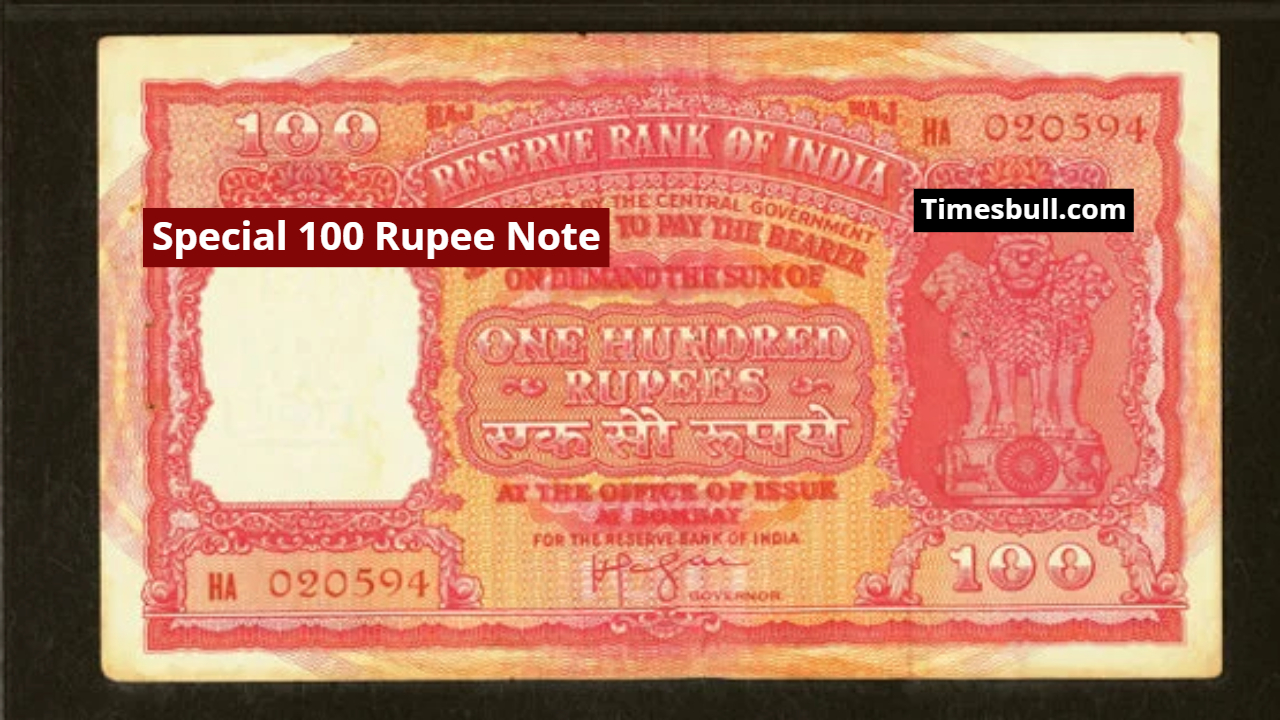
Special 100 Rupee Note: An international auction held in London has set a new record in Indian currency history. A rare 100 rupee Hajj note from India was purchased for 5.6 million rupees. While this may seem unbelievable, its historical significance and extremely limited availability have driven its price skyrocketing. This note bears the serial number HA 078400, and it is one of the most special notes issued by the Reserve Bank of India in the 1950s.
Read More- Vivo X300 Ultra Launch Timeline Confirmed For China, Here’s What You Need To Know?
Why were Hajj notes special?
In the 1950s, a large number of Indian pilgrims traveled to the Gulf countries for the Hajj pilgrimage. Buying gold using ordinary Indian currency was common at that time, leading to increased gold smuggling from the country. To address this challenge, the RBI issued special currency, called Hajj notes. These notes were valid only in select Gulf countries and could not be used in India. These notes were intended to curb currency misuse and illegal transactions.
Circulation and End in the Gulf Countries
In 1961, Kuwait launched its official currency, and other Gulf countries soon adopted the new currency. Subsequently, the use and production of Hajj notes were gradually phased out in the 1970s. As they ceased to circulate, these notes became increasingly rare and are now highly prized among collectors as historical Indian currency.
Rising Prices of Old Notes and the SS Shirala Case
Last year, Indian notes also fetched astonishing prices at London auctions. In May 2024, two 10-rupee notes issued in 1918 sold for ₹6.90 lakh and ₹5.80 lakh, respectively. These notes belonged to the British ship SS Shirala, which was torpedoed by a German U-boat in the final months of World War I. These notes, recovered from the wreckage of the ship, fetched high prices due to their historical significance.
Read More- OnePlus Ace 6T Leak Reveals 8000mAh Battery and Snapdragon 8 Gen 5 Power
Demand for rare notes continues to grow
The Hajj notes and the SS Shirala-related notes prove how valuable Indian currency, steeped in history, can be to collectors worldwide. The rarity, originality, and historical background of these notes multiply their value. This is why old Indian notes are selling for millions of rupees at international auctions today.