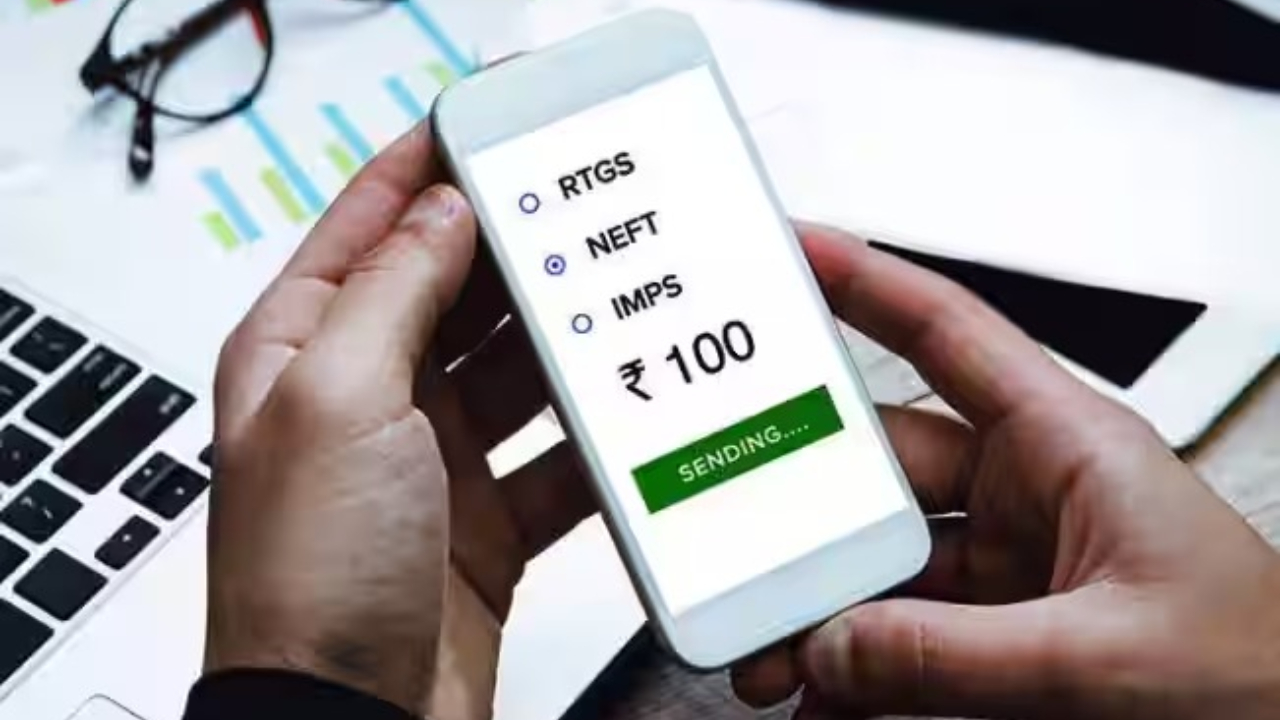
RTGS Payment: People are increasingly using the Unified Payment Interface (UPI) for everyday tasks. Whether it’s purchasing everyday items or making online payments, UPI helps us everywhere. But did you know that the largest amount of money in India is transferred through the RTGS system, not UPI?
According to the latest report from the Reserve Bank of India (RBI), the Real Time Gross Settlement (RTGS) system handles 69% of the country’s total transaction value, while UPI accounts for only 9%. However, UPI continues to dominate in terms of transaction volume. 85% of the country’s total payments are processed through UPI.
What is RTGS and why is it used?
RTGS is another electronic method of fund transfer. It is a large-value transfer system. This system is typically used for sending amounts of Rs 2 lakh or more. Fund transfers through RTGS are real-time and final, meaning once the money is sent, it cannot be withdrawn. This facility is available 24×7, 365, and can be done online through net banking.
What are the charges for RTGS transactions?
On receiving money: No charge.
Remittances: Rs 2 lakh to Rs 5 lakh – Rs 25 plus tax charge and Rs 5 lakh and above – Rs 50 plus tax charge
If banks want, they can charge less than this, but not more than this.
Overall, the UPI system has revolutionized small payments, while RTGS also handles transactions worth crores of rupees in a single click.
UPI was launched in 2016. It’s worth noting that UPI is a real-time payment system. The UPI payment system was launched in 2016. The UPI system is operated by the National Payments Corporation of India (NPCI). This facility is also available 24x7x365.