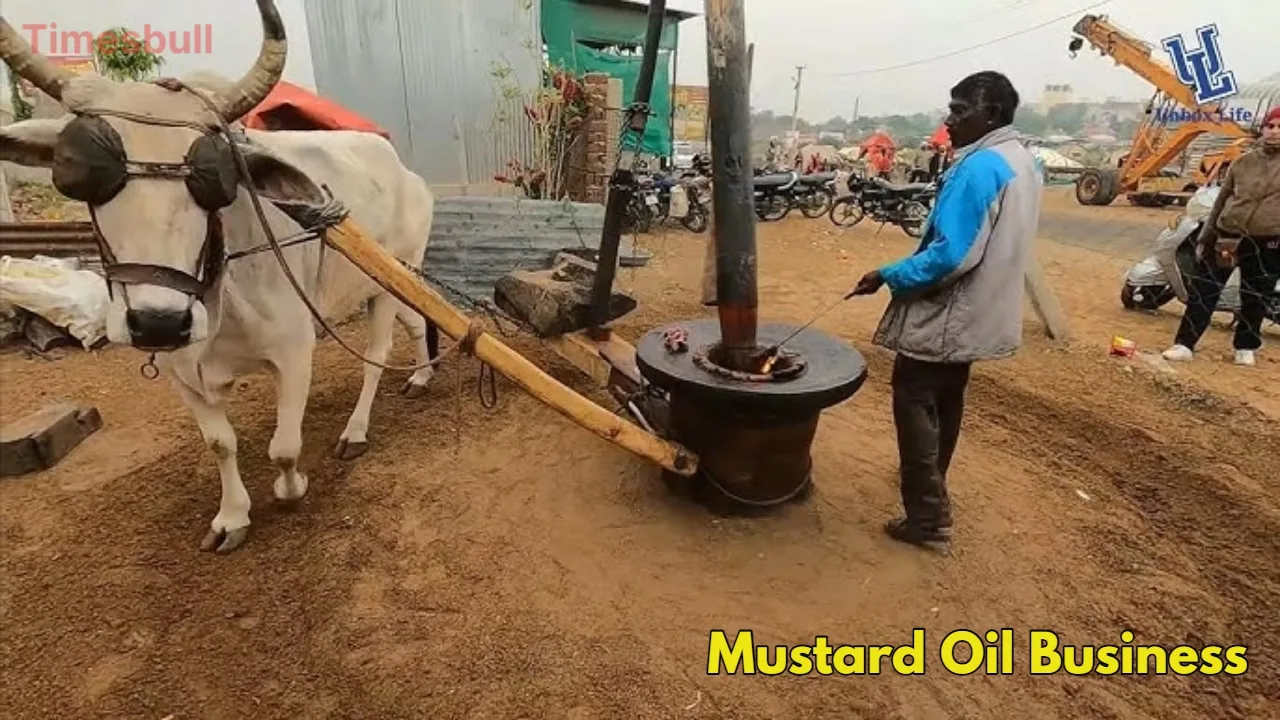
Oil Press Business 2026: In today’s era, when people are becoming more health-conscious, oil extracted from traditional ‘kolhu’ (cold-pressed oil) is once again gaining market share. The disadvantages of refined oil and the purity of kolhu oil have made this business a great source of income in villages. The best part is that this business can be started with substantial subsidies available under government schemes like PMEGP and Mudra.
Costs and Earnings in Oil Press Business
The oil press business can be started on a small scale and then gradually expanded. The initial cost of setting up a modern mini oil mill or oil press unit ranges from approximately ₹60,000 to ₹1.5 lakh. If you set up a large-scale unit with a 10-ton capacity, the project cost can go up to ₹10 lakh.
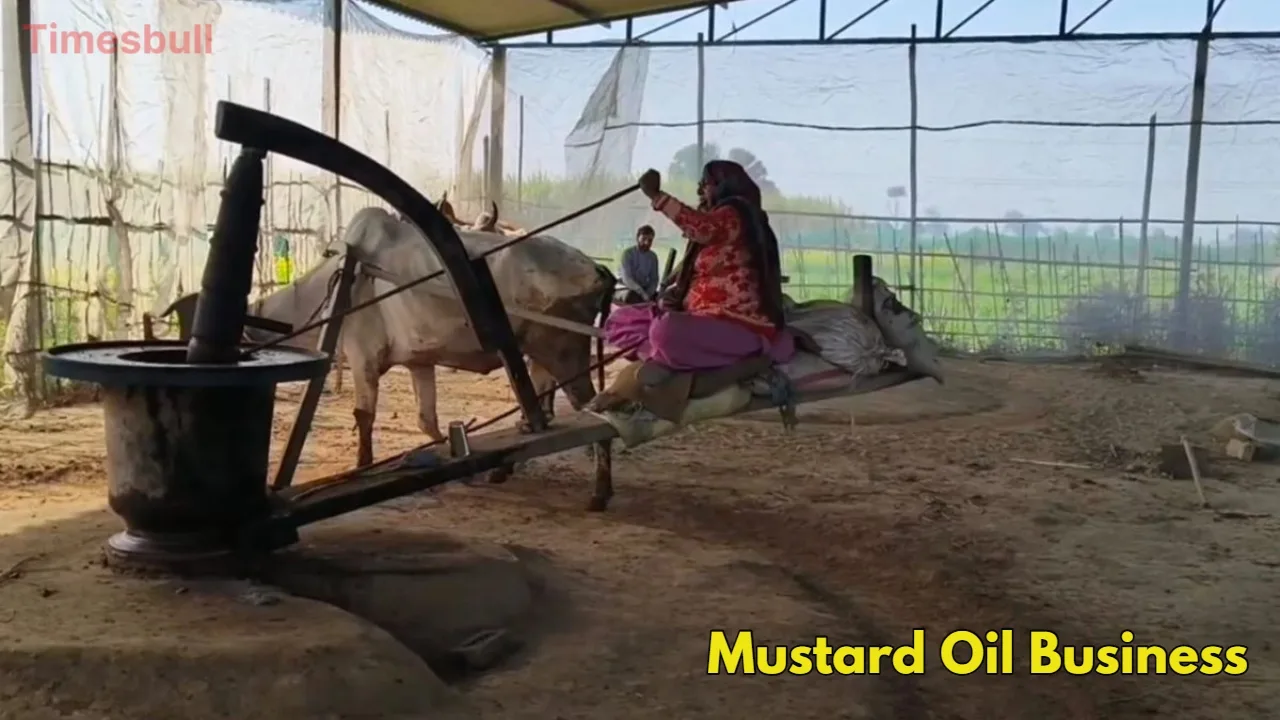
In terms of earnings, pure mustard oil sells for ₹250 to ₹500 per liter, and almond oil for ₹2,000 to ₹3,000 per liter. Furthermore, the oil cake left after oil extraction is sold as animal feed, providing additional profits. By producing 700 to 1,000 liters of oil per month, one can easily earn a net profit of ₹40,000 to ₹60,000.
Government Subsidies and Support
As of the latest update from February 2026, the central and state governments are providing significant subsidies to promote rural industries. Under the Prime Minister’s Employment Generation Programme (PMEGP), subsidies of up to 25% are provided for the general category and up to 35% for special categories (SC/ST/OBC/women) in rural areas.
In states like Bihar and Uttar Pradesh, the ‘Oil Crushing Mill Scheme’ provides a direct subsidy of 33% (approximately ₹3.5 lakh) on units costing ₹9.90 lakh. Note that this subsidy is primarily for machinery and processing units, not for land or shed construction.
Required Licenses and Registrations
To legally start a crusher business, certain mandatory documents are required. First, you must register with the Food Safety and Standards Authority of India (FSSAI). If your annual turnover is less than ₹12 lakh, a ‘basic registration’ is available for a fee of just ₹100.
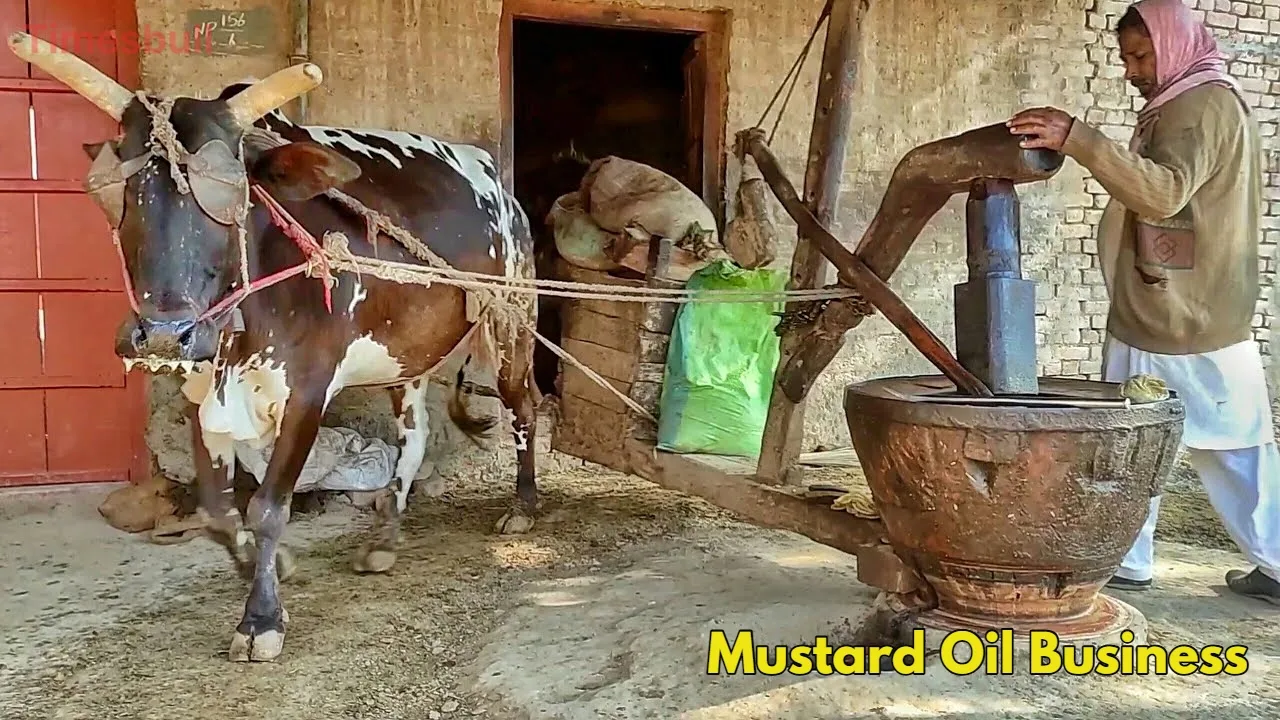
Additionally, obtaining an MSME (Enterprise Registration) and a trade license from the local municipal body or panchayat is mandatory to avail of government subsidies. In 2026, the government also introduced the “Tatkal” license facility under the “Ease of Doing Business” initiative, allowing you to obtain the necessary permissions within just 7 days.
Why is this a great opportunity for villages
This business utilizes local resources and doesn’t require large machinery or urban infrastructure. Crops like mustard, peanuts, and sesame are readily available in villages, keeping raw material costs low. Additionally, this business provides direct access to health-conscious urban consumers while keeping traditional knowledge alive. In the era of Digital India and e-commerce, you can also export pure oil produced in your village directly abroad through online platforms.
Latest News
- ITR Filing Before May 31? You May Get Notice

- Women Free Bus Travel Scheme – How to Get Free Bus Travel From June 1, 2026? How to Apply

- LSG Vs PBKS Video: ऋषभ पंत पर भड़के अर्जुन तेंदुलकर! वीडियो देखकर आप भी रह जाएंगे हैरान

- Apple MacBook Neo Deal Alert: Get It For Under ₹58,000 on Amazon Right Now

- Pakistan Attack: आत्मघाती हमले से दहला पाकिस्तान, 23 लोगों की मौत, 50 से ज्यादा घायल, जानें

- Honor Magic 9 Series Leaks: Flagship Upgrades with Massive 8,000mAh Battery and 200MP Cameras

- Motorola Edge 60 Fusion Review: Mid-Range King or Outdated?

- FD Update– Breaking Your FD Early? Know the consequences

- Bank Holiday–RBI Announces Closure of SBI, HDFC and All Banks Next Week, Save the Dates

- Samsung Galaxy S26 Ultra Amazon Deal – Get ₹23,509+ Discount with Bank Offers and Exchange Benefits