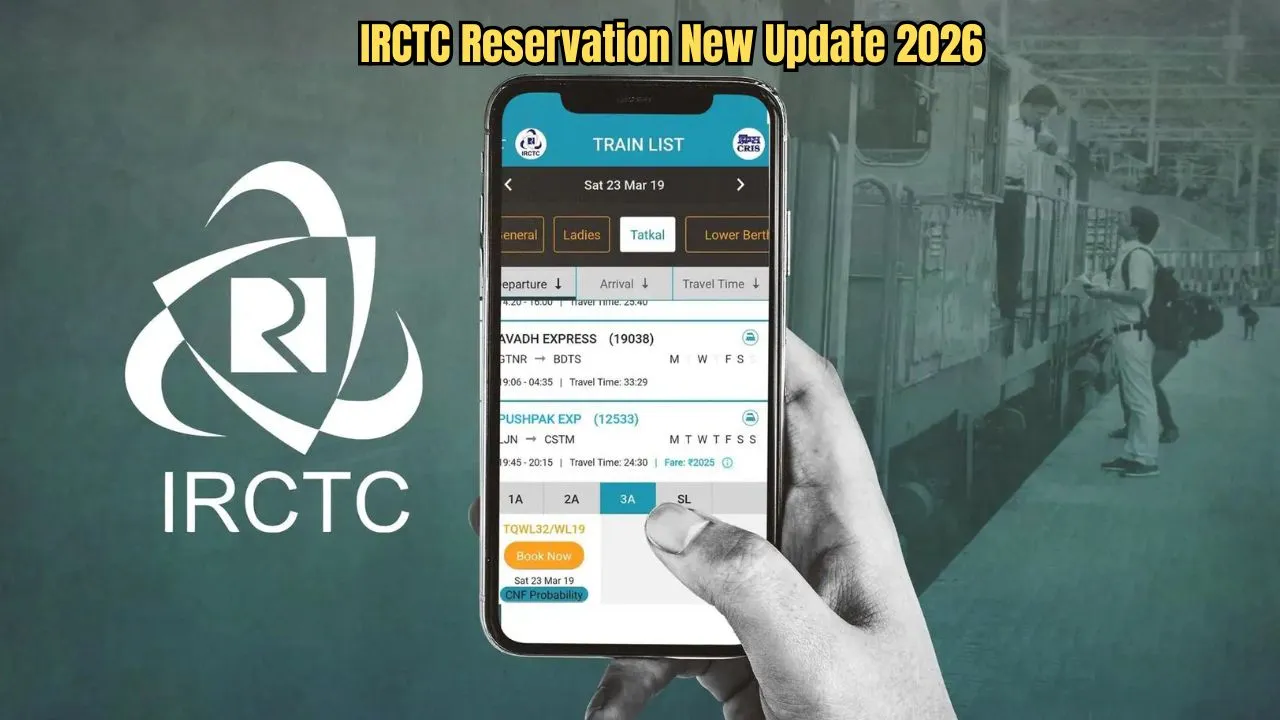
Indian Railways has experienced a welcome Business Idea: Start These 4 Businesses With Low Investment, Then Earn Big Every Month” to the New Year by providing some much-needed relief for train ticket purchasers. Purchasing train tickets previously involved significant restrictions on ticket sales due to the overwhelming demand and timing restrictions caused by agents and brokers buying tickets in bulk. The agents/brokers consistently filled the available seats immediately after advance ticket sales became available. However, with the adoption of a new rule by Indian Railways and IRCTC to allow purchasers to purchase tickets comfortably from the comfort of their homes, this practice is expected to change.
Provide a Description of the Relief
The Railways has been receiving numerous complaints for months regarding the unfairness of booking procedures for the purchase of advance train tickets. During festive, special event and vacation periods, these complaints grew stronger as obtaining tickets became almost impossible for normal, everyday passengers. The ongoing presence of agents/brokers within the ticketing process created an environment in which the “opening” of ticket sales at times resulted in tickets being sold out in under five minutes.
Therefore, the introduction of an Aadhaar-based registration and booking service will aid in the transparency and fairness of ticket sales. The new registration and booking system is designed to encourage consumers to buy tickets on their own.
What is the new rule of the Railways?
As per the new rules, from January 5, only those users whose IRCTC account is linked with Aadhaar will be able to book train tickets between 8 am and 4 pm (i.e., for 8 hours). This rule will come into effect on the day the advance booking window for a train opens 60 days in advance. This means that general passengers will get full access on the crucial first day of ticket booking.
Railways have implemented this system in three phases
- In the first phase, from December 29, Aadhaar-linked users will be able to book tickets from 8 am to 12 noon.
- In the second phase, from January 5, this time has been extended from 8 am to 4 pm (8 hours).
- In the third and final phase, from January 12, Aadhaar-linked users will be able to book tickets online from 8 am to 12 midnight.
Agents will not be able to book tickets
The biggest advantage of this entire system is that agents will not be able to book tickets on the first day of booking. Yes, now only general railway passengers can take advantage of this time. This rule is applicable only for booking reserved tickets in the general category, so that the common people can get priority.
How will the tickets be booked?
Now the question is how to book tickets using Aadhaar? Actually, for this, the passenger’s IRCTC account must be linked with Aadhaar. So when you book a ticket, an OTP will come on your registered mobile Gas Cylinder: Why Was the Number of Subsidized Cylinders Reduced? Government Explains the Reaso, then the ticket will be confirmed only after the OTP verification. By doing this, the chances of booking tickets using fake IDs and automated software will be eliminated to a large extent.
Aadhaar Link is Necessary
If a passenger does not have an IRCTC account linked to Aadhaar, he can link it or create a new ID. Now, passengers without an Aadhaar-linked account will not be able to book tickets within the first eight hours of the ticket booking window opening. However, bookings will be possible later as per the normal process.
Also, the same rule applies to counter ticket booking. If you buy a ticket from a railway station or an authorized counter, you will get an OTP on your mobile phone. This means that the passenger’s mobile number must be linked with Aadhaar. Even if a family member or any other person is buying a ticket for you, an OTP will still be required.
How to link Aadhaar?
You can connect your Aadhaar to your IRCTC account by signing into either the website or mobile app. Go to your Profile area, select the enabling of KYC with Aadhaar, and complete the process in less than five minutes. This new law will improve how people buy tickets by making it easy for them to share their Aadhaar number, thus decreasing the number of people who use brokers, and allowing everyone to receive their tickets much sooner, especially during peak travel times.