

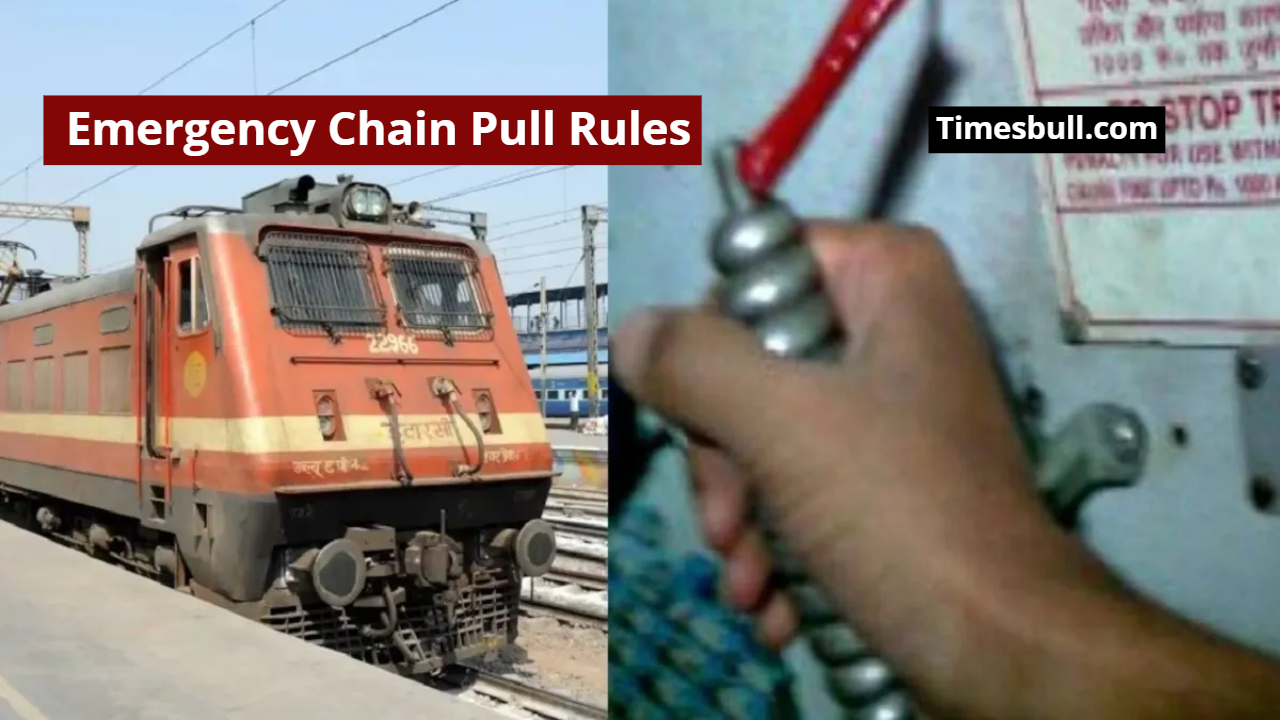
Indian Railways is one of the world’s largest transportation networks, carrying millions of passengers daily. To ensure the safe operation of such a vast network, the Railways adheres to numerous rules and regulations. One important feature is the emergency or alarm chain installed in every coach, which is only permitted for use in emergencies.
Read More- Retirement Planning – Build a Secure Fund of ₹10 Crore Through SIPs
Purpose of the Emergency Chain
The alarm chain is installed to allow the train to be stopped immediately in the event of a sudden medical emergency, accident, security threat, or other critical situation. This is especially useful in situations where the life or safety of a passenger is at risk.
A Growing Problem Due to Lack of Awareness
It is often seen that some people, due to a lack of awareness or carelessness, pull the alarm chain without any reason. This not only affects the timing of that one train but also affects several trains following it. This can disrupt the operation of the entire route and cause inconvenience to passengers.
Strict Provisions Under the Railway Act
Indian Railways has enacted strict rules to prevent the misuse of the alarm chain. Under Section 141 of the Railway Act 1989, anyone who pulls the alarm chain without a valid reason can be fined up to ₹1,000. In some cases, this can also result in imprisonment of up to one year. If necessary, both the fine and the sentence can be applied simultaneously.
In what situations can the alarm chain be used correctly?
The Railways clearly state that the alarm chain should only be used in a genuine emergency. It is considered appropriate to pull the chain only if a child or elderly passenger is left behind at a station, someone experiences a sudden health problem, a fire breaks out on the train, or there is a potential for a major accident.
Read More- Mokshada Ekadashi Remedies – Powerful Rituals to Bring Peace and Salvation to Ancestors
Important Precautions for Passengers
Every passenger must be aware of this rule while traveling on a train, as it is a safety concern. Improper use not only results in severe penalties but also disrupts the journey of other passengers. This feature should be used only under appropriate circumstances to ensure safe and smooth railway operations.