
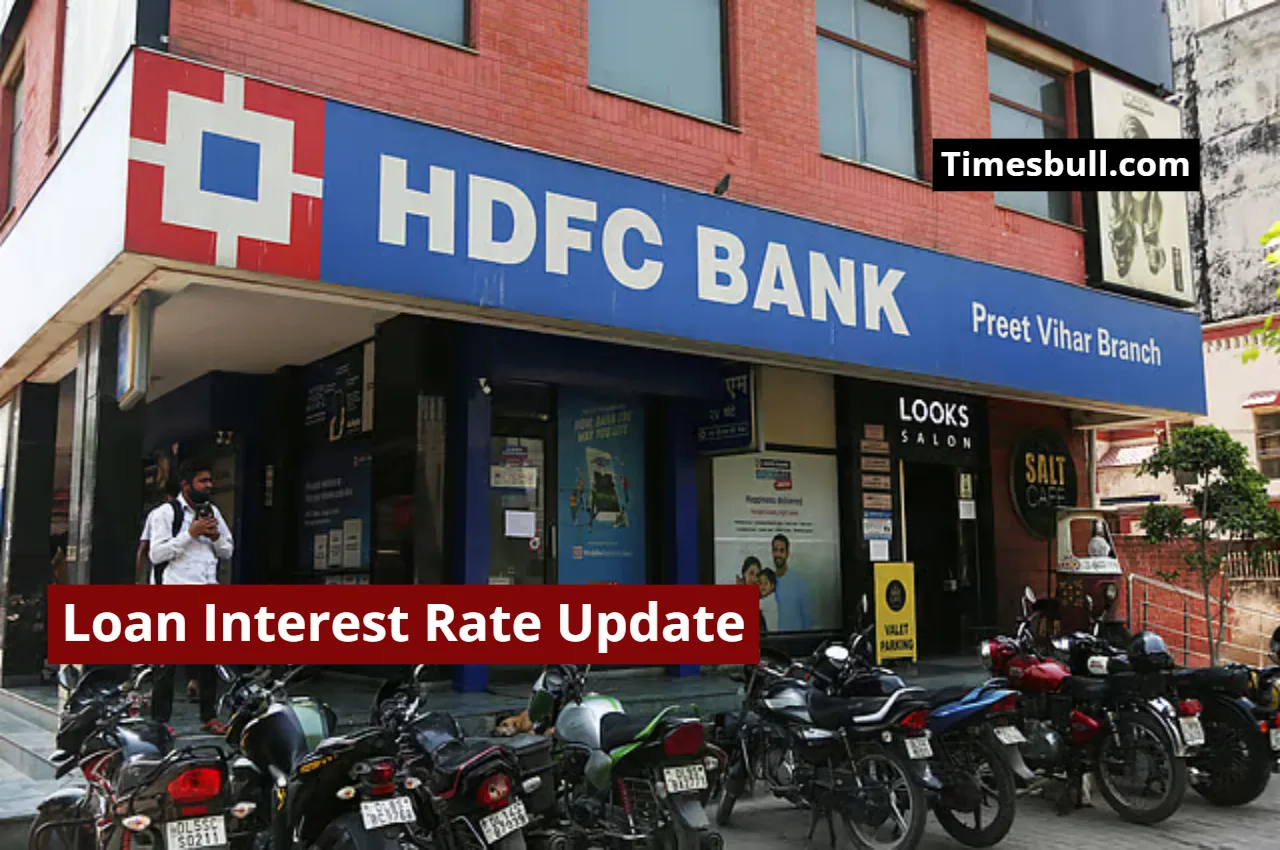
HDFC Bank, one of the country’s leading private banks, has provided relief to its loan customers by making a limited reduction in the Marginal Cost of Funds Based Lending Rate (MCLR). The bank has reduced interest rates by 5 basis points, or 0.05 percent, for specific tenures. This change has come into effect from February 7, 2026, and will benefit customers whose loans are linked to MCLR-based interest rates.
What are the new MCLR rates?
After the reduction, HDFC Bank’s MCLR rates now range between 8.25 percent and 8.60 percent, depending on the tenure. Previously, the MCLR rates were 8.60 percent. The one-month MCLR is now at 8.25 percent. The three-month MCLR rate is 8.30%, the six-month and one-year MCLR rate is 8.40%, and the two-year MCLR rate is 8.50%. Previously, this range was slightly higher. Short-term rates are typically lower, and long-term rates are higher because the risk and funding costs are higher over longer periods
When will the new MCLR rates be effective?
The new MCLR rates have been implemented since February 7, 2026. Banks have decided to adjust the rates based on their own funding costs and liquidity. However, the RBI has not made any changes to the repo rate. Changes in the MCLR are directly linked to bank costs and market conditions. Therefore, banks adjust their loan rates from time to time to maintain balance.
This decision will directly benefit customers whose home loans, personal loans, or business loans are linked to the MCLR. Although a 5 basis point reduction isn’t considered significant, these savings on long-term loans can reduce overall interest costs.
Effect on EMIs
The impact of the lower MCLR isn’t immediately reflected in EMIs. This depends on your loan’s reset cycle. As soon as the next reset date arrives, the new interest rate may become effective, and a slight reduction in EMIs may be observed.
Read More- 8th Pay Commission: Deadline Alert for Central Employees Before March 16
Real estate and business sectors will also receive support
Many banks have revised interest rates in the past few months. This is due to changing economic conditions, RBI policy, and bank funding costs. This could make borrowing easier and provide support to the real estate and business sectors.
Latest News
- Apple MacBook Neo Deal Alert: Get It For Under ₹58,000 on Amazon Right Now

- Pakistan Attack: आत्मघाती हमले से दहला पाकिस्तान, 23 लोगों की मौत, 50 से ज्यादा घायल, जानें

- Honor Magic 9 Series Leaks: Flagship Upgrades with Massive 8,000mAh Battery and 200MP Cameras

- Motorola Edge 60 Fusion Review: Mid-Range King or Outdated?

- FD Update– Breaking Your FD Early? Know the consequences

- Bank Holiday–RBI Announces Closure of SBI, HDFC and All Banks Next Week, Save the Dates

- Samsung Galaxy S26 Ultra Amazon Deal – Get ₹23,509+ Discount with Bank Offers and Exchange Benefits

- Best Scooters For College Girls 2026 – Perfect Mix Of Mileage, Style And Lightweight Design

- Kodak Matrix QLED Google TV 2026 Series Launched in India Just Under 10,999

- Senior Citizen FD Rates: सीनियर सिटीजन को यहां से मिल रहा बंपर ब्याज, जल्द करें निवेश