
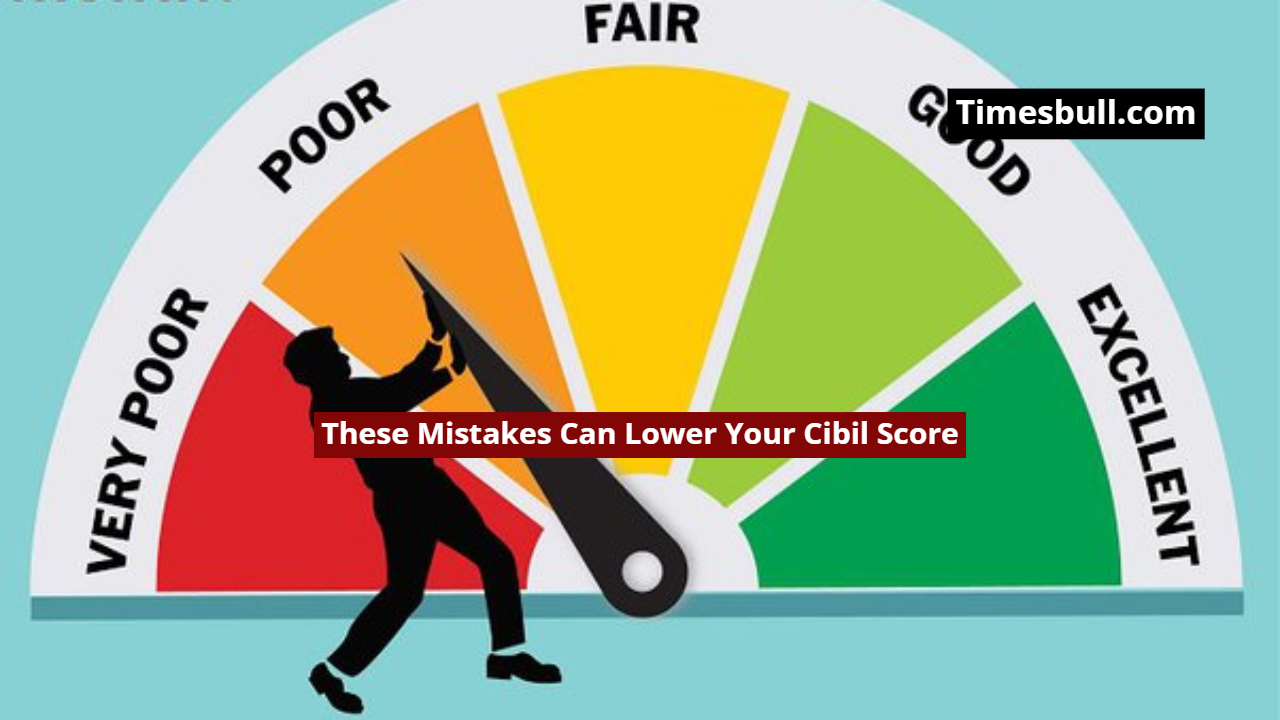
In today’s world, credit cards have become a necessity for salaried individuals and business owners. People are using them extensively due to features like online shopping, cashback, reward points, and EMI options. However, the convenience associated with credit cards can lead to carelessness, which can gradually turn into a major financial problem. Often, people don’t realize that some of their everyday habits are harming their CIBIL score, which impacts their ability to get loans in the future.
Read More- ITR Refund Not Yet Received, Check Your Status Quickly Like This
Why is the CIBIL Score so important?
The CIBIL score is a reflection of your credit history. Banks use this score to determine whether you are creditworthy or not. A good score makes it easy to get a home loan, personal loan, or car loan, while a poor score leads banks to consider you a high-risk customer.
Why paying only the Minimum Due is risky
Many credit card users feel relieved after paying only the minimum due amount each month. They think that since they’ve made a payment, there will be no harm. However, the truth is that heavy interest starts accumulating on the remaining amount. This interest compounds every month, and your total liability increases rapidly. Consistently paying only the minimum due signals to the bank that you are unable to make full payments, which weakens your repayment behavior and causes your CIBIL score to drop.
Why does excessive use of your credit limit harm your profile
If you spend your entire credit limit or more than half of it, it’s a warning sign. This is called the Credit Utilization Ratio. Experts believe this ratio should be less than 30 percent. Using too much of your credit limit makes banks think you are overly dependent on debt, which makes your credit profile look weak.
Late payments directly affect your score
Many people delay paying their credit card bills, thinking that a delay of a day or two won’t matter. But the reality is that even a single day’s delay can damage your credit history. Information about late payments reaches the Credit Bureau, and its impact on your CIBIL score is immediate. This record can remain on your report for several years.
The habit of converting every expense into EMIs
Nowadays, it’s easy to convert purchases into EMIs with just one click. However, converting every expense into EMIs increases your monthly liabilities. This ties up a large portion of your salary even before you receive it. Banks consider such customers overleveraged and exercise extra caution before granting new loans.
Why having multiple credit cards increases risk
Lured by offers and higher credit limits, many people take out several credit cards at once. Each card has a different billing date and due date. Even a slight oversight can lead to missed payments. A mistake on one card affects your entire credit profile. However, with proper planning and discipline, these risks can be avoided.
Why do banks hesitate to give loans?
When your CIBIL score drops, banks consider you a high-risk borrower. They fear that loan EMIs will not be paid on time. Because of this, loan applications are either rejected or loans are offered at very high interest rates, further increasing your financial difficulties.
Read More- Follow These Simple Tricks to Reduce Electricity Bill in Winter
How to use your credit card correctly
If you want to maintain a strong CIBIL score, it is crucial to pay your entire bill on time every month. Use your credit limit judiciously and avoid taking EMIs unnecessarily. Check your card statement at least once a month so that any errors can be corrected promptly.
Latest News
- New Honda City Facelift 2026 Launched – Sporty Coupe Look And ADAS Safety Revealed

- 8th Pay Commission: केंद्रीय कर्मचारियों की बढ़ेगी बंपर सैलरी! आयोग ने उठाया यह बड़ा कदम

- China: चीन के कोयला खदान में भयंकर विस्फोट, 90 लोगों की गई जान, पीएम मोदी ने भी जताया दुख

- Weather warning – Heavy Rain, thunderstorms, lightning Alerts for 13 States Over Next 3 Days

- UP TGT Exam City Slip 2026 Released – Download at upessc.up.gov.in, Exam June 3-4

- ATM Alert: एटीएम में फंस जाए डेबिट कार्ड तो घबराएं नहीं, फटाफट यह काम करने से होगा समाधान
- Post Office Scheme – 7.5% Interest Rate, ₹5 Lakh Becomes ₹7,24,974 in 5 Years, Start with Just ₹1,000
- Best AI Video Editing Laptops Under 60,000 INR: Top Picks Her
- Best CNG Cars: पेट्रोल के बढ़ते दाम के बीच ये सीएनजी गाड़ी खरीदकर खर्च करें कम, माइलेज भी जबरदस्त

- Samsung Stable One UI 8.5 Update to Galaxy Tab S10 FE and Tab S10 FE+