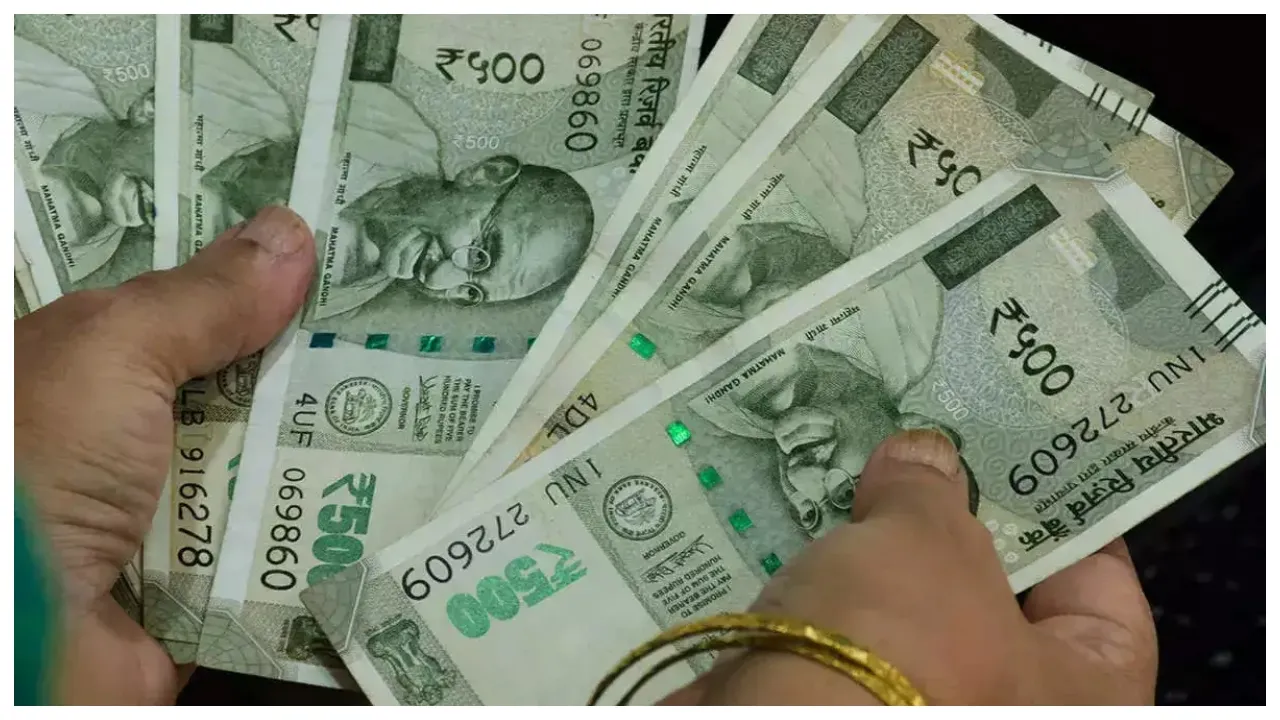
8th pay commission: There’s big news for central Business Idea: Start These 4 Businesses With Low Investment, Then Earn Big Every Month”/gas-cylinder-why-was-the-number-of-subsidized-cylinders-reduced-government-explains-the-reaso-750917.html" class="tb-related-post-link" rel="bookmark">Gas Cylinder: Why Was the Number of Subsidized Cylinders Reduced? Government Explains the Reaso employees and pensioners. The Drafting Committee of the National Council (Staff Side) under the Joint Consultative Machinery (NC-JCM) will begin a crucial week-long meeting in New Delhi. This meeting will finalize a common memorandum of demands to be presented to the 8th Central Pay Commission (CPC) on behalf of over 12 million employees and pensioners.
This meeting comes soon after the 8th Pay Commission was allotted office space in the Chandralok Building on Janpath, indicating that the Commission has formally entered its operational stage. The Commission is chaired by Justice Ranjana Prakash Desai.
Why is this meeting important?
This drafting exercise is necessary because the unions want to present a unified and detailed charter of demands before the Commission begins its structured consultations. However, there is clear resentment among the NC-JCM staff members. Several federations have expressed disappointment that several key demands they previously submitted to the government were not reflected in the official Terms of Reference (ToR) of the 8th Pay Commission.
For this reason, the current meeting is being seen as an attempt to formally bring together and strongly re-emphasize those demands through a larger memorandum. In simple words, the employee unions want to ensure that issues like fitment factor, pension reforms and increments are strongly put before the Commission, even if they are not clearly mentioned in the ToR.
3.25 fitment factor
One of the biggest considerations is the proposed fitment factor.
The Federation of National Postal Organizations (FNPO) has suggested a “multi-level fitment factor” instead of a single uniform multiplier. This proposal is based on the “Ackroyd formula,” which calculates the minimum living wage based on the essential needs of a family of four.
Proposed Fitment Structure
– Levels 1 to 5: 3.00 factor
– Levels 6 to 12: 3.05 to 3.10
– Levels 13 to 15: 3.05 to 3.15
– Levels 16 to 18: 3.25
The idea behind this tiered structure is to provide greater corrections to lower-level employees, while also preventing “pay compression” at higher levels.
Level 1 denotes entry-level Group C posts, while Level 18 corresponds to the Cabinet Secretary.
Example impact on salary (as suggested by FNPO)
Level 1–5: Basic salary can be between Rs 54,000 and Rs 87,600
– Level 6–12: Rs 1,08,000 to Rs 2,44,300
– Level 13–15: Rs 3,61,500 to Rs 5,74,000
– Level 16–18: Rs 6,57,300 to Rs 8,12,500
It is important to note that these figures are proposals from the Federation and not yet official recommendations from the Commission.Another major demand is related to annual increment.
Currently, central government employees receive a 3% annual increment. Employee federations are demanding an increase to 7%, while the FNPO has suggested a minimum of 5%. The argument is that a higher increment rate will ensure better financial growth throughout an employee’s career, especially in an environment of rising inflation and living costs.
Demand to increase the family unit to 5 members. The federations are also pushing for expanding the definition of “family unit” from three to five members, including dependent parents.
If accepted, this change could significantly impact the basic pay calculations under the wage determination formula, leading to a significant increase in salaries.
Allowances and retirement benefits
The charter of demands goes beyond basic pay:
– Fixed Medical Allowance (FMA): Proposed to increase it from Rs 1,000 to Rs 20,000 per month for pensioners in non-CGHS areas.
– Leave Travel Concession (LTC): Demand to allow encashment in cash.
– Leave encashment: Increase the limit on retirement from 300 days to 400 days.