


The announcement of the 8th Pay Commission for central employees and pensioners brought a ray of hope. But even seven months after its approval in January 2025, the process of its formation is hanging in the balance. Neither has the government appointed the chairman and members, nor has a formal notification been issued. This delay has further increased the uneasiness of lakhs of employees and pensioners. When will we get relief from inflation?
Why is there a delay in the formation of the 8th Pay Commission
The Finance Ministry has clarified that suggestions are being taken from various ministries, states, and employee organizations before finalizing the terms of the commission. It is believed that this process is the main reason for its slow pace. Minister of State for Finance Pankaj Chaudhary had said in Parliament that the notification of the commission would be issued at an “appropriate time”. However, given the complexities of the government machinery and financial balance, it is feared that this process may drag on till early 2026.
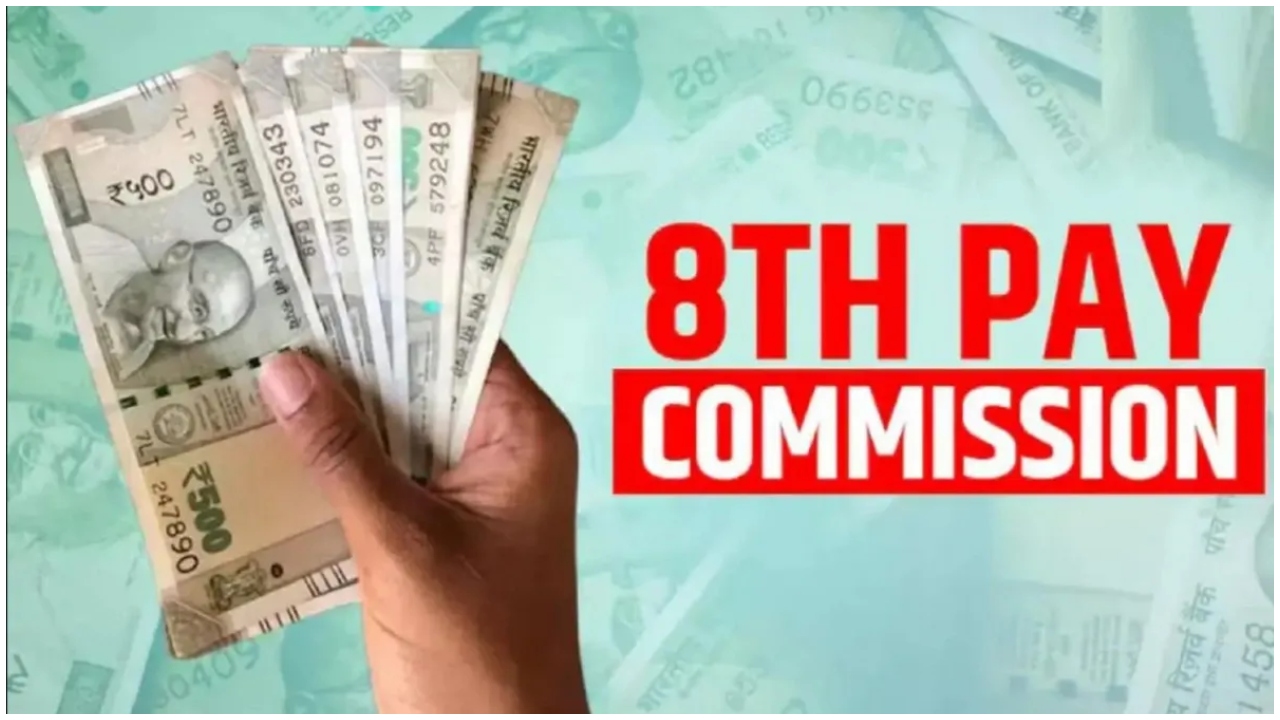
When will the 8th Pay Commission be implemented
It is officially stated that the 8th Pay Commission will come into effect from January 1, 2026. But if the delay in appointments and approvals continues, the deadline may slip to the end of 2027 or even the beginning of 2028. Employees and pensioners are eagerly waiting for this, as it will bring significant changes to their salaries and pensions.
Fitment factor and possible salary hike
The fitment factor that forms the basis of salary revision can be between 1.8 and 2.86 this time. If the maximum formula of 2.86 is applied, the minimum basic salary will increase from ₹ 18,000 to ₹ 51,480. At the same time, the minimum pension of pensioners can increase from ₹ 9,000 to ₹ 25,740. However, with this, the dearness allowance (DA) will become zero after the implementation of the new pay commission.
What will be the benefit to the employees

Currently, employees are getting 55% dearness allowance, which may increase to 58% in July 2025. As soon as the 8th Pay Commission is implemented, dearness allowance will be added to the basic salary. This will increase the salary of the employees, but the new count of dearness allowance will start from zero. It will be interesting to see how beneficial this change proves to be for the employees in this era of inflation.
Suspicion remains on the DA arrears of 18 months
During the COVID-19 pandemic, the payment of Dearness Allowance (DA) and Dearness Relief (DR) from January 2020 to June 2021 was stopped. Employee unions are constantly demanding that the arrears of these 18 months be settled. But, the government says that it is not economically possible, as it will lead to an additional burden of thousands of crores of rupees. There is still confusion on this issue, and employee unions are constantly pressuring the government.
Key demands of employee unions
Employee organizations have placed several important demands before the central government. The main demands are early formation and notification of the 8th Pay Commission, restoration of the Old Pension Scheme (OPS), and speeding up the recruitment process for vacant posts. Along with this, the employee unions are also demanding the implementation of an automatic system for salary revision, so that there is no need for a pay commission every 10 years.

Considering an alternative pay system
According to some media reports, the government is considering a new system instead of the traditional pay commission system. In this, salary revision can be linked to the performance of employees and the inflation rate. If this happens, the need to form a new commission every 10 years may end. However, there is no official confirmation on this proposal yet. This can be a major change, which will have a direct impact on the salary and pension of employees.
Financial impact and government challenge
After the implementation of the recommendations of the 8th Pay Commission, the government’s expenditure on salaries and pensions will increase significantly. This may impact the fiscal deficit. Therefore, the biggest challenge before the central government is to strike a balance between the expectations of the employees and its economic policies. The government will have to find a way that satisfies the employees and also does not put too much burden on the country’s economy.